
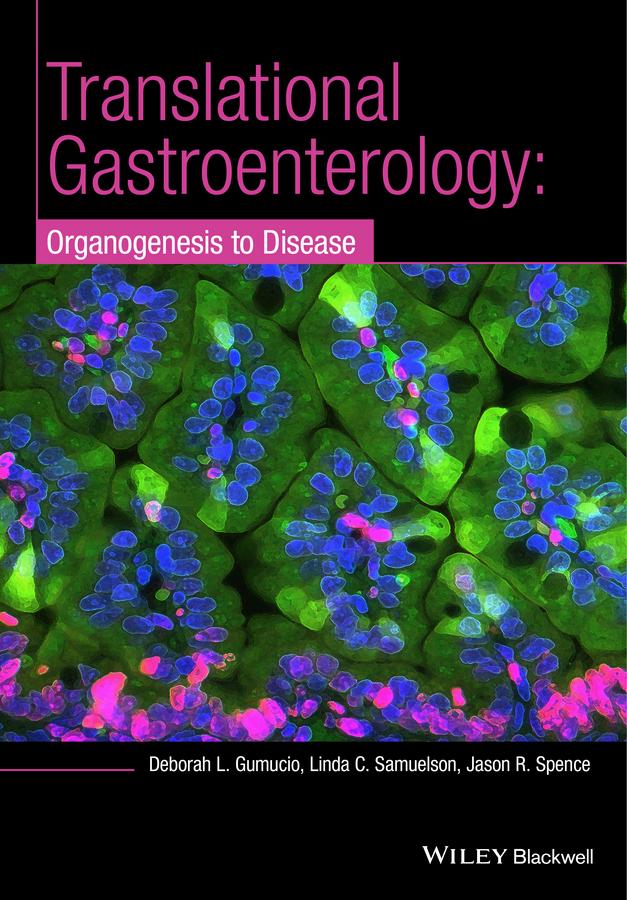
Translational Gastroenterology: Organogenesis to Disease bridges the gap between basic and clinical research by providing information on GI (gastrointestinal) organ development discovered through scientific inquiry, alongside clinical observations of acquired and congenital abnormalities. Paired chapters, written from basic science and clinical viewpoints, review the major biological pathways and molecules at work in organ ontogeny and disease. In addition to a comprehensive survey of GI organ development and pathologies, the book also highlights model organisms and new areas of research, with chapters devoted to recent advances in the field of GI stem cell biology, and the potential for tissue engineering of GI organs.
The topics covered provide a unique window onto current activity in the field of gastroenterology, fostering enhanced knowledge for developmental biologists as well as for clinical practitioners.
Notable features include the following:
• Basic science chapters review the molecular and cellular pathways of GI organ development alongside clinical chapters examining organ-based diseases, closing the gap between the bench and the clinic.
• Derivative organs – esophagus, stomach, pylorus, small intestine, colon, liver, and pancreas –as well as tissues such as serosa and enteric nervous system that are common to multiple GI organs.
• Chapters detailing the use of model organisms – Drosophila, sea urchin, zebrafish, C. elegans, Xenopus – for basic discovery studies are included.
• Chapters on GI stem cells and the potential for tissue engineering of the GI organs provide a view to the future of research and therapy in these organs.
Paga fácilmente con tarjeta, Klarna, Apple Pay o Google Pay. ¿No estás contento? Siempre tienes 14 días de garantía de devolución. Lee más en nuestros términos. Si tienes preguntas, escríbenos a hello@memmo.org.
Memmo hace que estudiar sea más fácil, estés donde estés. Aquí tienes tus libros de texto y herramientas de estudio inteligentes en un solo lugar: resúmenes, quizzes, podcasts y flashcards. Y también a Ted, tu compañero de estudio que responde a todo lo que te preguntes. Más de 50 000 estudiantes ya estudian aquí. Está hecho para que aprendas más rápido y te estreses menos.