
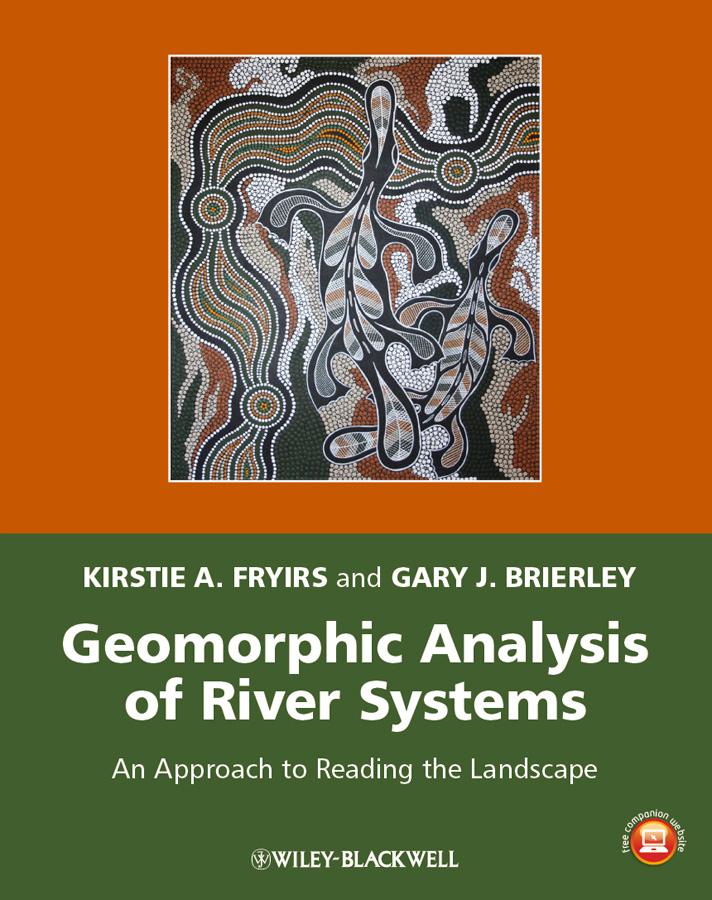
Filling a niche in the geomorphology teaching market, this introductory book is built around a 12 week course in fluvial geomorphology.
‘Reading the landscape’ entails making sense of what a riverscape looks like, how it works, how it has evolved over time, and how alterations to one part of a catchment may have secondary consequences elsewhere, over different timeframes. These place-based field analyses are framed within their topographic, climatic and environmental context. Issues and principles presented in the first part of this book provide foundational understandings that underpin the approach to reading the landscape that is presented in the second half of the book. In reading the landscape, detective-style investigations and interpretations are tied to theoretical and conceptual principles to generate catchment-specific analyses of river character, behaviour and evolution, including responses to human disturbance.
This book has been constructed as an introductory text on river landscapes, providing a bridge and/or companion to quantitatively-framed or modelled approaches to landscape analysis that are addressed elsewhere. Key principles outlined in the book emphasise the importance of complexity, contingency and emergence in interpreting the character, behaviour and evolution of any given system.
The target audience is second and third year undergraduate students in geomorphology, hydrology, earth science and environmental science, as well as river practitioners who use geomorphic understandings to guide scientific and/or management applications.
The primary focus of Kirstie and Gary’s research and teaching entails the use of geomorphic principles as a tool with which to develop coherent scientific understandings of river systems, and the application of these understandings in management practice. Kirstie and Gary are co-developers of the River Styles® Framework and Short Course that is widely used in river management, decision-making and training.
Additional resources for this book can be found at: www.wiley.com/go/fryirs/riversystems.
Paga fácilmente con tarjeta, Klarna, Apple Pay o Google Pay. ¿No estás contento? Siempre tienes 14 días de garantía de devolución. Lee más en nuestros términos. Si tienes preguntas, escríbenos a hello@memmo.org.
Memmo hace que estudiar sea más fácil, estés donde estés. Aquí tienes tus libros de texto y herramientas de estudio inteligentes en un solo lugar: resúmenes, quizzes, podcasts y flashcards. Y también a Ted, tu compañero de estudio que responde a todo lo que te preguntes. Más de 50 000 estudiantes ya estudian aquí. Está hecho para que aprendas más rápido y te estreses menos.