
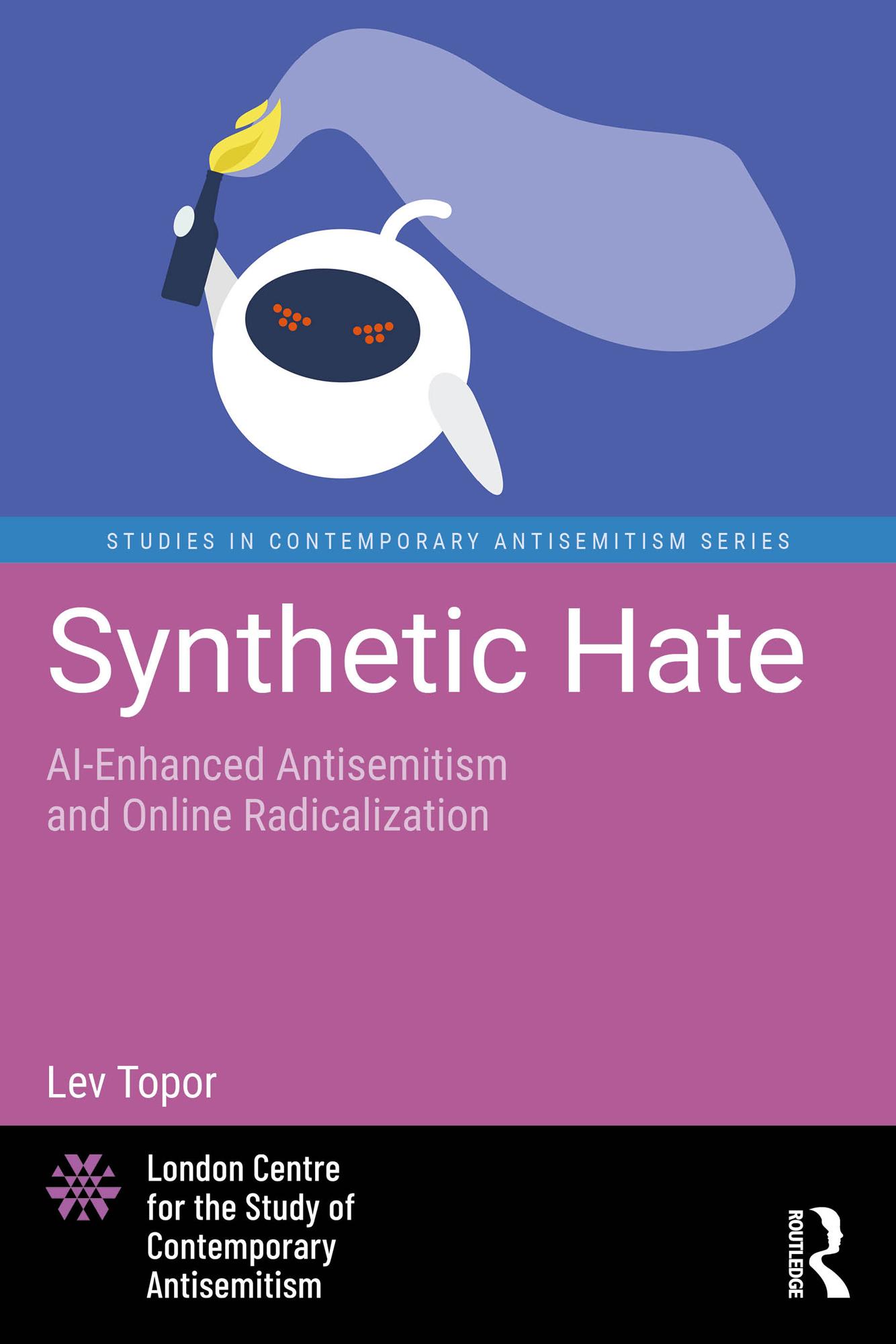
Synthetic Hate investigates how extremists exploit artificial intelligence (AI) to modernize the world’s oldest hatred. Antisemitism – rooted in religious discrimination, medieval blood libels, Nazi propaganda, and contemporary Islamist and far-right conspiracies – has found new life through generative tools that can produce persuasive text, images, audio, and video at scale.
Drawing on documented cases and controlled demonstrations, the book shows how large language models (LLMs), deepfakes, bots, and recommendation systems enable cheap, rapid, and adaptive propaganda – memes that evade moderation, fabricated “evidence,” synthetic voices, and narrative laundering that spreads across platforms and into mainstream feeds. The result is not “new” hate, but hate that is faster, more convincing, and harder to police.
Crucially, Synthetic Hate goes beyond diagnosis, and it lays out a practical counterstrategy of technical safeguards, platform accountability and regulation, and education and resilience, so policymakers, researchers, and practitioners can blunt AI-amplified antisemitism and hate without sacrificing democratic values.
Paga fácilmente con tarjeta, Klarna, Apple Pay o Google Pay. ¿No estás contento? Siempre tienes 14 días de garantía de devolución. Lee más en nuestros términos. Si tienes preguntas, escríbenos a hello@memmo.org.
Memmo hace que estudiar sea más fácil, estés donde estés. Aquí tienes tus libros de texto y herramientas de estudio inteligentes en un solo lugar: resúmenes, quizzes, podcasts y flashcards. Y también a Ted, tu compañero de estudio que responde a todo lo que te preguntes. Más de 50 000 estudiantes ya estudian aquí. Está hecho para que aprendas más rápido y te estreses menos.