
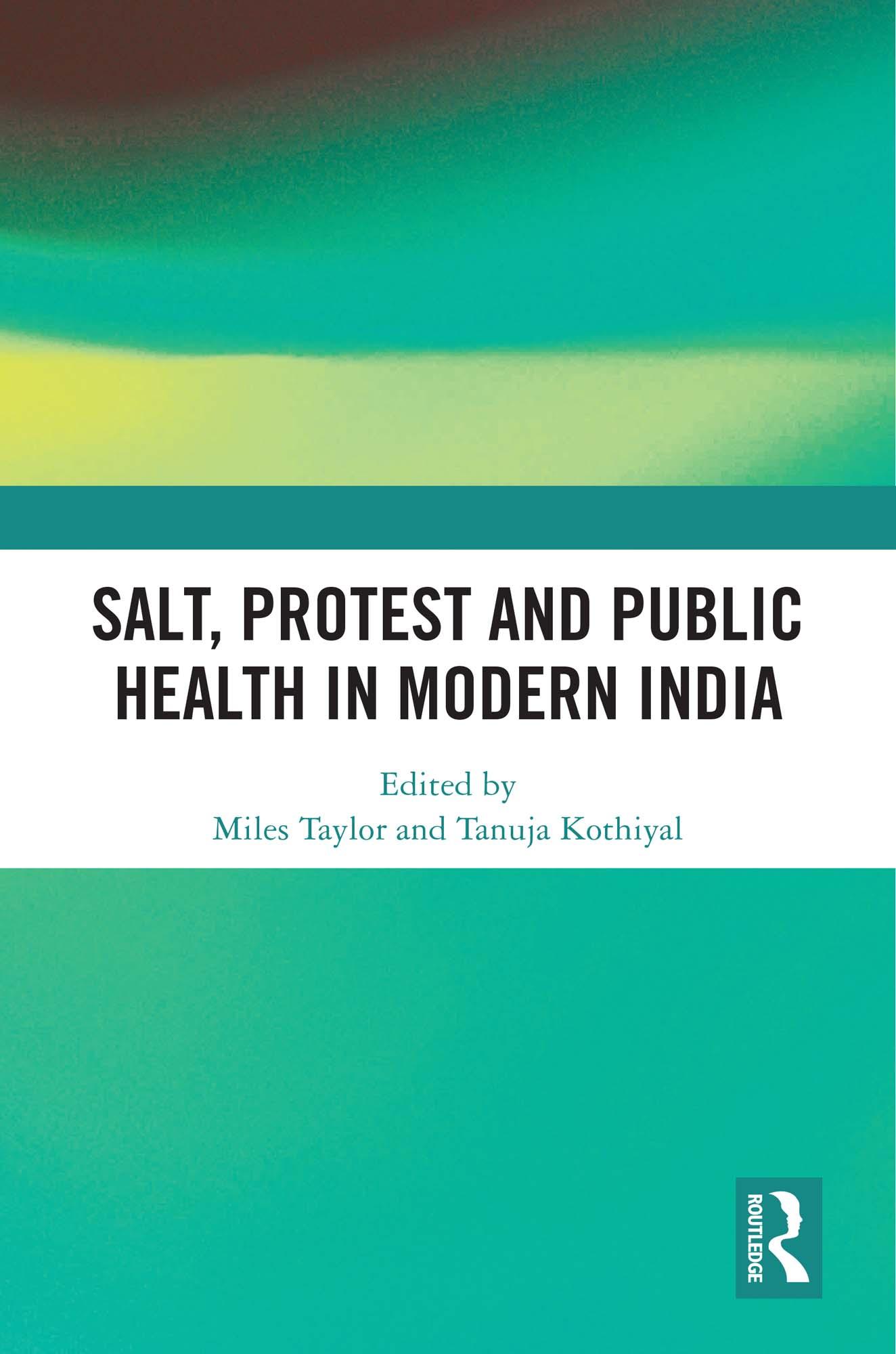
This book explores the central role of salt in modern Indian history through eleven specially commissioned essays from an international range of scholars. Down to 1947, the British controlled the production, distribution and sale of salt in India. Salt was taxed, with the burden falling disproportionately on the poor. By the early 20th century, salt yielded the largest revenue of all commodities taxed by the Government of India. When Mohandas Gandhi sought to mobilize the Indian poor against colonial rule in 1930, he chose a march from Ahmedabad to the sea-salt producing coastline of Gujarat as an act of civil disobedience, projecting the Indian struggle for independence to an unprecedented global audience. Using salt as a lens, these essays reconstruct how one of life's necessities remained a central issue of public policy in both colonial and independent India, exploring the entangled histories of colonial state making, economic policies, individual ambitions, legal entanglements, protest and public health.
This volume will be invaluable for students, researchers and scholars interested in South Asian studies, Economic History and Public Policy. The book covers broad subject areas including colonial administration, taxation and revenue systems, civil disobedience movements, economic nationalism, public health policy, and the social and cultural significance of essential commodities in shaping state-society relations in modern India.
The chapters in this book were originally published as a special issue of the Journal of South Asian Studies.
Paga fácilmente con tarjeta, Klarna, Apple Pay o Google Pay. ¿No estás contento? Siempre tienes 14 días de garantía de devolución. Lee más en nuestros términos. Si tienes preguntas, escríbenos a hello@memmo.org.
Memmo hace que estudiar sea más fácil, estés donde estés. Aquí tienes tus libros de texto y herramientas de estudio inteligentes en un solo lugar: resúmenes, quizzes, podcasts y flashcards. Y también a Ted, tu compañero de estudio que responde a todo lo que te preguntes. Más de 50 000 estudiantes ya estudian aquí. Está hecho para que aprendas más rápido y te estreses menos.