
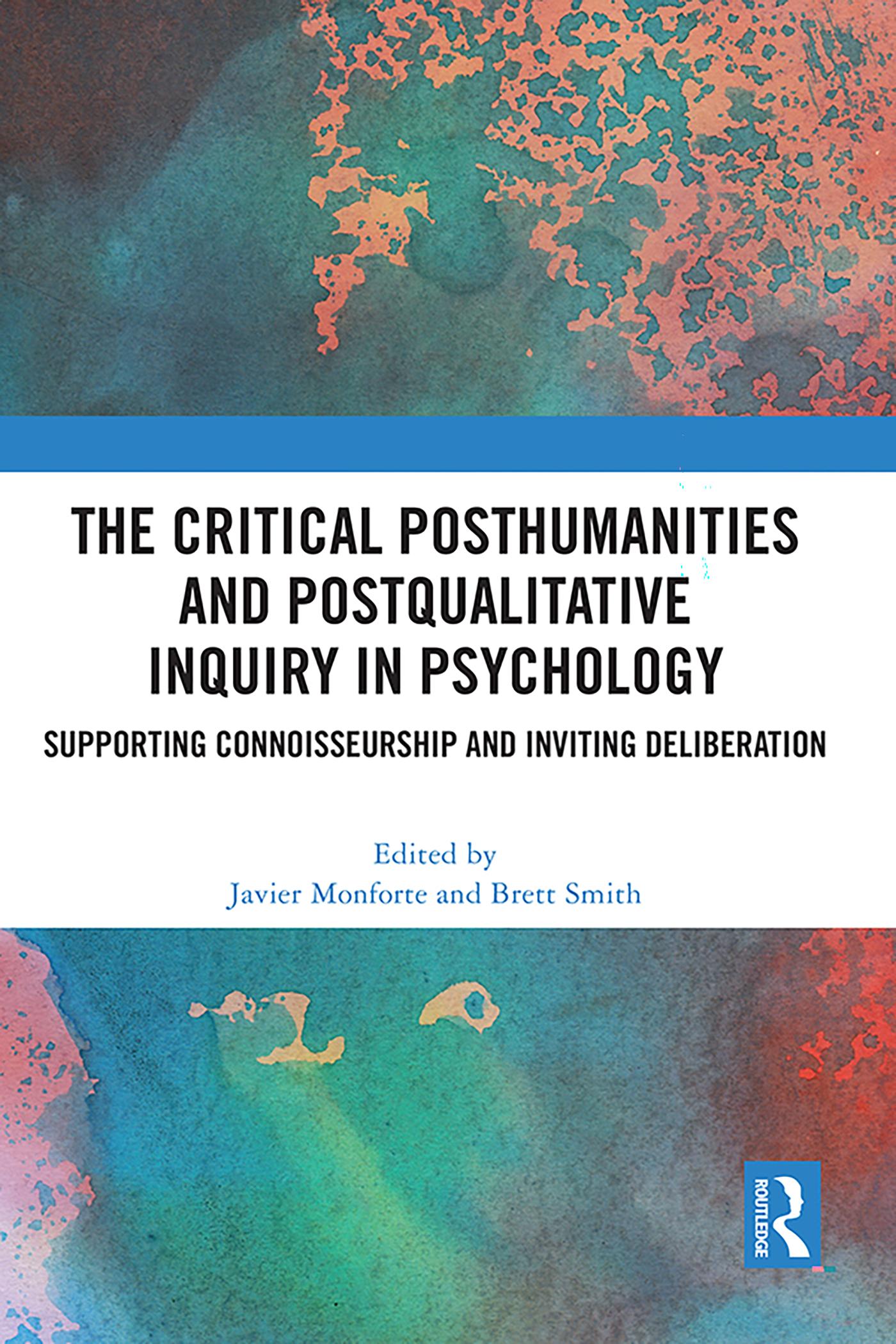
At the turn of the 21st century, after decades of resisting the quantitative imperative, qualitative psychology and the psychological humanities seemed to have found some respite. However, the sense of stability was soon disrupted by the posthuman and postqualitative critique of humanism and the conventional assumptions and practices of qualitative research. How have (qualitative) psychologists responded to this? For the most part, they have chosen to either sweep the ‘posts’ under the rug or to carelessly dismiss them as faddish folderol. This collection supports a more grounded response, not by persuading readers that ‘post inquiry’ is good and should be accepted, but by helping them evaluate its claims thoughtfully. This is one of the first collections to address questions such as:
- What is post qualitative inquiry and where did it come from?
- What does posthumanism mean for our understanding of ourselves as persons?
- What should we make of the ‘critical’ in critical posthumanisms?
- Are qualitative and postqualitative inquiries incommensurable?
- What might the ‘posts’ mean to phenomenology and ethnography?
This volume includes contributions from leading voices such as Elisabeth St.Pierre, Svend Brinkmann, and Vivienne Bozalek, as well as emerging scholars who were introduced to research in a period characterised by multiple competing paradigms. This book was originally published as a special issue of Qualitative Research in Psychology.
Paga fácilmente con tarjeta, Klarna, Apple Pay o Google Pay. ¿No estás contento? Siempre tienes 14 días de garantía de devolución. Lee más en nuestros términos. Si tienes preguntas, escríbenos a hello@memmo.org.
Memmo hace que estudiar sea más fácil, estés donde estés. Aquí tienes tus libros de texto y herramientas de estudio inteligentes en un solo lugar: resúmenes, quizzes, podcasts y flashcards. Y también a Ted, tu compañero de estudio que responde a todo lo que te preguntes. Más de 50 000 estudiantes ya estudian aquí. Está hecho para que aprendas más rápido y te estreses menos.