
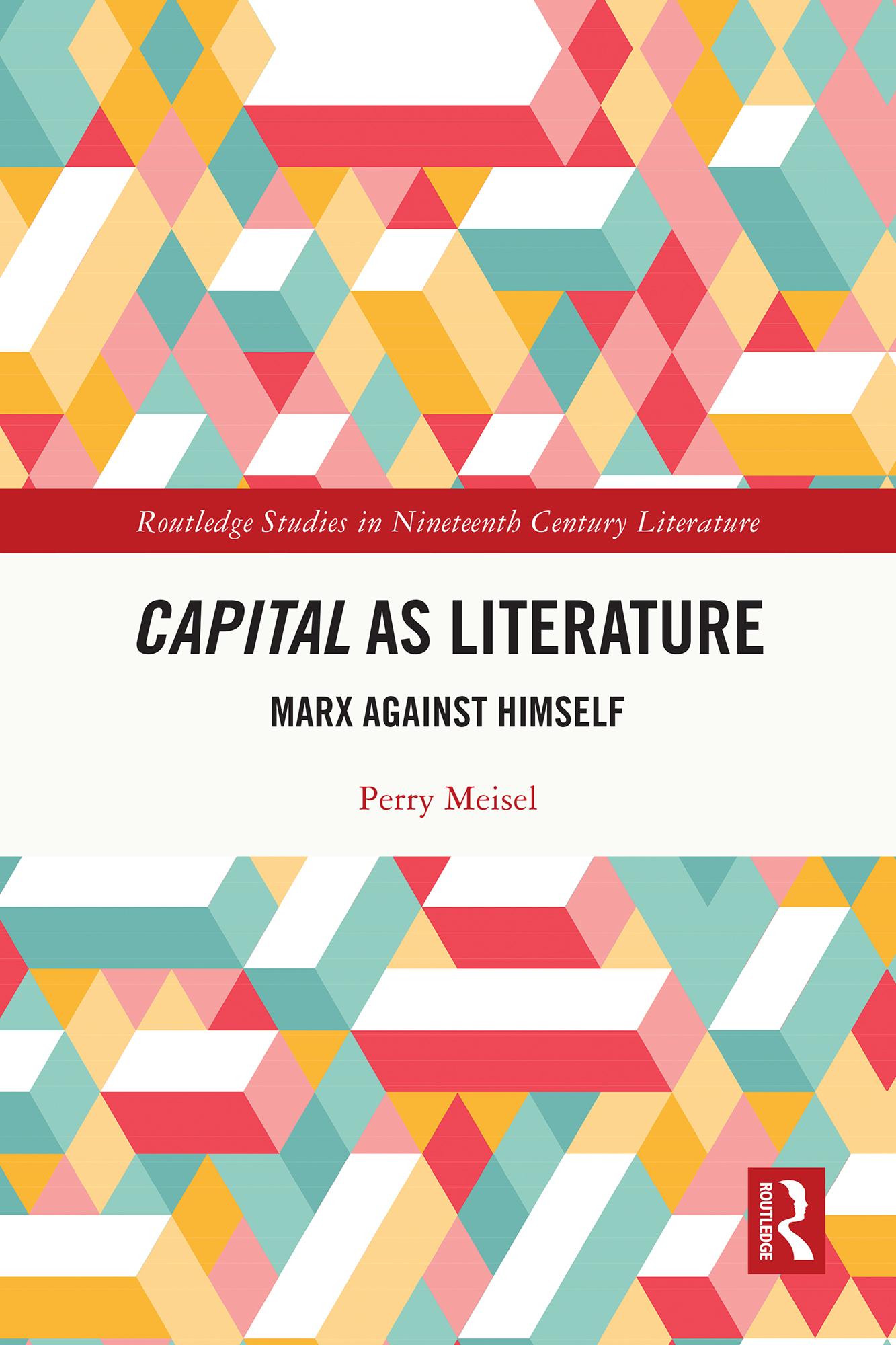
Studies of Marx, particularly of his masterwork Capital (1867), are as a rule tutelary—they attempt to explain him. Even literary readers of Marx, from Raymond Williams to Fredric Jameson, seek to secure Marxist tenets by means of Marxian style. ‘Capital’ as Literature: Marx Against Himself departs from this tradition by reading Capital as literary in its own right rather than as political economy with style as its filigree rather than its focus. Here, Marx emerges in a different light. If literature is writing that calls whatever is settled into question, then Marx's writing is literature, not because of its revolutionary program, but because Marx's rhetoric, particularly its key trope of chiasmus, undoes the coherence of the notions it propounds, especially in Capital. Marx's chiasmatic style turns Capital into a mise en abyme and Marx's enterprise into an example of what it describes rather than its foil or antidote: the structure of capital itself. Capital, like capital, is a self-begetting production machine whose fungibility as a form is one and the same with the money economy it unravels. ‘Capital’ as Literature: Marx Against Himself shows how this irony unfolds and what the implications are for epistemology, cultural studies, and literary criticism.
Paga fácilmente con tarjeta, Klarna, Apple Pay o Google Pay. ¿No estás contento? Siempre tienes 14 días de garantía de devolución. Lee más en nuestros términos. Si tienes preguntas, escríbenos a hello@memmo.org.
Memmo hace que estudiar sea más fácil, estés donde estés. Aquí tienes tus libros de texto y herramientas de estudio inteligentes en un solo lugar: resúmenes, quizzes, podcasts y flashcards. Y también a Ted, tu compañero de estudio que responde a todo lo que te preguntes. Más de 50 000 estudiantes ya estudian aquí. Está hecho para que aprendas más rápido y te estreses menos.