
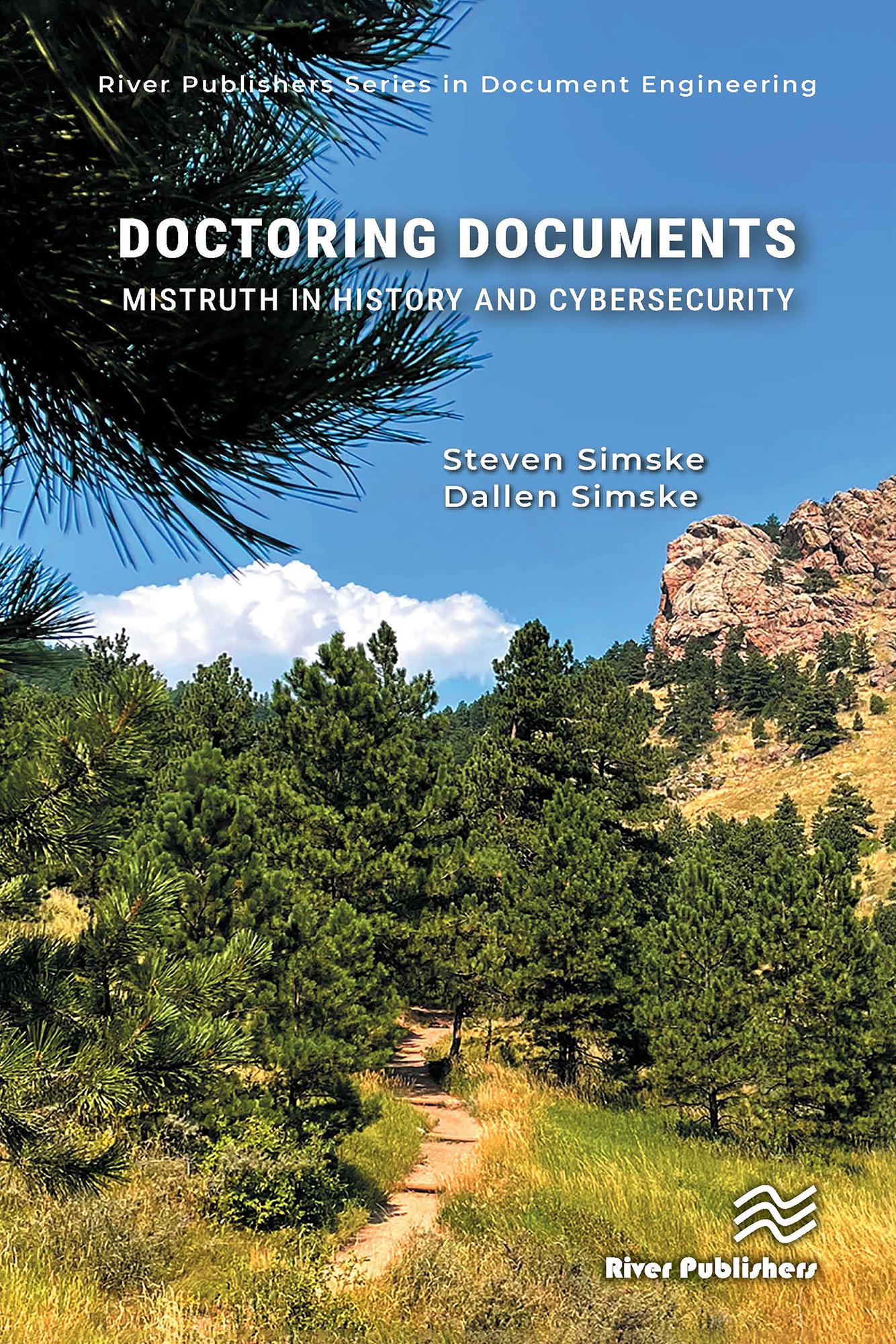
This book explores the primary methods, presented as a set of thirteen patterns, used to insert mistruth in historical narratives. These patterns culminate in the broadest of patterns, versioning and propaganda, which are used to show that mistruth is unavoidable in any historical narrative. This also supports the argument that a primary task of the historian is to provide their own contextual considerations sufficiently to help their readers create their own version. The value of a deep, mistruth-aware analysis of history is thus shown to be crucial for understanding how to protect data of all types in today’s electronic society.
In the Internet age, the history, literature, culture, and training of humans has increasingly moved on-line. While this makes traditionally difficult-to-access content available (in theory) to all, it also exposes the truth associated with these hallmarks of civilization to attack by those who wish to replace it with their own version of history, literature, culture, and learning.
Each chapter includes a brief “cyber salon” applying the historical principles to the field of cybersecurity, which is of critical importance to preserving truth in an on-line world.
Paga fácilmente con tarjeta, Klarna, Apple Pay o Google Pay. ¿No estás contento? Siempre tienes 14 días de garantía de devolución. Lee más en nuestros términos. Si tienes preguntas, escríbenos a hello@memmo.org.
Memmo hace que estudiar sea más fácil, estés donde estés. Aquí tienes tus libros de texto y herramientas de estudio inteligentes en un solo lugar: resúmenes, quizzes, podcasts y flashcards. Y también a Ted, tu compañero de estudio que responde a todo lo que te preguntes. Más de 50 000 estudiantes ya estudian aquí. Está hecho para que aprendas más rápido y te estreses menos.