
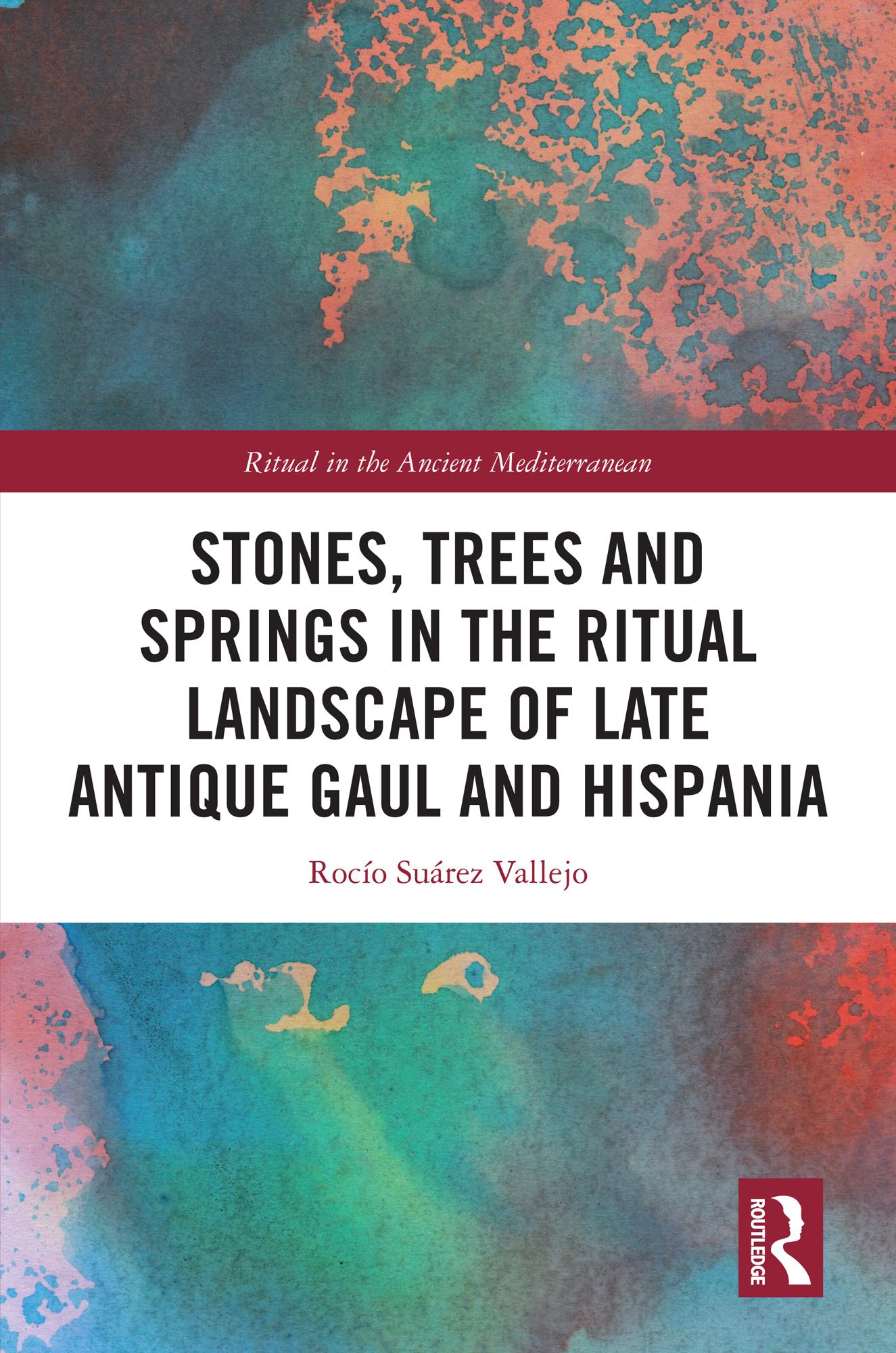
This book explores how late antique condemnations of rituals at stones, trees and springs reveal deliberate ecclesiastical strategies designed to control devotion, redefine sacred landscapes and consolidate episcopal control across the rural territories of post-Roman Gaul and Hispania.
By analysing sermons, conciliar canons, penitentials, hagiography and civil legislation, the book shows how accusations of idolatry in natural spaces functioned as rhetorical tools to regulate ritual plurality and impose orthodoxy in Gaul and Hispania in the 6th to 8th centuries. Engaging with ongoing historiographical debates on the persistence of non-Christian practices in rural areas during Late Antiquity, it challenges the conventional view that such rituals were merely residual traces of pre-Roman or Roman belief systems. Combining historical, textual and anthropological approaches, it reframes so-called ‘rural paganism’ as a discursive construction and proposes novel insights into the intersection of ritual practices, ecclesiastical authority and the role of natural features in the construction of religious landscapes.
Intended for scholars and students of religion in Late Antiquity and the early Middle Ages and of the history of early Christianity, this book also appeals to readers interested in cultural landscapes and the transformation of religious practices in the post-Roman West.
Paga fácilmente con tarjeta, Klarna, Apple Pay o Google Pay. ¿No estás contento? Siempre tienes 14 días de garantía de devolución. Lee más en nuestros términos. Si tienes preguntas, escríbenos a hello@memmo.org.
Memmo hace que estudiar sea más fácil, estés donde estés. Aquí tienes tus libros de texto y herramientas de estudio inteligentes en un solo lugar: resúmenes, quizzes, podcasts y flashcards. Y también a Ted, tu compañero de estudio que responde a todo lo que te preguntes. Más de 50 000 estudiantes ya estudian aquí. Está hecho para que aprendas más rápido y te estreses menos.