
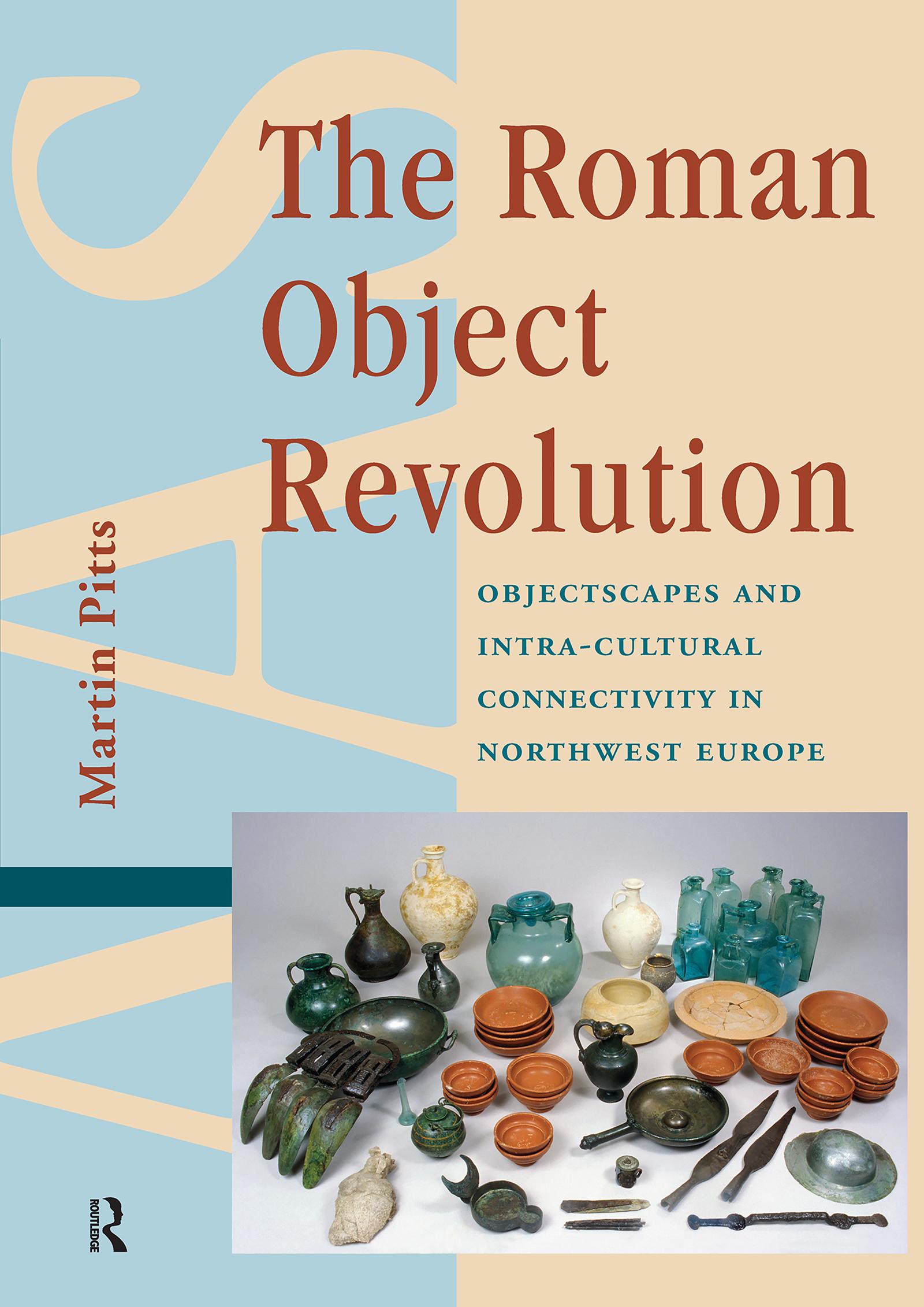
Archaeologists working in northwest Europe have long remarked on the sheer quantity and standardisation of objects unearthed from the Roman period, especially compared with earlier eras. What was the historical significance of this boom in standardised objects? With a wide and ever-changing spectrum of innovative objects and styles to choose from, to what extent did the choices made by people in the past really matter? To answer these questions, this book sheds new light on the make-up of late Iron Age and early Roman ‘objectscapes’, through an examination of the circulation and selections of thousands of standardised pots, brooches, and other objects, with emphasis on funerary repertoires, c. 100 bc-ad 100. Breaking with the national frameworks that inform artefact research in much ‘provincial’ Roman archaeology, the book tests the idea that marked increases in the movement of people and objects fostered pan-regional culture(s) and transformed societies. Using a rich database of cemeteries and settlements spanning a swathe of northwest Europe, including southern Britannia, Gallia Belgica, and Germania Inferior, the study extensively applies multivariate statistics (such as Correspondence Analysis) to examine the roles of objects in an ever-changing and richly complex cultural milieu.
Paga fácilmente con tarjeta, Klarna, Apple Pay o Google Pay. ¿No estás contento? Siempre tienes 14 días de garantía de devolución. Lee más en nuestros términos. Si tienes preguntas, escríbenos a hello@memmo.org.
Memmo hace que estudiar sea más fácil, estés donde estés. Aquí tienes tus libros de texto y herramientas de estudio inteligentes en un solo lugar: resúmenes, quizzes, podcasts y flashcards. Y también a Ted, tu compañero de estudio que responde a todo lo que te preguntes. Más de 50 000 estudiantes ya estudian aquí. Está hecho para que aprendas más rápido y te estreses menos.
También te podría gustar
Comprar el libro0