
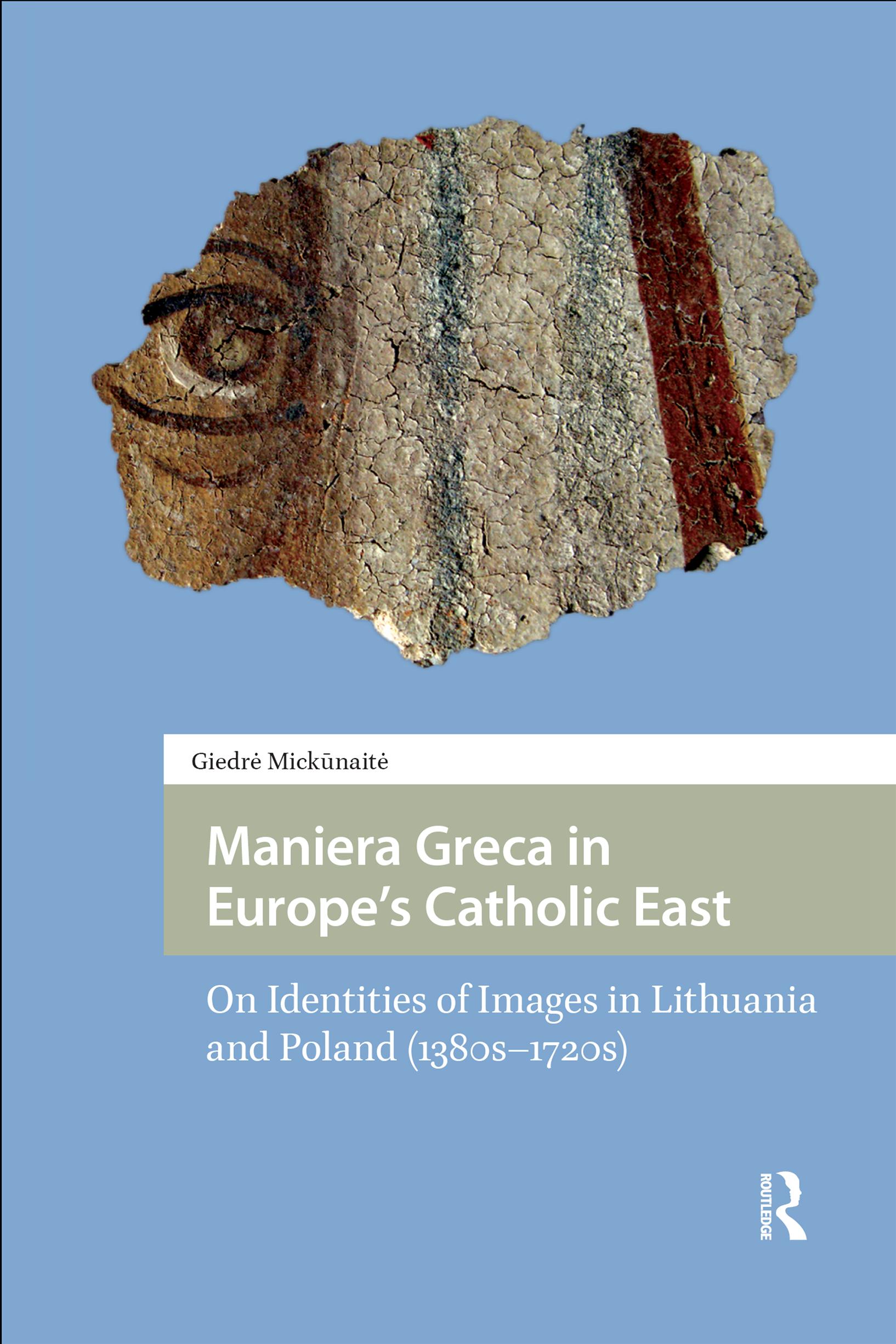
How and why does vernacular art become foreign? What does ‘Greek manner’ mean in regions far beyond the Mediterranean? What stories do images need? How do narratives shape pictures? The study addresses these questions in Byzantine paintings from the former Grand Duchy of Lithuania, contextualized with evidence from Poland, Serbia, Russia, and Italy. The research follows developments in artistic practices and the reception of these images, as well as distinguishing between the Greek manner – based on visual qualities – and the style favoured by the devout, sustained by cults and altered through stories. Following the reception of Byzantine and pseudo-Byzantine art in Lithuania and Poland from the late fourteenth through the early eighteenth centuries, Maniera Greca in Europe’s Catholic Easit argues that tradition is repetitive order achieved through reduction and oblivion, and concludes that the sole persistent understanding of the Greek image has been stereotyped as the icon of the Mother of God.
Paga fácilmente con tarjeta, Klarna, Apple Pay o Google Pay. ¿No estás contento? Siempre tienes 14 días de garantía de devolución. Lee más en nuestros términos. Si tienes preguntas, escríbenos a hello@memmo.org.
Memmo hace que estudiar sea más fácil, estés donde estés. Aquí tienes tus libros de texto y herramientas de estudio inteligentes en un solo lugar: resúmenes, quizzes, podcasts y flashcards. Y también a Ted, tu compañero de estudio que responde a todo lo que te preguntes. Más de 50 000 estudiantes ya estudian aquí. Está hecho para que aprendas más rápido y te estreses menos.