
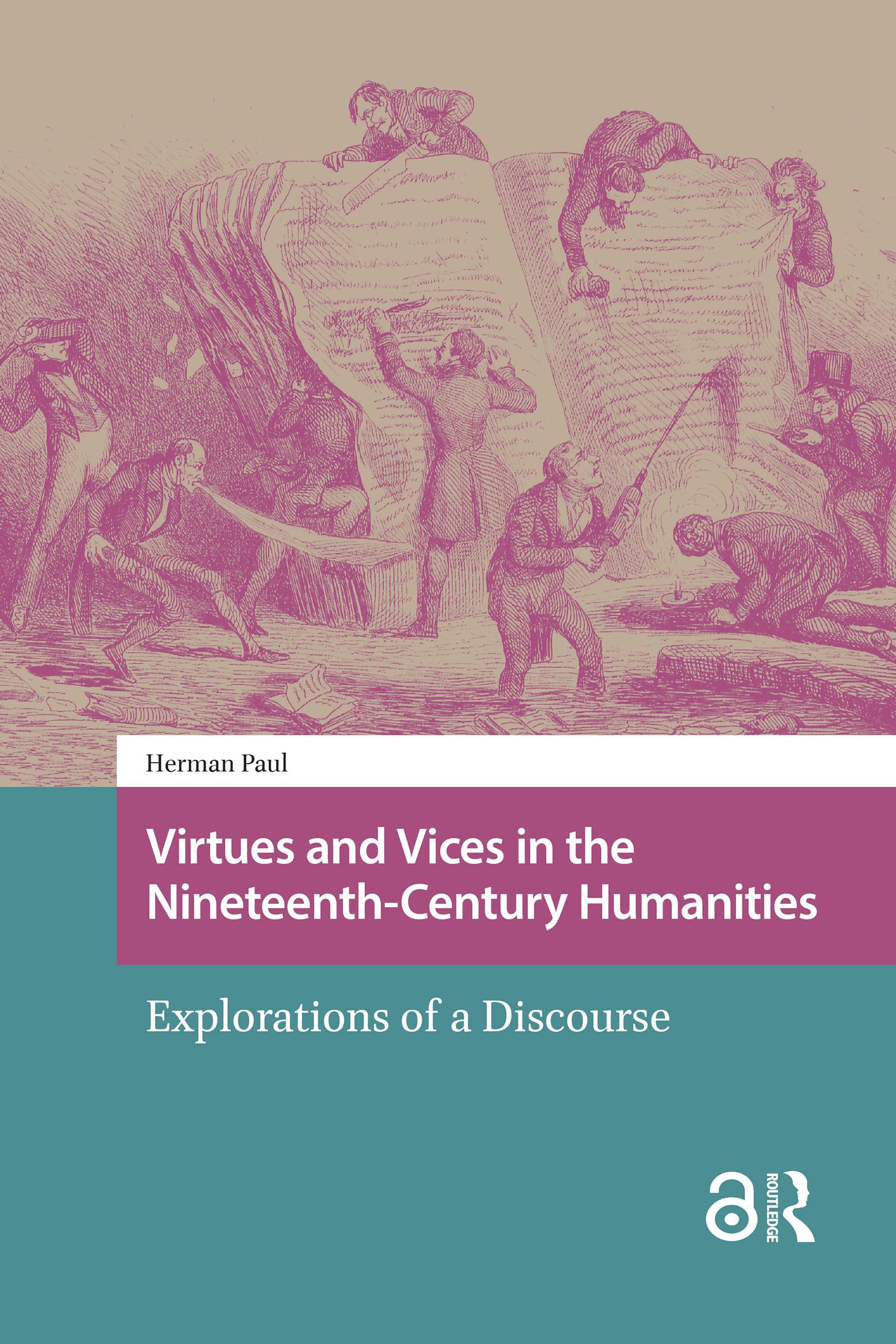
What do scholars do when they talk about virtues (impartiality, accuracy) or vices (dogmatism, prejudice)? Against the common view that such high-minded talk is largely irrelevant to actual scholarly practice, this volume proposes to treat it as a practice in its own right. Drawing on case studies from the nineteenth-century humanities (with occasional forays into physics, chemistry, and medicine), Paul shows that notions of virtue and vice were an evaluative discourse used across the academic spectrum. Paul argues that this evaluative idiom is best studied from a rhetorical point of view, with due attention to repertoires on which scholars drew, explicit or implicit appeals to authority, multi-layered meanings of virtue and vice terms, different uses to which these concepts were put, and societal contexts that lent plausibility to scholars' invocations of virtue and vice. Based on more than a decade of research, this volume will be a key reference for scholars interested in virtues, vices, and the history of the humanities.
Paga fácilmente con tarjeta, Klarna, Apple Pay o Google Pay. ¿No estás contento? Siempre tienes 14 días de garantía de devolución. Lee más en nuestros términos. Si tienes preguntas, escríbenos a hello@memmo.org.
Memmo hace que estudiar sea más fácil, estés donde estés. Aquí tienes tus libros de texto y herramientas de estudio inteligentes en un solo lugar: resúmenes, quizzes, podcasts y flashcards. Y también a Ted, tu compañero de estudio que responde a todo lo que te preguntes. Más de 50 000 estudiantes ya estudian aquí. Está hecho para que aprendas más rápido y te estreses menos.
También te podría gustar
Comprar el libro0