
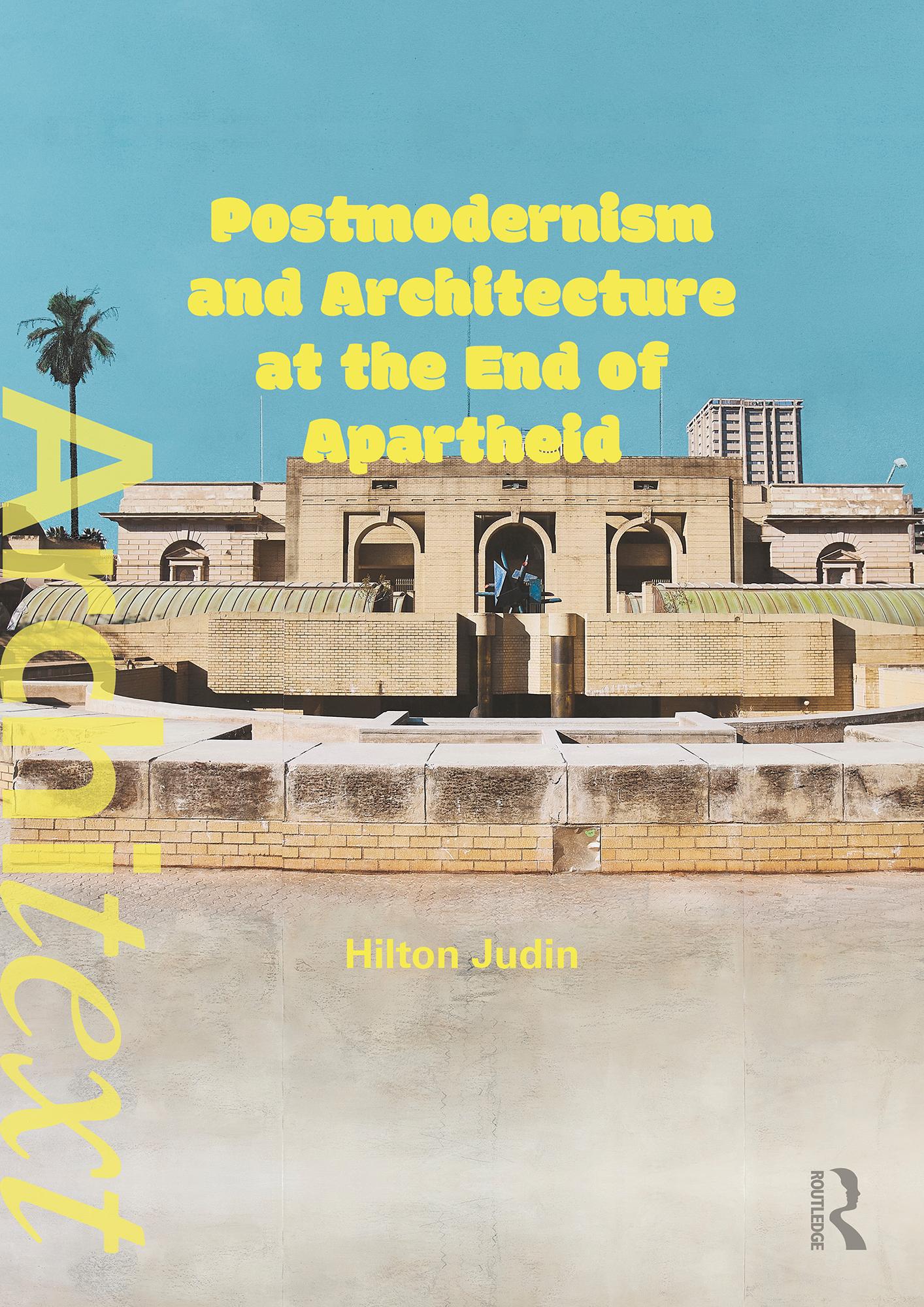
Set against a social and political urban landscape of segregation and forced removals, Postmodernism and Architecture at the End of Apartheid unpacks postmodernism in the 1970s and 1980s as it unfolds in South Africa during the final brutal decade of apartheid. Architecture and apartheid are central subjects of the book – the ways they came to interact simultaneously to both buttress and undermine a country rapidly disintegrating. With battles waged in defence of white minority rule, architects’ turn to postmodernism reflected their disintegrating consciences and commitments in operating in uncertain times.
They shared with architects globally a postmodernism steeped in anxiety and despondency, summoning forth classical forms and colonial symbols detached from their surroundings. For some of these architects having studied abroad at the University of Pennsylvania, the route to postmodernism was through their mentor Louis Kahn’s bid to begin architecture anew in transforming ancient ruins as a modern concrete and brick order. For others, influenced by compatriot Denise Scott Brown who had moved to the United States, it was learning by way of her "African view of Las Vegas."
Postmodernism and Architecture at the End of Apartheid expands on contemporary discourse in postmodernism and architectural theory, public culture, and urban spatial politics. It examines critical voices of the period – Robert Venturi, Paolo Portoghesi, Colin Rowe, Manfredo Tafuri, Fredric Jameson, and Kenneth Frampton – as well as questions of resistance in different forms and mediums, from the literature of Nadine Gordimer and J.M. Coetzee to grassroots struggle and community participation. Connections between postmodernism and apartheid are uncovered along with the contributions brought by architects in South Africa to a global postmodernism of newly transformed landscapes of neon strips, corporate temples, and white suburban sprawl amidst townships and growing informal settlements.
Paga fácilmente con tarjeta, Klarna, Apple Pay o Google Pay. ¿No estás contento? Siempre tienes 14 días de garantía de devolución. Lee más en nuestros términos. Si tienes preguntas, escríbenos a hello@memmo.org.
Memmo hace que estudiar sea más fácil, estés donde estés. Aquí tienes tus libros de texto y herramientas de estudio inteligentes en un solo lugar: resúmenes, quizzes, podcasts y flashcards. Y también a Ted, tu compañero de estudio que responde a todo lo que te preguntes. Más de 50 000 estudiantes ya estudian aquí. Está hecho para que aprendas más rápido y te estreses menos.