
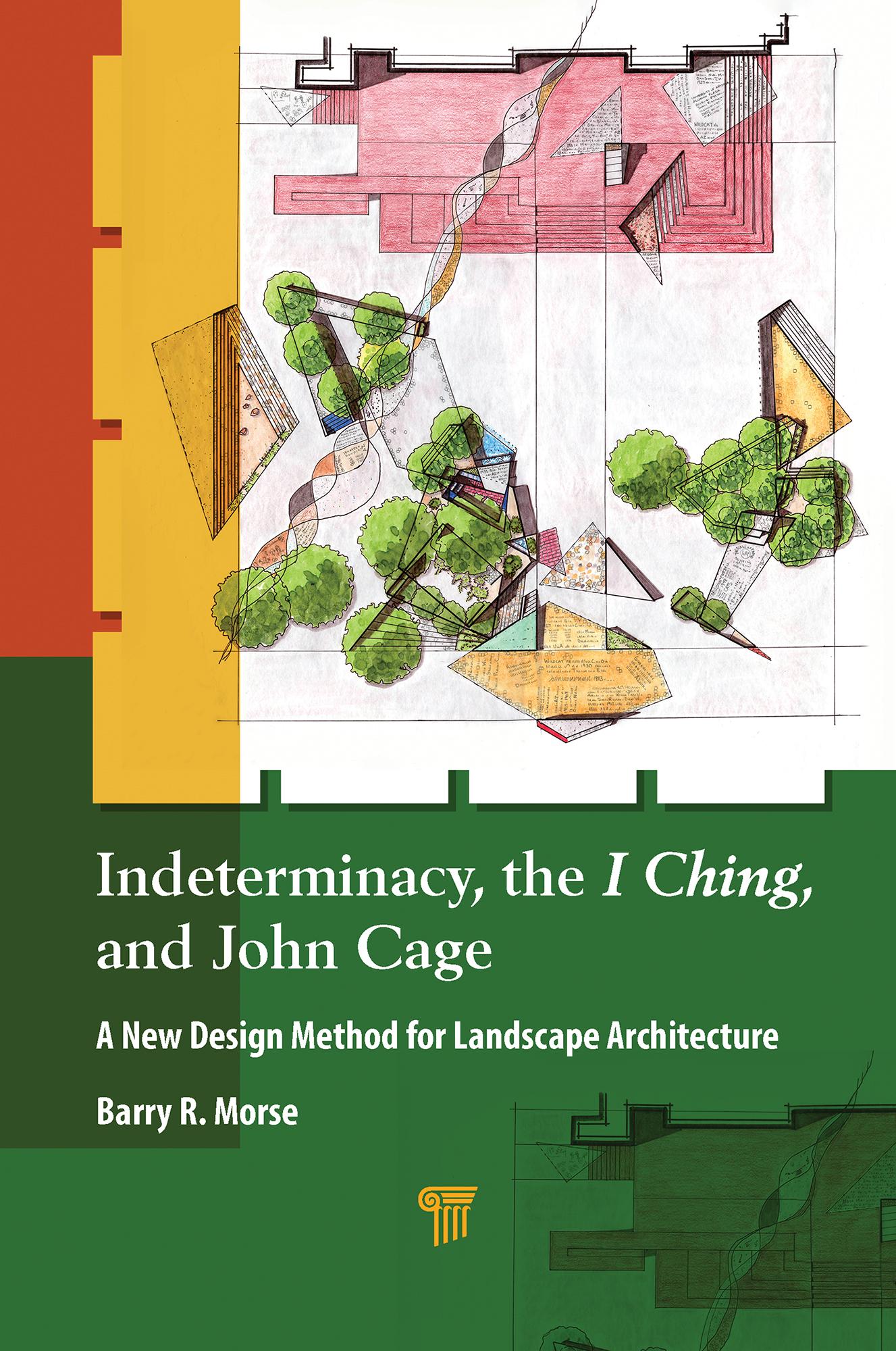
The creative use of indeterminacy, that is, “chance,” is an often-overlooked design opportunity despite the universality of chance in art, nature, science, and life. How can “chance,” a seemingly capricious phenomenon, be made to work for someone? One controlled use of chance is through the Chinese I Ching “chance operations” method of composer and artist John Cage (1912–1992). This book addresses the questions of how one might approach using this method in landscape architectural design, what the outcome of such an indeterminate design would be, and whether or not it could lead to a viable constructed landscape.
In addition, this book answers the question: What is the relationship between the I Ching, John Cage, and the constructed landscape anyway? The final product of the exploration of this method is a new hypothetical redesign of an existing plaza using Cage’s techniques and a comparative evaluation of the new indeterminate concept and the two pre-existing designs, using the original program objectives as a guide against which the three designs can be judged for effectiveness.
Paga fácilmente con tarjeta, Klarna, Apple Pay o Google Pay. ¿No estás contento? Siempre tienes 14 días de garantía de devolución. Lee más en nuestros términos. Si tienes preguntas, escríbenos a hello@memmo.org.
Memmo hace que estudiar sea más fácil, estés donde estés. Aquí tienes tus libros de texto y herramientas de estudio inteligentes en un solo lugar: resúmenes, quizzes, podcasts y flashcards. Y también a Ted, tu compañero de estudio que responde a todo lo que te preguntes. Más de 50 000 estudiantes ya estudian aquí. Está hecho para que aprendas más rápido y te estreses menos.