
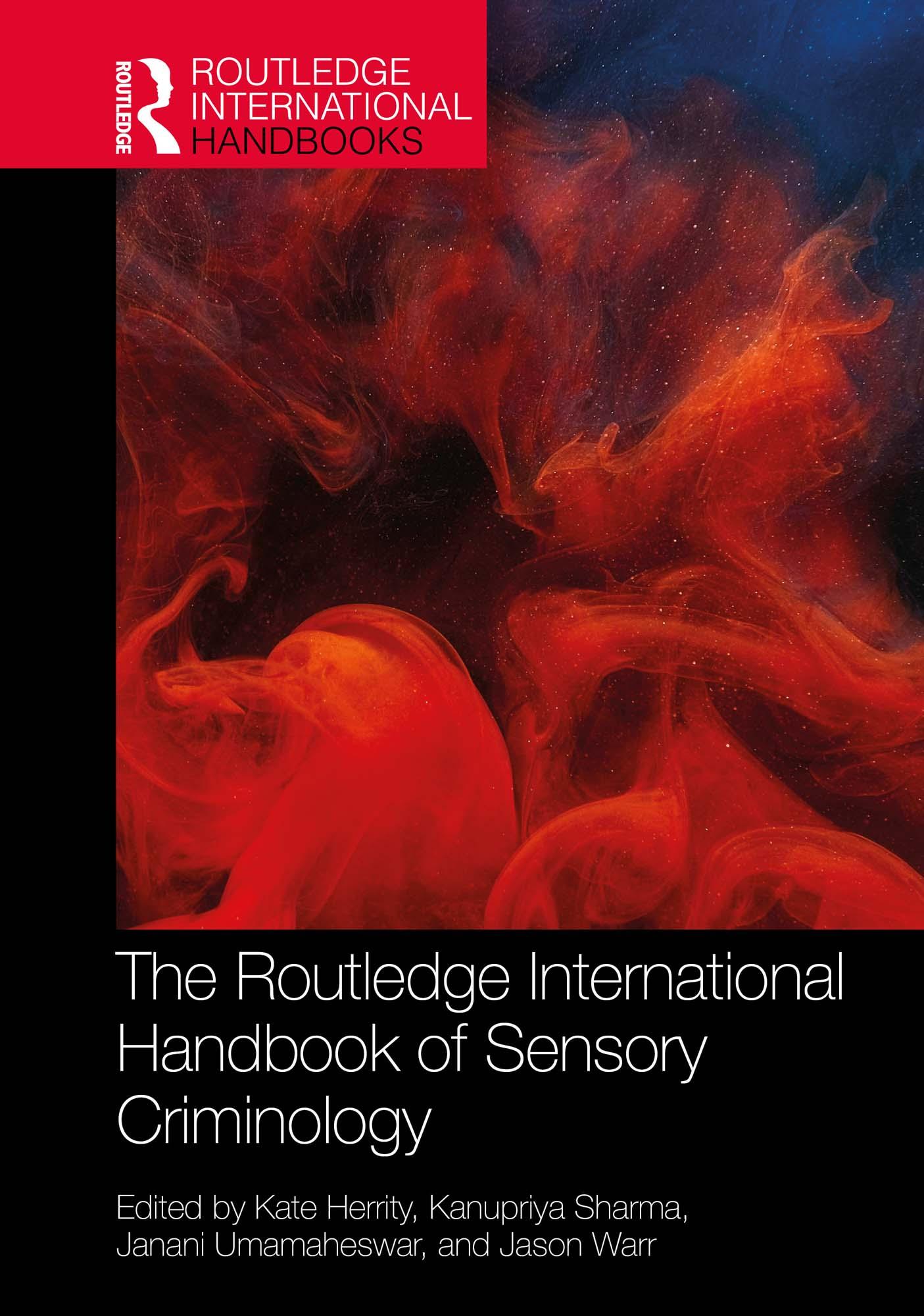
The Routledge International Handbook of Sensory Criminology reimagines what criminology can become when we take the senses seriously. Centring the sensory as fundamental to the experience of harm, justice, and resistance, this groundbreaking volume brings together 29 chapters from scholars across disciplines, career stages, and geographies. Together, they explore how power is heard, felt, inhaled, touched, and moved through, from courtrooms and prisons to museums, marine ecologies, colonial archives, transitional spaces, high‑crime zones, and urban streets.
The Handbook opens up new pathways for criminological inquiry, offering rich, situated analysis of how the sensory shapes and is shaped by structures of criminalisation, exclusion, and survival. Contributors engage themes including punishment, victimhood, environmental harm, archival memory, decolonial justice, and innovative methodologies. Rather than offering a prescriptive vision, the volume offers a provocation: to expand the criminological imagination and embrace new ways of knowing, sensing, and intervening.
This Handbook is an essential reading for students, scholars, and early career researchers in criminology, sociology, law, anthropology, geography, gender studies, politics, and cultural studies, as well as those interested in decolonial approaches, sensory methods, and interdisciplinary justice research.
Paga fácilmente con tarjeta, Klarna, Apple Pay o Google Pay. ¿No estás contento? Siempre tienes 14 días de garantía de devolución. Lee más en nuestros términos. Si tienes preguntas, escríbenos a hello@memmo.org.
Memmo hace que estudiar sea más fácil, estés donde estés. Aquí tienes tus libros de texto y herramientas de estudio inteligentes en un solo lugar: resúmenes, quizzes, podcasts y flashcards. Y también a Ted, tu compañero de estudio que responde a todo lo que te preguntes. Más de 50 000 estudiantes ya estudian aquí. Está hecho para que aprendas más rápido y te estreses menos.