
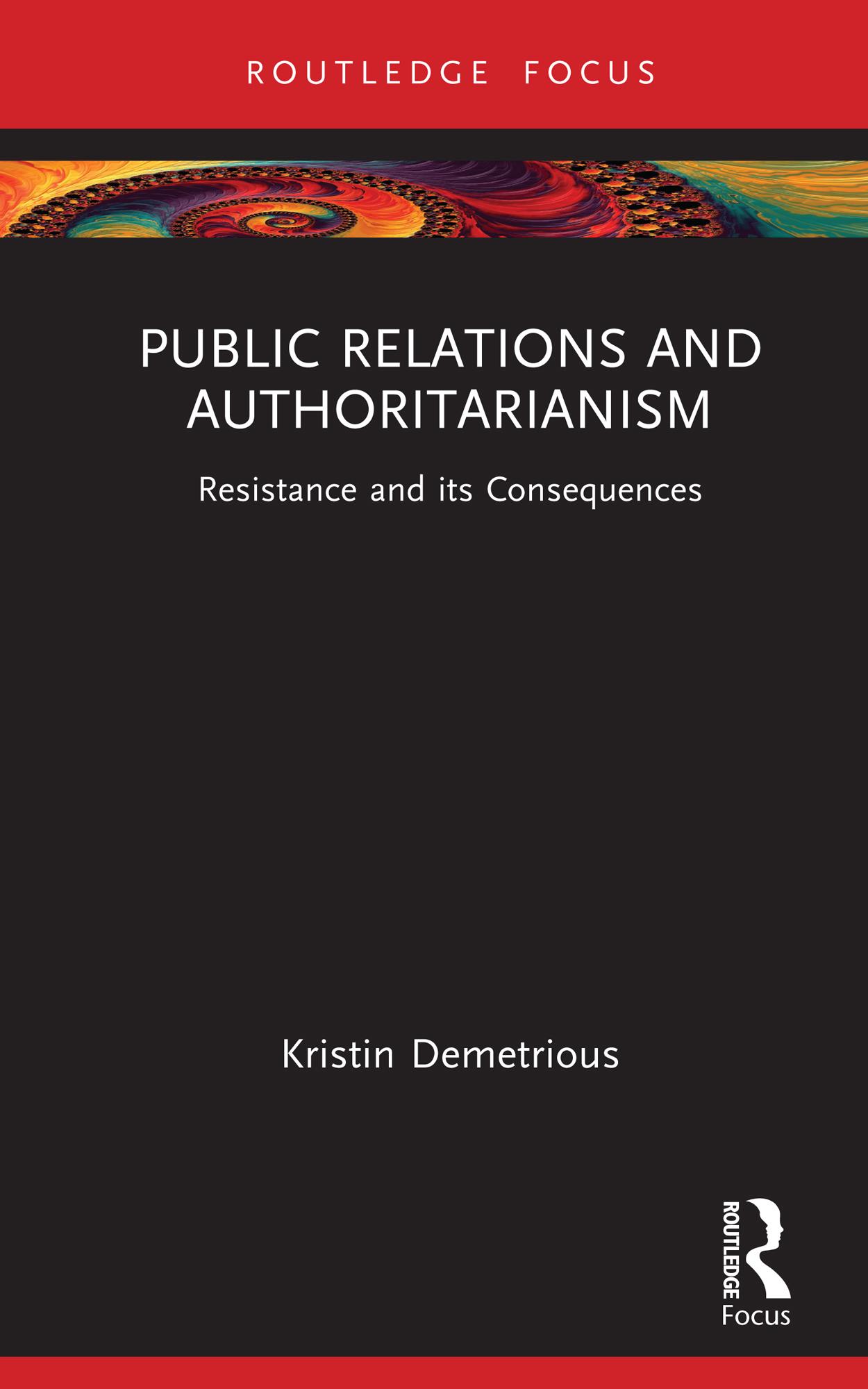
This book traces a resistance to public relations (PR) from the postwar period that sought to expose it as a dangerous, but little understood political dynamic. Critically exploring authoritarianism as a key concept, it argues “PR”’s market-friendly but oppressive and concealed language practices have systematically led to many of the divisive and polarised communication styles that we see today, and has had wider damaging effects for society.
Rich with illustrative examples, the chapters set out the limits of "PR" in relation to "truth" and show how literature and websites opened an important but under-recognised space in which neoliberal dogma was challenged. Offering a major new theory, it introduces a radical way to think about public relations and its relationship to democracy and society, and to understand its legacies like climate change denial.
This accessible book renews critique and is a valuable reference for undergraduate and postgraduate students studying and researching media and communication, politics, sociology, cultural sociology, cultural studies and history, and for those working in the communication industries.
Paga fácilmente con tarjeta, Klarna, Apple Pay o Google Pay. ¿No estás contento? Siempre tienes 14 días de garantía de devolución. Lee más en nuestros términos. Si tienes preguntas, escríbenos a hello@memmo.org.
Memmo hace que estudiar sea más fácil, estés donde estés. Aquí tienes tus libros de texto y herramientas de estudio inteligentes en un solo lugar: resúmenes, quizzes, podcasts y flashcards. Y también a Ted, tu compañero de estudio que responde a todo lo que te preguntes. Más de 50 000 estudiantes ya estudian aquí. Está hecho para que aprendas más rápido y te estreses menos.