
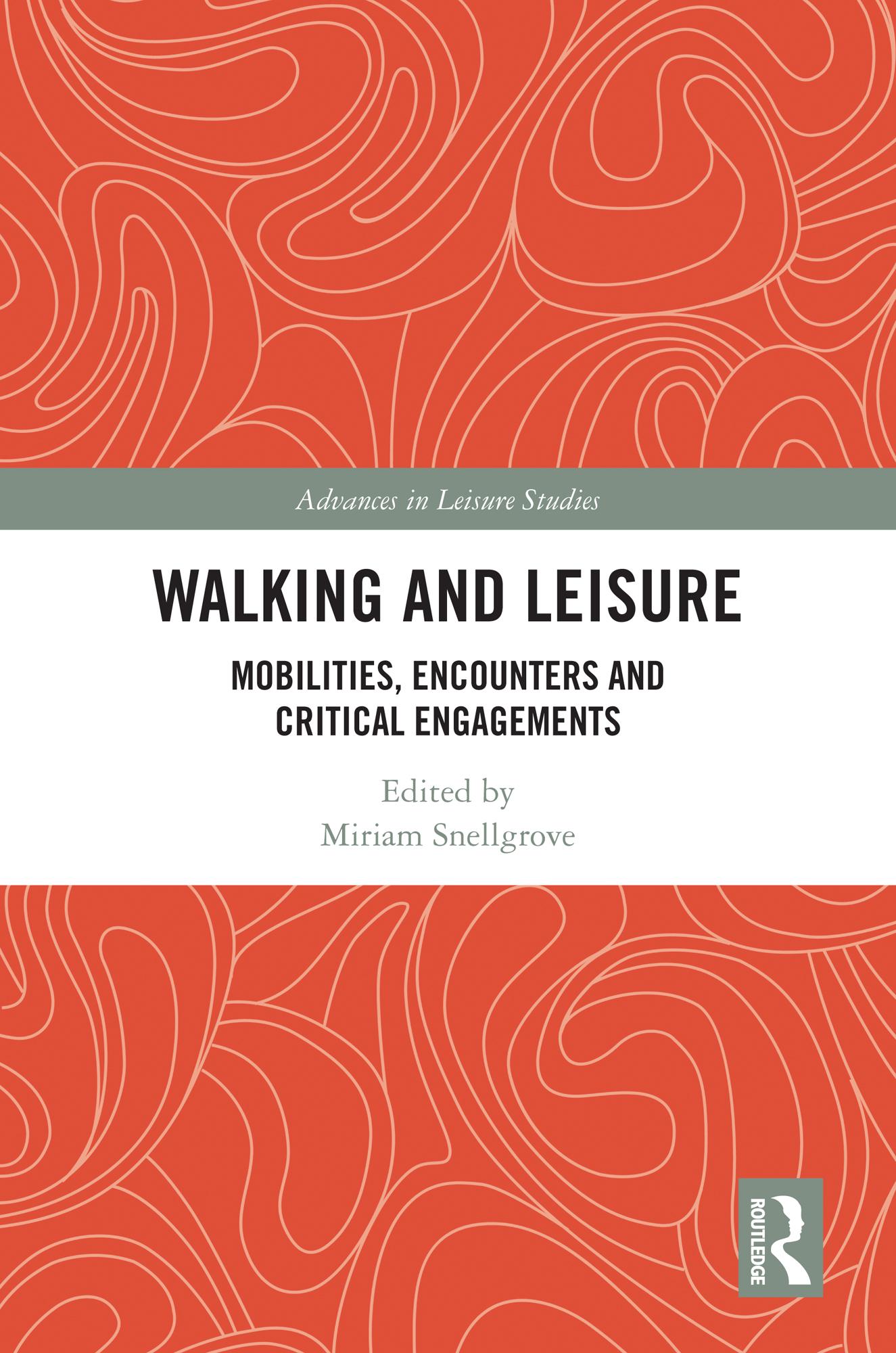
This book critically examines walking as a socially and politically situated leisure practice, exploring how movement through urban and rural spaces is shaped by broader structures of power and inequality.
While walking is often framed as a leisure activity with physical and mental health benefits, this book foregrounds its role as an embodied practice deeply influenced by intersecting factors such as class, race, gender, age and disability. Drawing on interdisciplinary theoretical perspectives and innovative methodological approaches, the chapters present empirically rich case studies from diverse global contexts—including the UK, Australia, Canada, Ireland, the Czech Republic, Austria, Hong Kong and Thailand. These studies range from pandemic walking and app-guided navigation to the experiences of mothers, disabled individuals, older adults, people with cancer, black women and those walking with animals. Together, they illuminate how walking practices negotiate space, place, identity and belonging, while also exposing spatial exclusions and embodied constraints.
Walking and Leisure offers a significant contribution to the sociology of leisure, human geography, cultural studies and critical disability studies. It will be of particular interest to scholars and students engaged in research on mobility, embodiment and the everyday politics of place and space.
Paga fácilmente con tarjeta, Klarna, Apple Pay o Google Pay. ¿No estás contento? Siempre tienes 14 días de garantía de devolución. Lee más en nuestros términos. Si tienes preguntas, escríbenos a hello@memmo.org.
Memmo hace que estudiar sea más fácil, estés donde estés. Aquí tienes tus libros de texto y herramientas de estudio inteligentes en un solo lugar: resúmenes, quizzes, podcasts y flashcards. Y también a Ted, tu compañero de estudio que responde a todo lo que te preguntes. Más de 50 000 estudiantes ya estudian aquí. Está hecho para que aprendas más rápido y te estreses menos.