
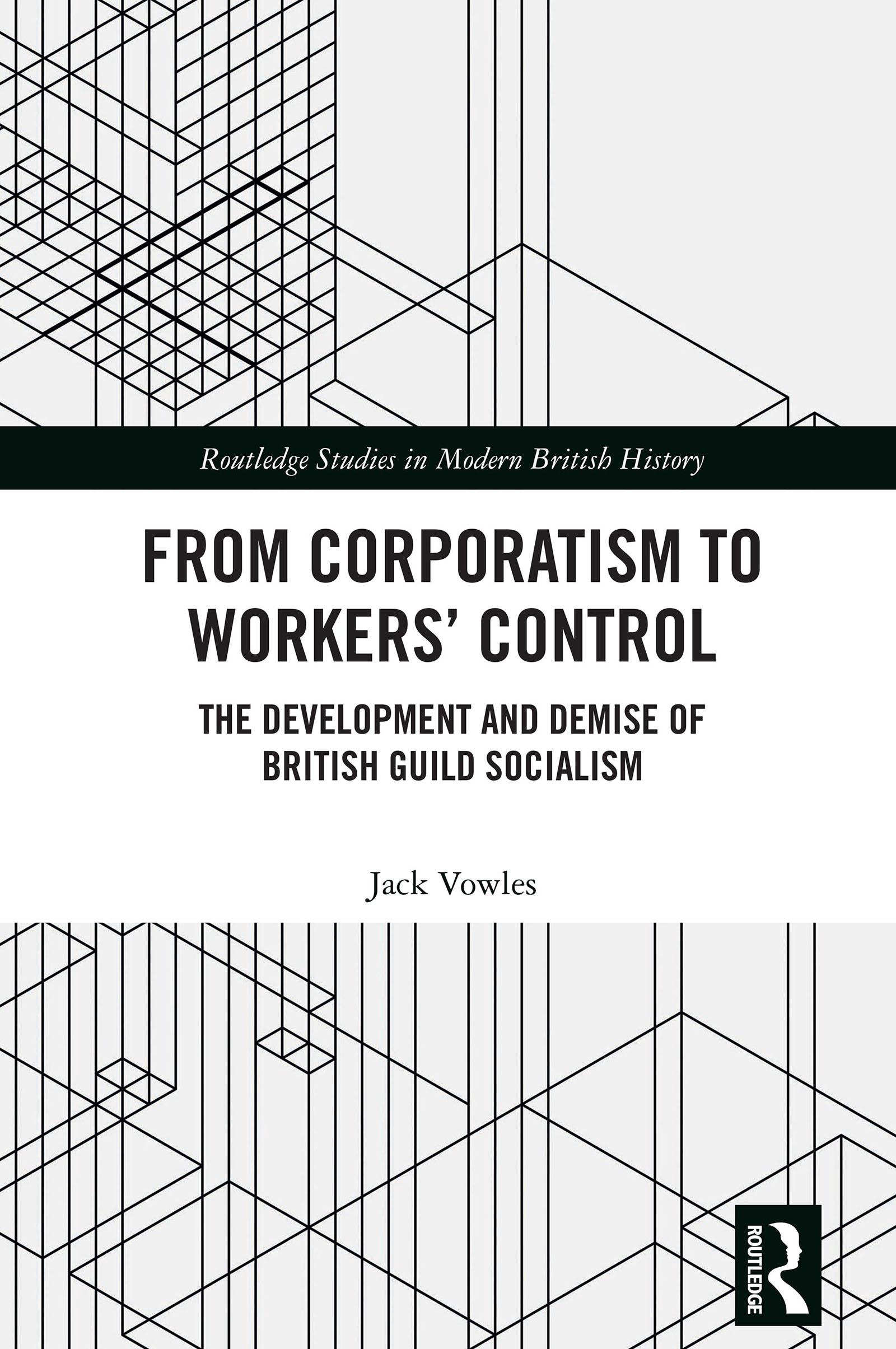
This book provides a history and analysis of how the British guild socialist movement was forged in the heat of labour unrest prior to World War I, the experience of the war and subsequent troubled years, including the impact of the Bolshevik Revolution.
Guild socialism proposed a model of participatory pluralism combining workers’ control of industry with local democracy and a federal coordinating ‘National Commune’. In its time, it generated not only considerable intellectual support and international attention but also internal contradictions and tensions. Its major theorist, G.D.H. Cole, aspired towards a society of direct functional community democracy, rejecting the ideas and practice of a state based on a mass electorate. Based on years of detailed research into the relevant newspapers, magazines and archives, the book shows how Cole developed a utopian social theory which still merits attention today, resonating with contemporary radical ideas and a deepening disillusion with representative democracy.
From Corporatism to Workers’ Control is intended for historians of British politics and intellectual history, political theorists and political philosophers more generally, and a wider audience of advocates and activists around the world interested in the principles and practices of associative pluralist democracy.
Paga fácilmente con tarjeta, Klarna, Apple Pay o Google Pay. ¿No estás contento? Siempre tienes 14 días de garantía de devolución. Lee más en nuestros términos. Si tienes preguntas, escríbenos a hello@memmo.org.
Memmo hace que estudiar sea más fácil, estés donde estés. Aquí tienes tus libros de texto y herramientas de estudio inteligentes en un solo lugar: resúmenes, quizzes, podcasts y flashcards. Y también a Ted, tu compañero de estudio que responde a todo lo que te preguntes. Más de 50 000 estudiantes ya estudian aquí. Está hecho para que aprendas más rápido y te estreses menos.