
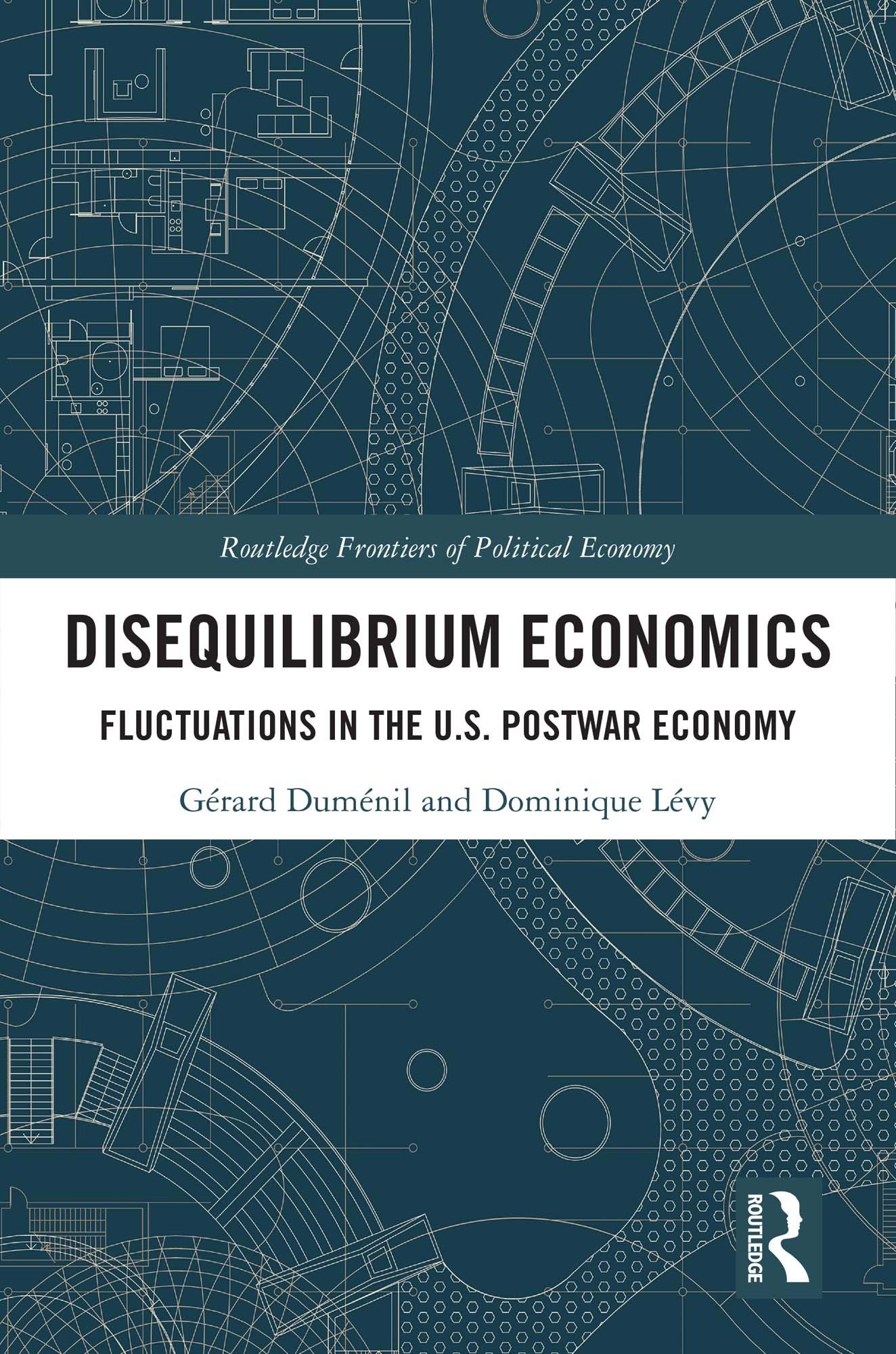
The ambition of this book is nothing less than the development of an alternative macroeconomic theory. There are important groundings, notably in Marxian, Keynesian, Schumpeterian, and Minskian approaches, but it does not adhere strictly to any particular train of thought.
The frontal treatment of "disequilibrium" is the key idiosyncratic feature. Disequilibrium is understood in the strict sense, with equilibria approached as outcomes of actual dynamic processes. The stability and instability of these dynamics are placed on equal footing. Credit mechanisms are a pivotal component of the funding of firms’ investment, brewing the destabilizing potential inherent in disequilibrium dynamics. Instability would be the general rule if procedures built in institutions and regulations did not see to it. Special attention is placed on the historical establishment of these mechanisms and their contemporary institutional settings such as the Basel Accords and unconventional macro policies, emphasizing their efficiency. The satisfaction of stability conditions remains, however, conditional, and their recurrent violation is the pivotal component of our analysis of business cycles.
The theory presented here is applied to the empirical study of the U.S. from World War II, but with deep roots in the 19th century, surrounded by the broader consideration of social relations: there is no a-historical or a-social macroeconomics.
This book, along with its sister volume, Instability Cycles, Distribution, and Inflation, is essential reading for all macroeconomists and economic theorists, especially those who are open to alternative approaches.
Paga fácilmente con tarjeta, Klarna, Apple Pay o Google Pay. ¿No estás contento? Siempre tienes 14 días de garantía de devolución. Lee más en nuestros términos. Si tienes preguntas, escríbenos a hello@memmo.org.
Memmo hace que estudiar sea más fácil, estés donde estés. Aquí tienes tus libros de texto y herramientas de estudio inteligentes en un solo lugar: resúmenes, quizzes, podcasts y flashcards. Y también a Ted, tu compañero de estudio que responde a todo lo que te preguntes. Más de 50 000 estudiantes ya estudian aquí. Está hecho para que aprendas más rápido y te estreses menos.