
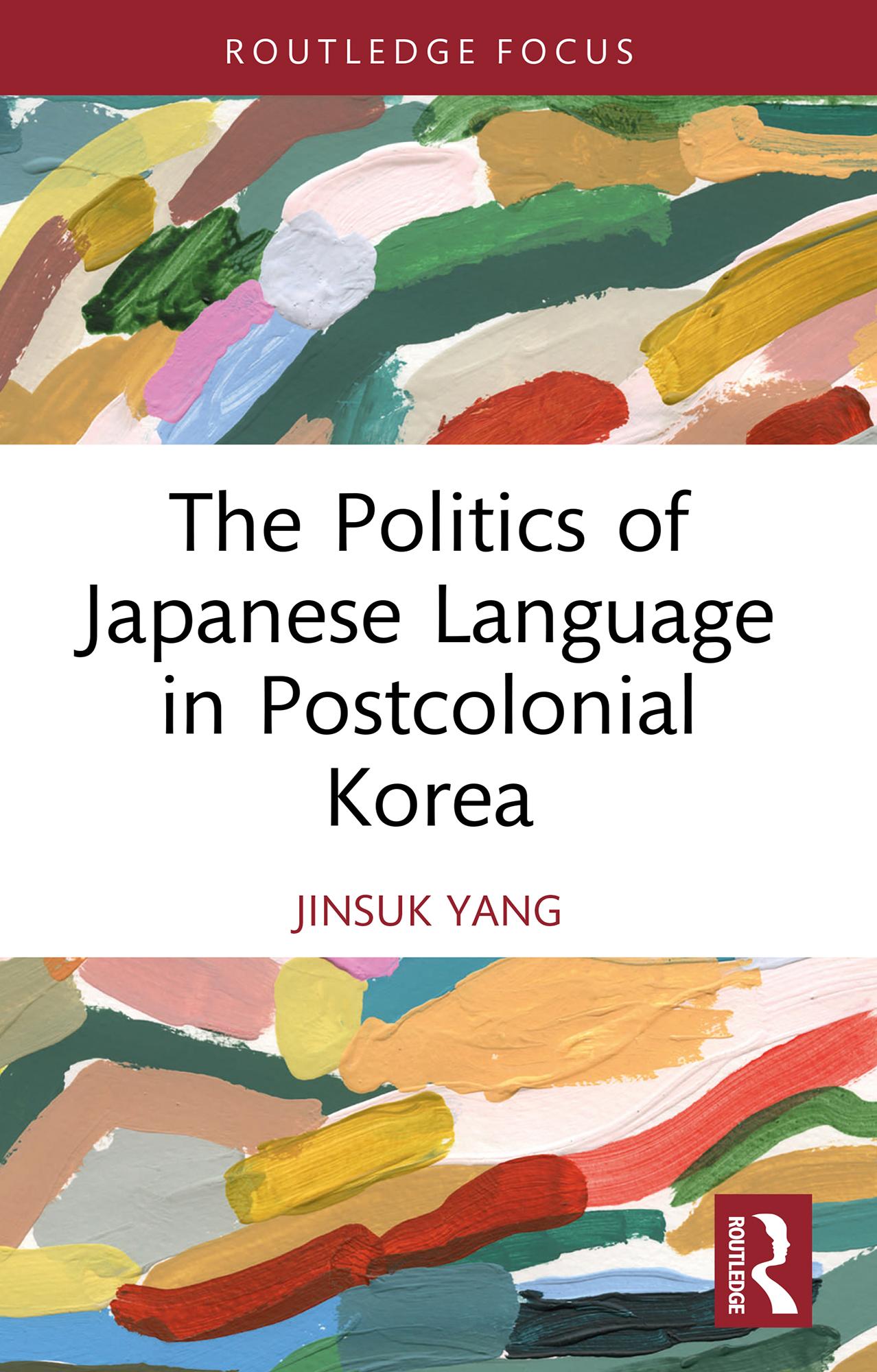
This book examines the politics of Japanese language learning in postcolonial Korea from 1945 through the 1970s, revealing the ways in which language functioned as a site of negotiations over identity, social mobility, and historical memory.
By tracing how Japanese continued to circulate in specific social fields, shaping and being shaped by gendered and classed subject positions, this book counters the linear narrative of national linguistic history that assumes the immediate and complete erasure of the Japanese language in the public sphere. Featuring analysis from contemporary articles from major Japanese and Korean newspapers it provides a comprehensive view of the discourses around Japanese language learning in postcolonial Korea. Through the application of a critical discourse analysis (CDA) as a primary methodological framework it highlights how meanings are constructed, whose perspectives are legitimized or silenced, and what kinds of social roles and hierarchies are reinforced or challenged.
Revealing how the Korean language became symbol to overcome its colonial history, reclaim the language-territory bond, and ultimately, transform Korea into a modern nation-state this will appeal to students and scholars of Korean history, culture and language
Paga fácilmente con tarjeta, Klarna, Apple Pay o Google Pay. ¿No estás contento? Siempre tienes 14 días de garantía de devolución. Lee más en nuestros términos. Si tienes preguntas, escríbenos a hello@memmo.org.
Memmo hace que estudiar sea más fácil, estés donde estés. Aquí tienes tus libros de texto y herramientas de estudio inteligentes en un solo lugar: resúmenes, quizzes, podcasts y flashcards. Y también a Ted, tu compañero de estudio que responde a todo lo que te preguntes. Más de 50 000 estudiantes ya estudian aquí. Está hecho para que aprendas más rápido y te estreses menos.