
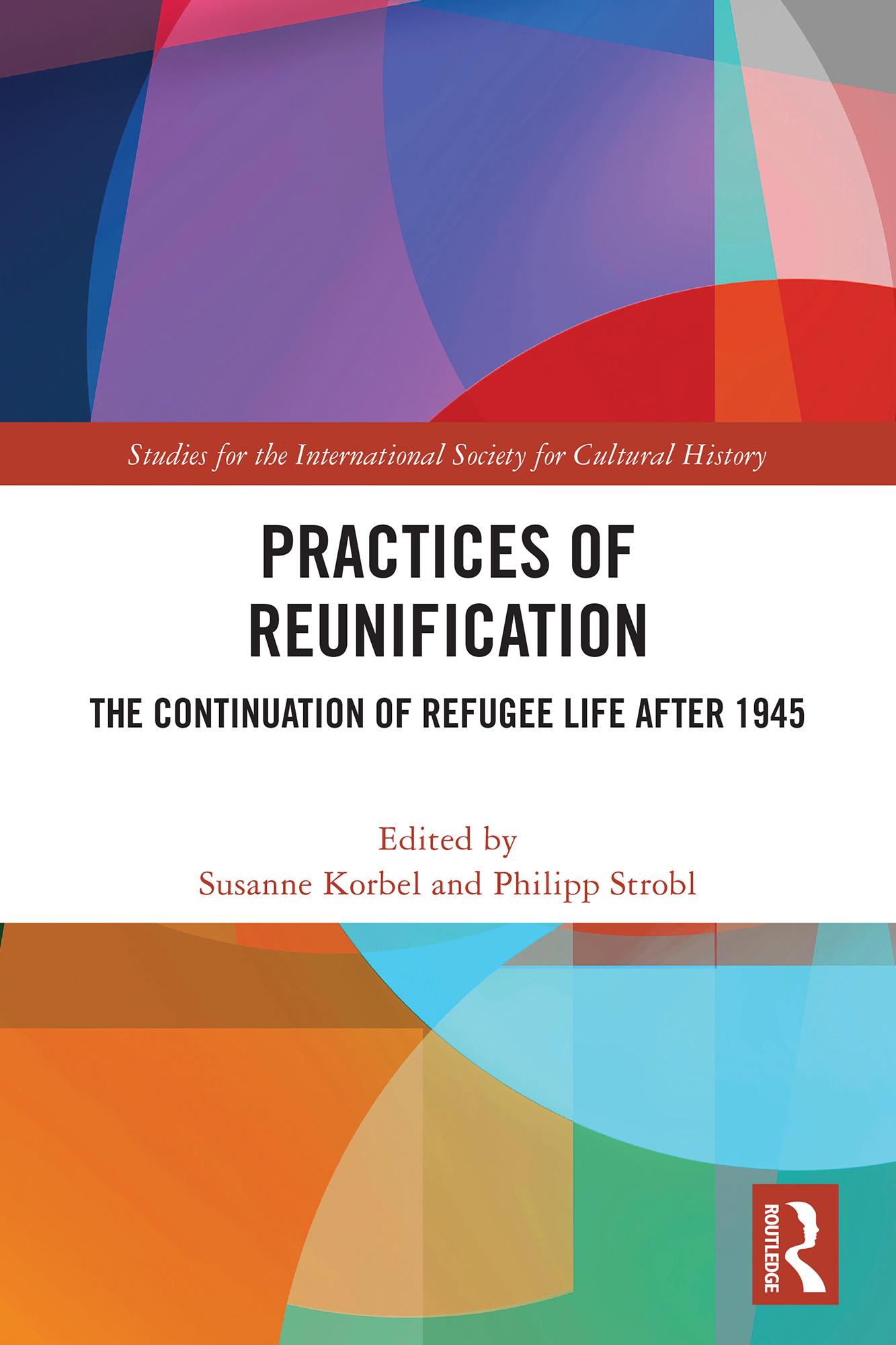
The volume explores the role of refugees and displaced persons (DPs) in Europe after 1945. It expands conventional narratives about post-National Socialist societies, which are characterized by victim myths, narratives of Trümmerfrauen (rubble women), and the reconstruction of supposedly homogeneous societies.
Using analyses informed by new approaches in cultural studies and digital humanities, the authors enhance studies of refugees and DPs’ ways of living and their interactions with their surrounding societies. Relying on microhistorical perspectives, the case studies focus on both post-National Socialist societies and exile communities and thus contribute to a better understanding of everyday life. The book locates itself at the intersection of Migration Studies, Gender Studies, Emotion Studies, and the History of Knowledge and focuses on the following key questions: How did family members reconnect with individuals liberated from concentration camps? How did they communicate about the choice of new places to live? How did exile communities reorganize themselves after the end of the war?
This volume explores diverse experiences in the post-1945 world that have been shaping not only the European societies but have also been influencing our present legal and societal understandings and interpretations on a global scale.
Paga fácilmente con tarjeta, Klarna, Apple Pay o Google Pay. ¿No estás contento? Siempre tienes 14 días de garantía de devolución. Lee más en nuestros términos. Si tienes preguntas, escríbenos a hello@memmo.org.
Memmo hace que estudiar sea más fácil, estés donde estés. Aquí tienes tus libros de texto y herramientas de estudio inteligentes en un solo lugar: resúmenes, quizzes, podcasts y flashcards. Y también a Ted, tu compañero de estudio que responde a todo lo que te preguntes. Más de 50 000 estudiantes ya estudian aquí. Está hecho para que aprendas más rápido y te estreses menos.