
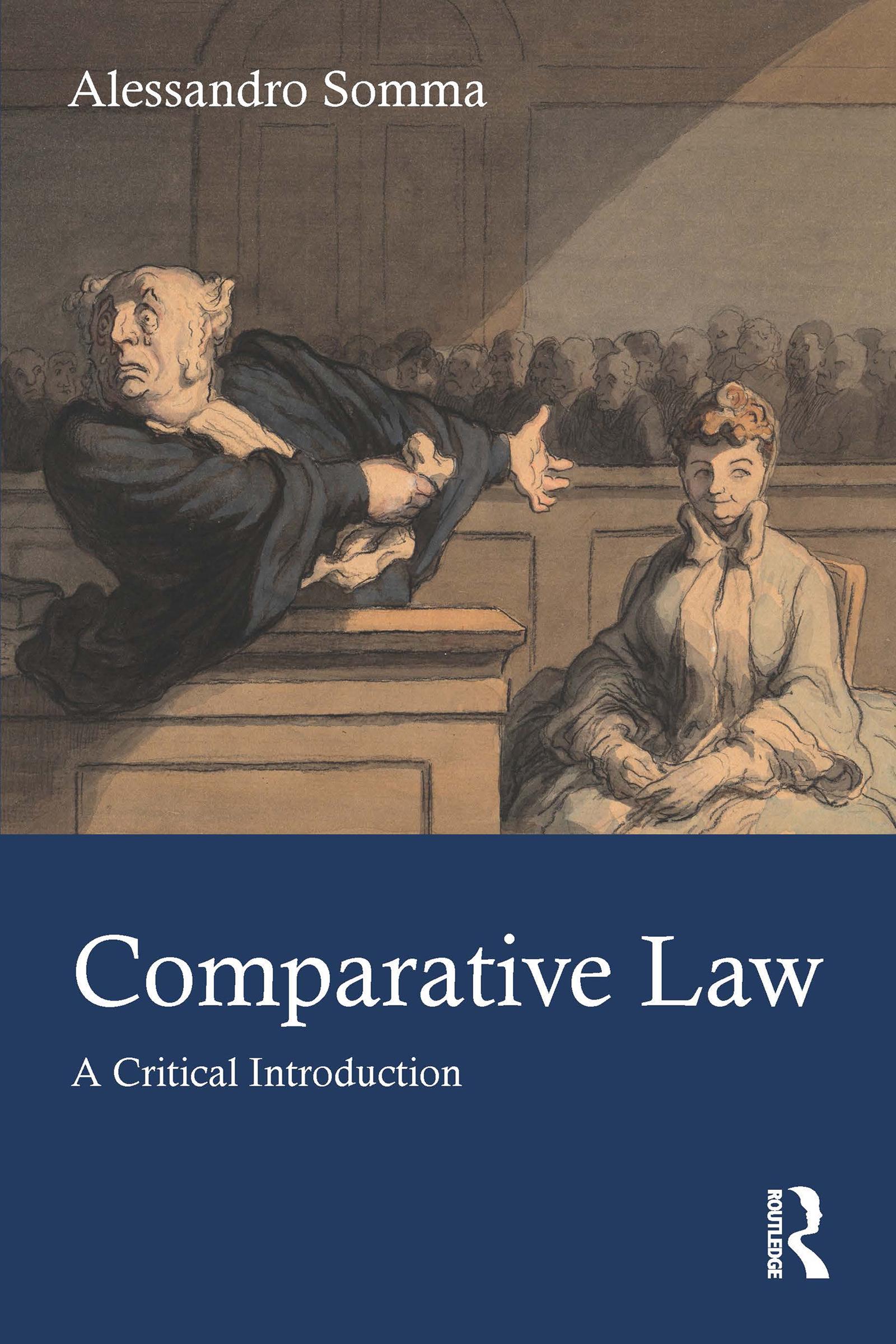
This advanced textbook offers an overview and critical treatment of comparative law, incorporating both traditional and modern approaches to the discipline and an up-to-date survey of the key methodological debates. The fundamental concepts of comparative law are examined through the lens of three main questions: what to compare, why compare, and how to compare.
The study of the objects of comparative analysis (what to compare) begins with a critique of legal positivism to address a plurality of legal concepts. The investigation of the aims of comparative law (why compare) considers the most widespread classifications of legal orders and the diverse approaches to the study of legal change. Finally, the methods of comparative law (how to compare) are analysed, taking into account their different functions. Adopting a contextualised, interdisciplinary approach to the subject with a focus on a range of different legal systems, the author brings in examples from politics and economics to the analysis, highlighting the importance of comparative law for the understanding of modern societies.
Comparative Law: A Critical Introduction will provide a thought-provoking read for advanced-level students and scholars of comparative law.
Paga fácilmente con tarjeta, Klarna, Apple Pay o Google Pay. ¿No estás contento? Siempre tienes 14 días de garantía de devolución. Lee más en nuestros términos. Si tienes preguntas, escríbenos a hello@memmo.org.
Memmo hace que estudiar sea más fácil, estés donde estés. Aquí tienes tus libros de texto y herramientas de estudio inteligentes en un solo lugar: resúmenes, quizzes, podcasts y flashcards. Y también a Ted, tu compañero de estudio que responde a todo lo que te preguntes. Más de 50 000 estudiantes ya estudian aquí. Está hecho para que aprendas más rápido y te estreses menos.