
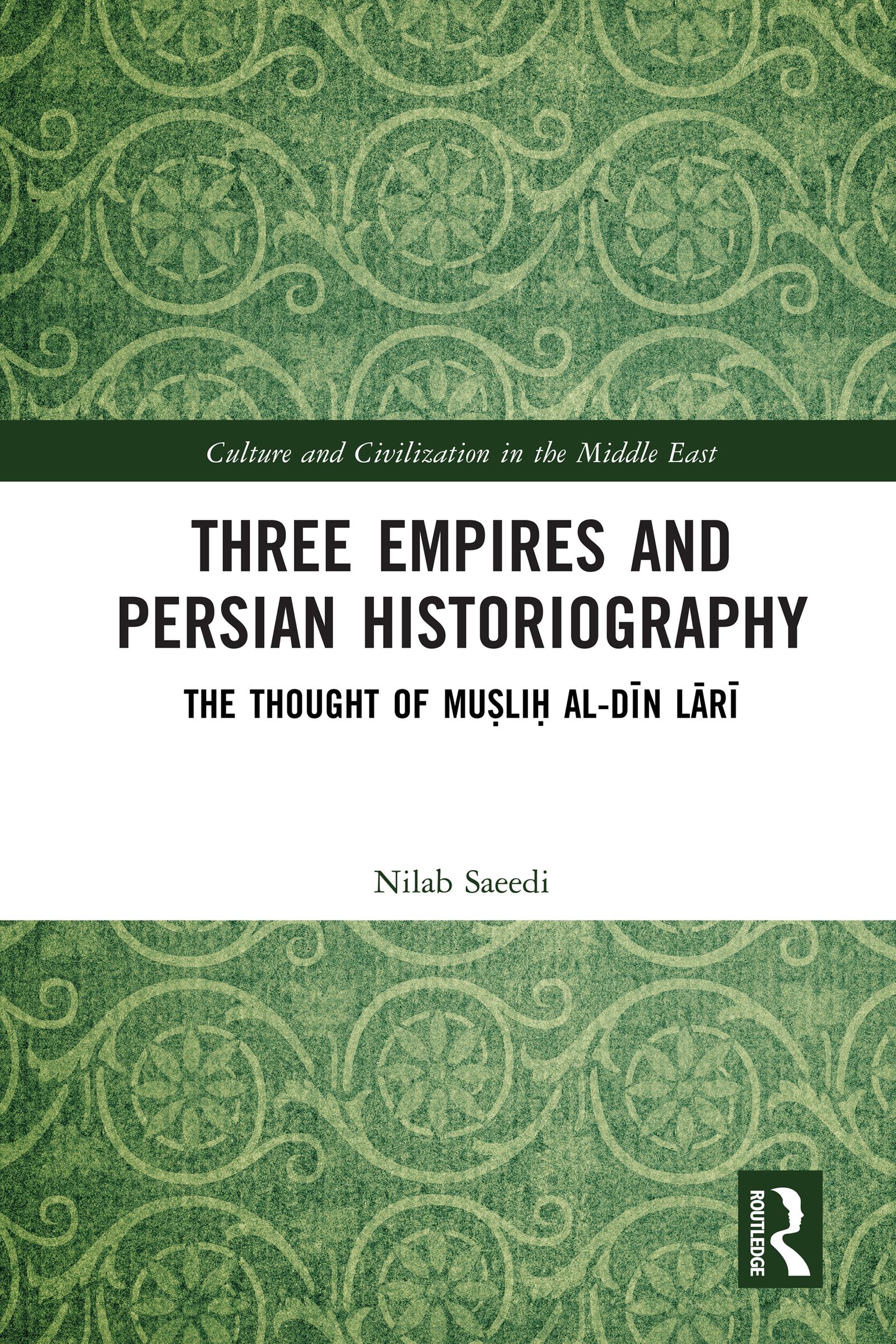
Three Empires and Persian Historiography: The Thought of Muṣliḥ al-dīn Lārī uncovers the underexplored historical vision of a sixteenth-century scholar whose work spanned the Safavid, Timurid, and Ottoman worlds.
Centering on Lārī’s universal chronicle [Mir’atu’l-Advār wa Mirḳātu’l-Aḫbār], The Mirror of Epochs and the Staircase of Historical Reports, this book explores how a figure in philosophy, theology, and the sciences used history to navigate shifting imperial landscapes. Written in Persian and completed upon Sultan Selīm II's accession to the throne, Lārī’s work offers a nuanced and often critical perspective on the Safavid dynasty, reverent accounts of the Timurid legacy, and a carefully constructed narrative of Ottoman rule. Through detailed textual analysis, the book demonstrates how Lārī positioned himself as both a cultural mediator and a political commentator, using historiography to reflect broader debates about legitimacy, identity, and intellectual authority in the early modern Islamic world.
A vital resource for scholars of Islamic historiography, Persianate studies, and Ottoman intellectual history, this book illuminates the enduring power of historical writing as a tool for negotiation, memory, and empire-making.
Paga fácilmente con tarjeta, Klarna, Apple Pay o Google Pay. ¿No estás contento? Siempre tienes 14 días de garantía de devolución. Lee más en nuestros términos. Si tienes preguntas, escríbenos a hello@memmo.org.
Memmo hace que estudiar sea más fácil, estés donde estés. Aquí tienes tus libros de texto y herramientas de estudio inteligentes en un solo lugar: resúmenes, quizzes, podcasts y flashcards. Y también a Ted, tu compañero de estudio que responde a todo lo que te preguntes. Más de 50 000 estudiantes ya estudian aquí. Está hecho para que aprendas más rápido y te estreses menos.