
'We are workers who are adding to the growth of objective knowledge as masons work on a cathedral'
- Karl Popper, Objective Knowledge
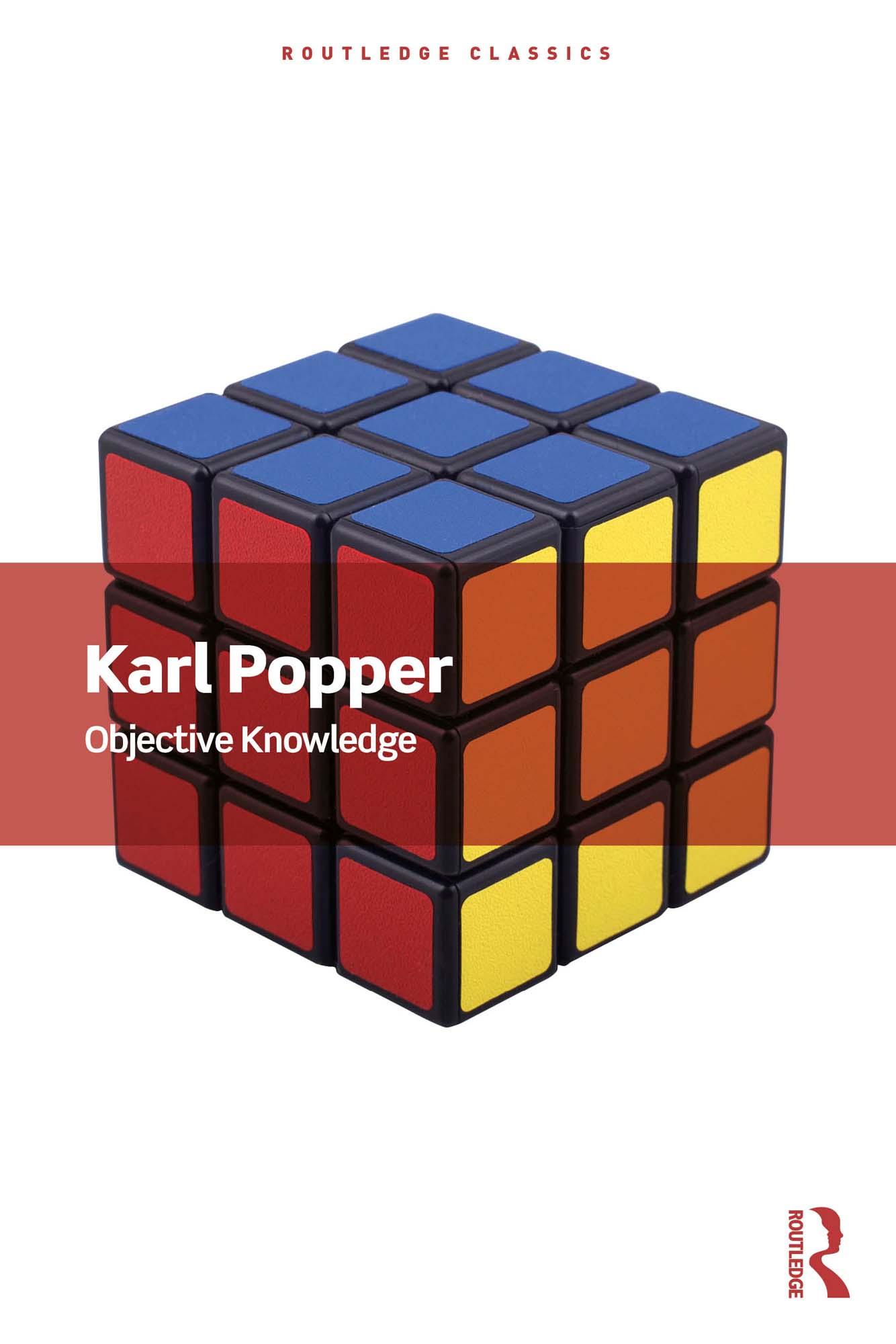
The extent and scope of human knowledge is arguably one of humankind's greatest achievements. Since Descartes, however, the theory of human knowledge has been mainly what philosophers call subjectivist: even scientific knowledge was regarded as a special kind of human belief, but human nonetheless. In Objective Knowledge, which contains some of his most important writings on epistemology, Karl Popper breaks decisively and controversially with this view of human knowledge.
A realist and a fallibilist, he argues that human knowledge, stated in human language, is no longer part of ourselves but open to objective criticism. Above all, Popper argues that human knowledge grows through a process of conjecture, testing and criticism. Such objective knowledge has significance also for us as individuals, as critical interaction with problem-situations and the constant process of trial and error playing a role in all walks of life, from philosophy and science to music and art.
A brilliant exposition of Popper's theory of knowledge, this Routledge Classics edition includes a new Introduction by Jeremy Shearmur, which provides some helpful context to Objective Knowledge and Popper's philosophy in general.
Paga fácilmente con tarjeta, Klarna, Apple Pay o Google Pay. ¿No estás contento? Siempre tienes 14 días de garantía de devolución. Lee más en nuestros términos. Si tienes preguntas, escríbenos a hello@memmo.org.
Memmo hace que estudiar sea más fácil, estés donde estés. Aquí tienes tus libros de texto y herramientas de estudio inteligentes en un solo lugar: resúmenes, quizzes, podcasts y flashcards. Y también a Ted, tu compañero de estudio que responde a todo lo que te preguntes. Más de 50 000 estudiantes ya estudian aquí. Está hecho para que aprendas más rápido y te estreses menos.