
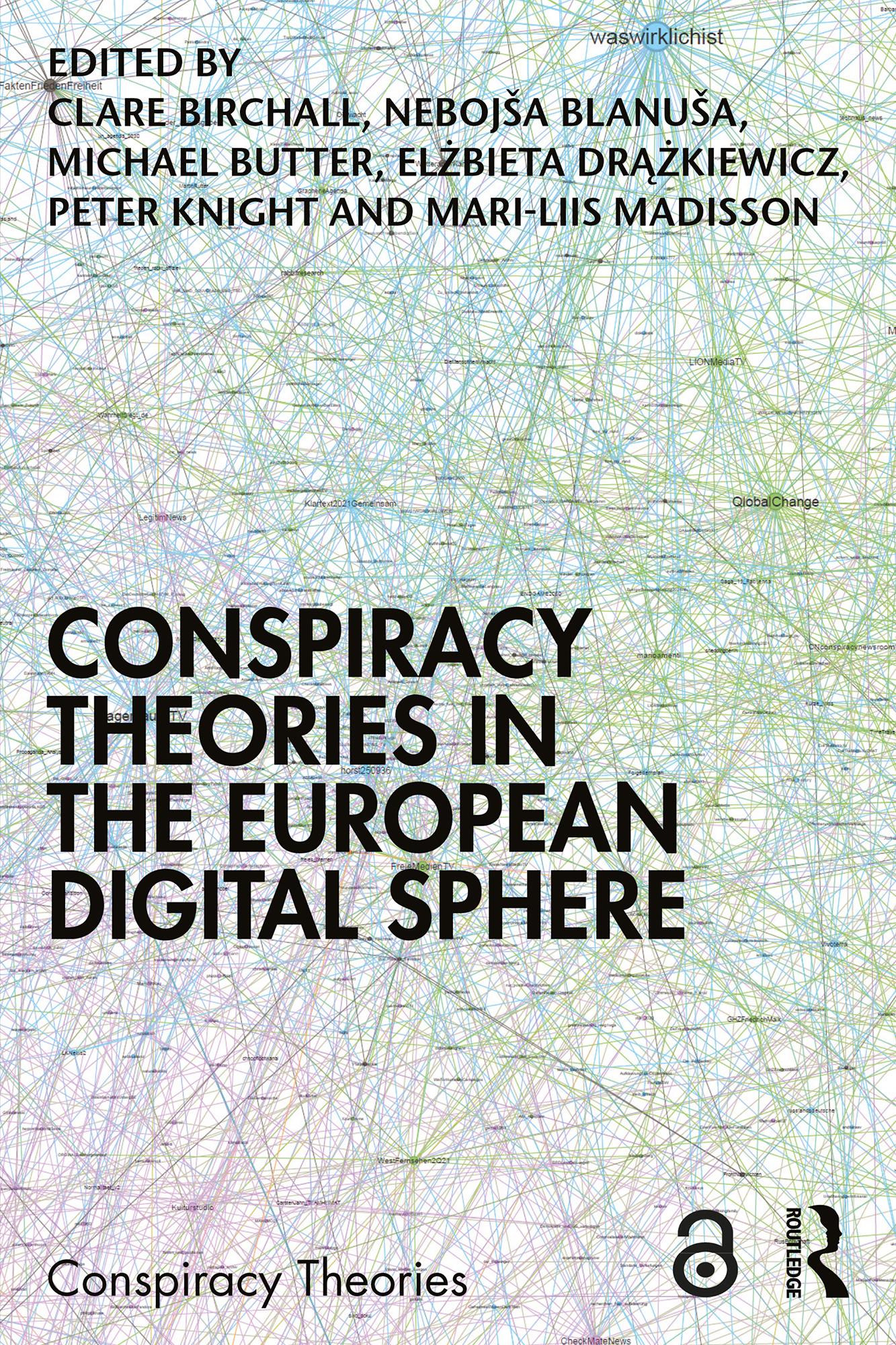
Conspiracy Theories in the European Digital Sphere offers a comparative account of online conspiracism, considered in terms of platform preferences, ideological content, aesthetic choices, political context, flow of travel and the role online conspiracism plays in the formation of community and identity.
The book examines the assumptions that inform current ways of framing and combatting online conspiracy theories. Rather than approach online conspiracy theories as merely a symptom of post-truth social media, or as simply a problem of either too little or false information and, therefore, as the same as other forms of mis- and disinformation that can be more easily corrected, the book proposes that online conspiracy theories need to be understood as a distinctive mode of digital disinformation because they are a vernacular knowledge and interpretation rooted in, engaged with and defined by regional and supra-regional political histories. The book is concerned with how experiences with freedom of speech, the role of the press, democratic and epistemological norms, levels of state control, conflict, authoritarianism and propaganda shape online conspiracy theories and the response to them.
This book is methodologically ambitious, combining quantitative and qualitative approaches, and will appeal to anyone interested in conspiracy theories, misinformation, culture wars, social media and contemporary society.
Paga fácilmente con tarjeta, Klarna, Apple Pay o Google Pay. ¿No estás contento? Siempre tienes 14 días de garantía de devolución. Lee más en nuestros términos. Si tienes preguntas, escríbenos a hello@memmo.org.
Memmo hace que estudiar sea más fácil, estés donde estés. Aquí tienes tus libros de texto y herramientas de estudio inteligentes en un solo lugar: resúmenes, quizzes, podcasts y flashcards. Y también a Ted, tu compañero de estudio que responde a todo lo que te preguntes. Más de 50 000 estudiantes ya estudian aquí. Está hecho para que aprendas más rápido y te estreses menos.