
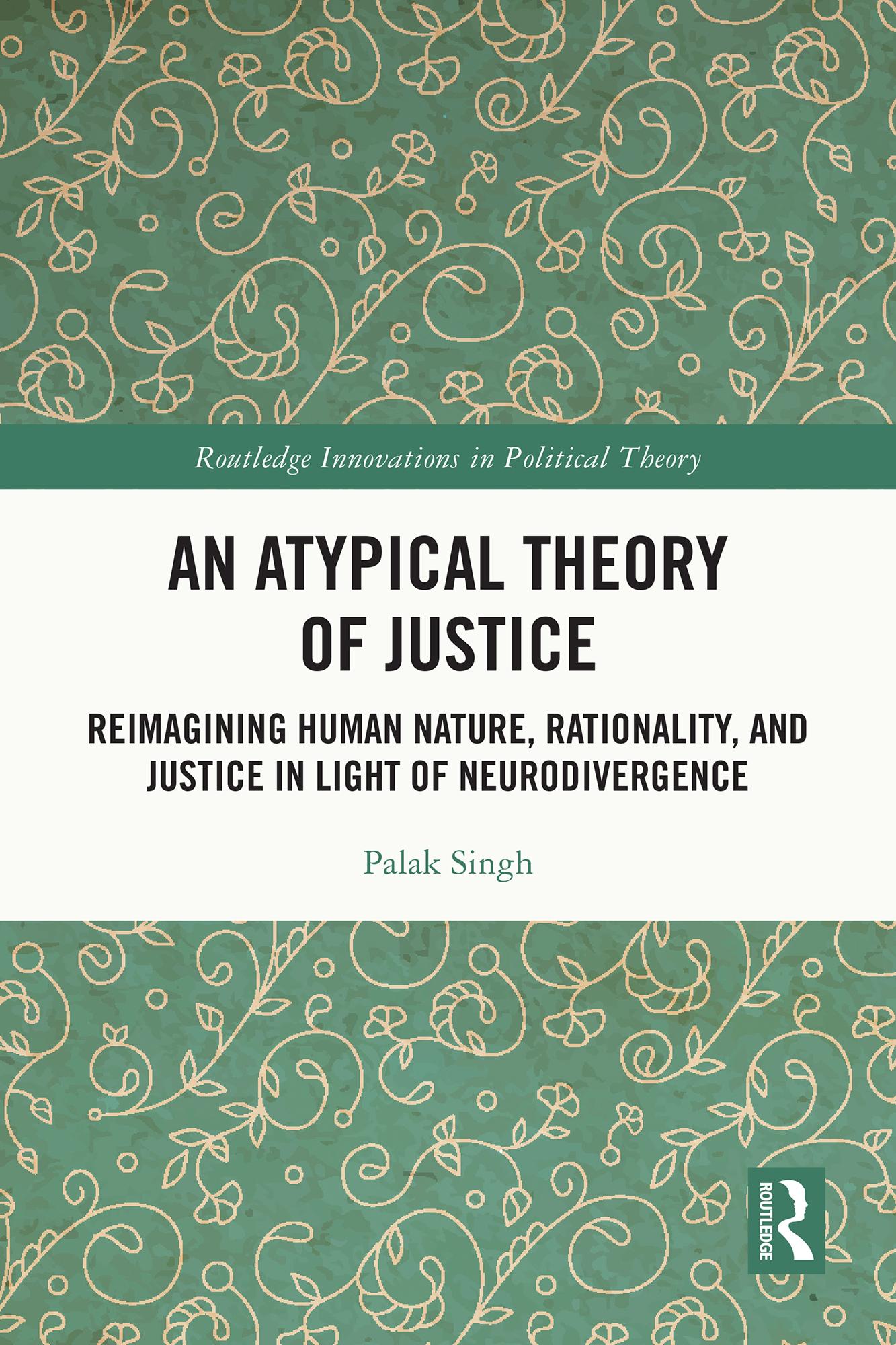
What does justice mean for individuals whose cognition diverges from these implicit norms? Can a theory of fairness truly be universal if it fails to account for autism, ADHD, psychopathy, and other forms of neurodiversity?
Palak Singh confronts these questions head-on by exposing the neurotypical biases embedded in liberal theories of justice and proposing a radical alternative: an atypical, neuropluralistic justice. Through a critical engagement with Rawls, Kant, Nussbaum, and feminist and disability theorists, she reveals how psychopathic instrumentalism, autistic rule-based reasoning, and other atypical cognitive profiles disrupt conventional notions of reciprocity, public reason, and moral personhood. Yet rather than dismissing these disruptions as anomalies, Singh reframes them as catalysts for reimagining justice itself.
At its core, this book advances a revised social contract—one where the ‘veil of ignorance’ includes cognitive variation, ensuring principles of fairness are robust across neurotypes. From education to criminal law, it charts a path towards a society where neurodivergent individuals are not merely accommodated but recognized as essential to human flourishing and as equal participants in shaping collective life, arguing for an ‘Atypical Theory’ for ‘atypical minds.’
Timely and provocative, An Atypical Theory of Justice bridges political philosophy, cognitive science, and disability studies to offer a groundbreaking and transformative framework. It argues for a world where justice is measured not by its adherence to a neurotypical standard but by its capacity to embrace the full spectrum of human cognition.
Paga fácilmente con tarjeta, Klarna, Apple Pay o Google Pay. ¿No estás contento? Siempre tienes 14 días de garantía de devolución. Lee más en nuestros términos. Si tienes preguntas, escríbenos a hello@memmo.org.
Memmo hace que estudiar sea más fácil, estés donde estés. Aquí tienes tus libros de texto y herramientas de estudio inteligentes en un solo lugar: resúmenes, quizzes, podcasts y flashcards. Y también a Ted, tu compañero de estudio que responde a todo lo que te preguntes. Más de 50 000 estudiantes ya estudian aquí. Está hecho para que aprendas más rápido y te estreses menos.