
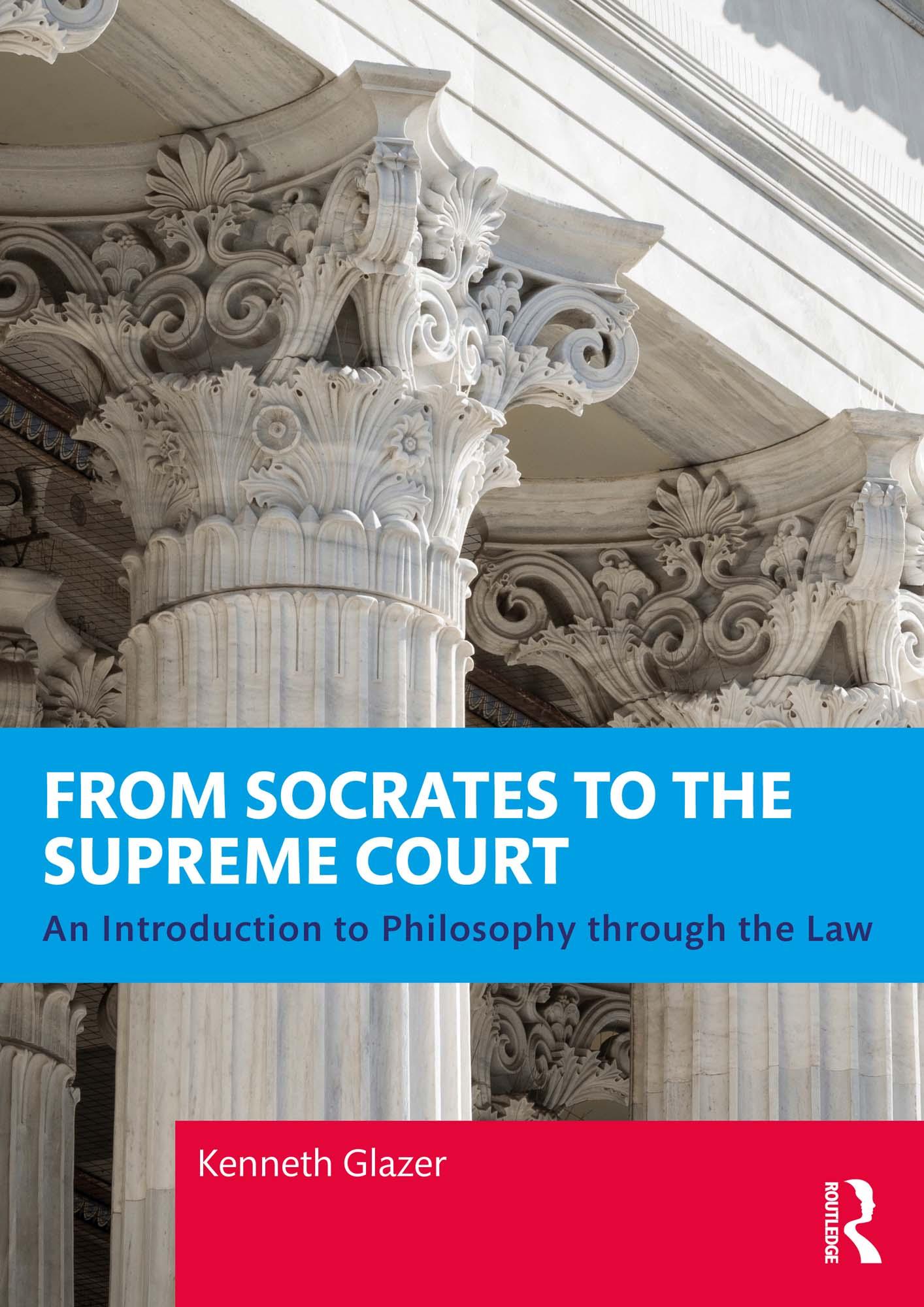
Philosophy and law are separate disciplines, but they deal with many of the same issues—from the meaning of equality and liberty, the nature of knowledge, reasoning, and mental states, to the indeterminacy of language, causation, free will, luck, and personal identity. This textbook introduces philosophy to undergraduates in a new and refreshing way—by using cases, concepts, and doctrines from the law to illustrate philosophical issues. From Socrates to the Supreme Court: An Introduction to Philosophy through the Law introduces the major areas in the discipline—moral and political philosophy, epistemology, metaphysics, philosophy of mind and language—and philosophy’s great thinkers, from Plato, Aristotle, Hume, and Kant to Russell, Wittgenstein, Austin, and Anscombe. It shows how ideas in philosophy are not academic but play out in Supreme Court rulings and other court cases. Through example after example—the concept of mens rea in criminal law, the rules governing the admissibility of evidence in court, statutory interpretation, free speech, perjury, the analogical nature of legal reasoning, the use of the Socratic method in deciding cases, and the laws against discrimination—this book deepens the student’s understanding of philosophy by driving home the fact that philosophical questions matter in the real world.
Paga fácilmente con tarjeta, Klarna, Apple Pay o Google Pay. ¿No estás contento? Siempre tienes 14 días de garantía de devolución. Lee más en nuestros términos. Si tienes preguntas, escríbenos a hello@memmo.org.
Memmo hace que estudiar sea más fácil, estés donde estés. Aquí tienes tus libros de texto y herramientas de estudio inteligentes en un solo lugar: resúmenes, quizzes, podcasts y flashcards. Y también a Ted, tu compañero de estudio que responde a todo lo que te preguntes. Más de 50 000 estudiantes ya estudian aquí. Está hecho para que aprendas más rápido y te estreses menos.