
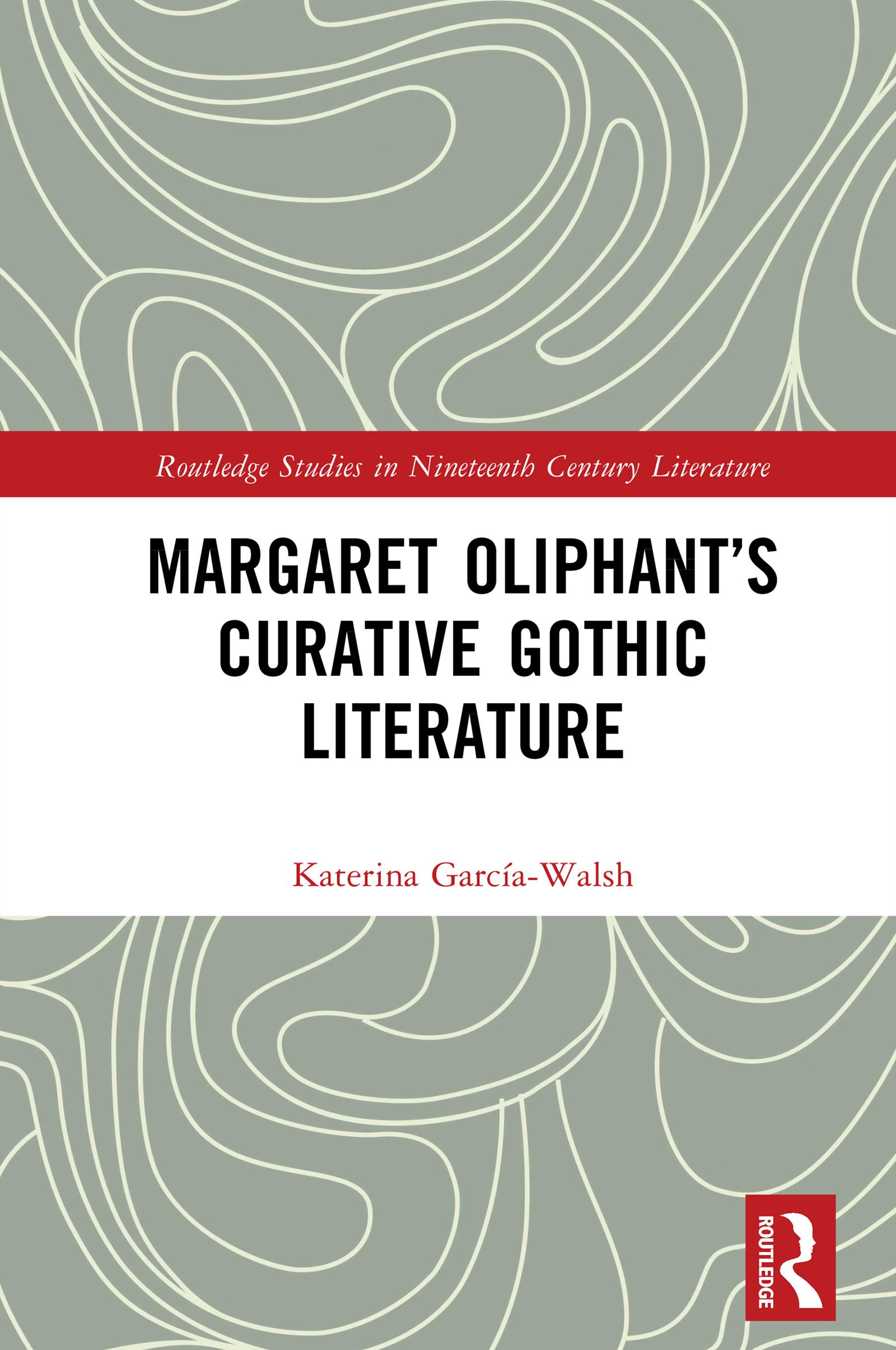
Prolific Scottish novelist Margaret Oliphant (1828–1897), remembered chiefly for her realist fiction and biting literary criticism of contemporary authors, also wrote nineteen supernatural tales. This monograph offers a comprehensive exploration of Oliphant’s Gothic literature, in the light of her religious beliefs, cultural context and experiences of death and mourning, as she survived her husband and all six of her children.
Oliphant’s stories set in the afterlife depict the dead as inhabiting a new existence characterised by spiritual growth, while her tales set on earth attempt contact between the mortal and immortal planes. García-Walsh illustrates Oliphant’s unique theological conception of “afterliving”, which ultimately seeks to eradicate the divide between the living and their deceased loved ones, reimagining death as a liminal passage towards God and divine self-development. This book thus suggests a new direction for Gothic studies by showing how Oliphant’s supernatural fiction provided a means of “curative” writing, transforming the traumatic reality of death into a source of hope. The volume is suited for students, researchers and academics in the disciplines of literature and history, particularly the fields of nineteenth-century studies, Victorian studies and Gothic studies with an interest in women’s writing, theology and mental health/trauma studies.
Paga fácilmente con tarjeta, Klarna, Apple Pay o Google Pay. ¿No estás contento? Siempre tienes 14 días de garantía de devolución. Lee más en nuestros términos. Si tienes preguntas, escríbenos a hello@memmo.org.
Memmo hace que estudiar sea más fácil, estés donde estés. Aquí tienes tus libros de texto y herramientas de estudio inteligentes en un solo lugar: resúmenes, quizzes, podcasts y flashcards. Y también a Ted, tu compañero de estudio que responde a todo lo que te preguntes. Más de 50 000 estudiantes ya estudian aquí. Está hecho para que aprendas más rápido y te estreses menos.