
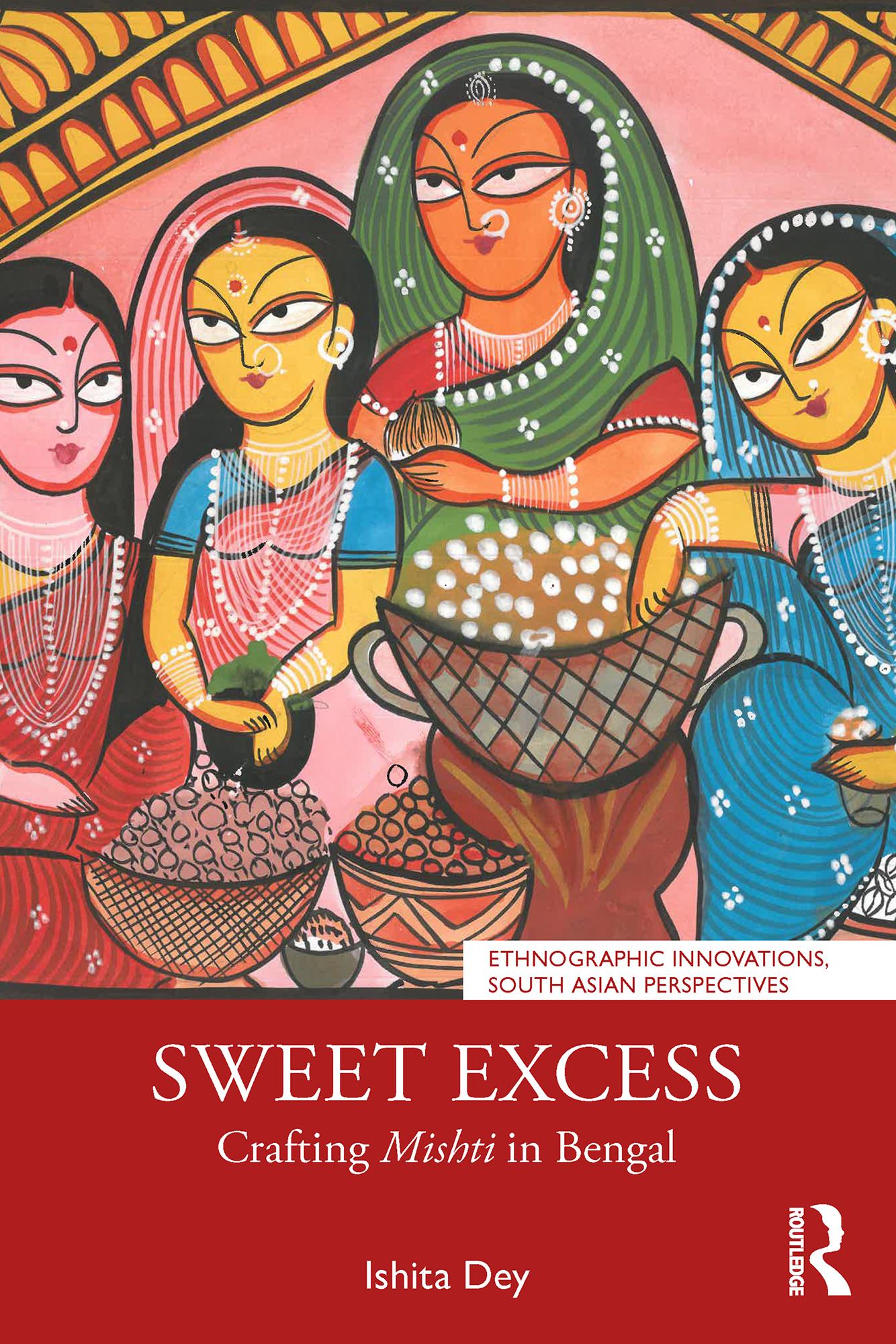
This book is an ethnographic work on excess. Based on a decade-long field work of a single food substance — sweets — it follows sweet-making in sweetshops, domestic spaces, fairs, festivals and its representation in recipe books to understand how caste, religion, science and law inform the life of a food item with an extremely short shelf life. It shows how food items of conspicuous consumption find a meaning in everyday lives of people through its socio-cultural meanings - ritual, pride of craftsmanship, heritage and cultural identity. It also shows how sweets continue to be a ubiquitous part of ‘Bengali’ diet in a geography that has been witness to acute hunger, starvation, food movements and social welfare programmes to ensure food security.
As a multi-sited ethnography on sweetness in diverse settings and its associated meanings in West Bengal and Bangladesh, this book explores everyday workplace hierarchies between artisans that reveal how caste and religion inform the choice of who is hired into this line of work. It also highlights how discourses on food safety and the overpowering presence of World Trade Organization have affected the life of the Bengali mishti.
The volume will be of great interest to scholars and researchers of ethnography, sociology, history, and South Asian studies. And if you, dear reader, love mishti, you will love this, too!
Paga fácilmente con tarjeta, Klarna, Apple Pay o Google Pay. ¿No estás contento? Siempre tienes 14 días de garantía de devolución. Lee más en nuestros términos. Si tienes preguntas, escríbenos a hello@memmo.org.
Memmo hace que estudiar sea más fácil, estés donde estés. Aquí tienes tus libros de texto y herramientas de estudio inteligentes en un solo lugar: resúmenes, quizzes, podcasts y flashcards. Y también a Ted, tu compañero de estudio que responde a todo lo que te preguntes. Más de 50 000 estudiantes ya estudian aquí. Está hecho para que aprendas más rápido y te estreses menos.