
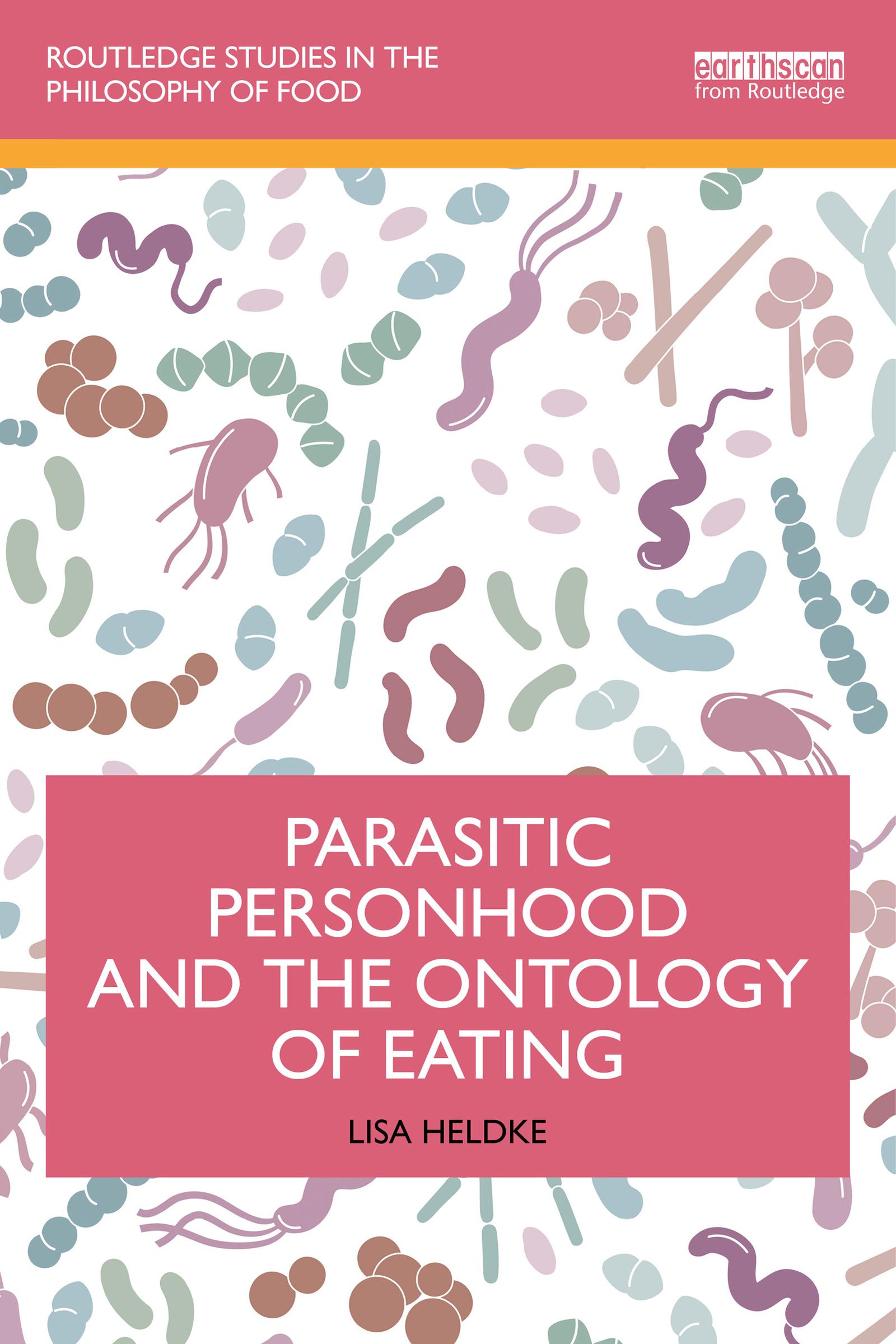
Humans must eat, and our eating involves us in a cascade of eating relationships that leave life and death biting into each other.
These realities should—but often do not—profoundly shape our understanding of personhood. This book explores “parasitic personhood,” an alternative to atomistic individualism that acknowledges the biological individual as a network of persistent biological relationships (a “holobiont”) and draws insight from the astonishing frequency and variety of parasitic feeding relationships. What happens to our conception of personhood if we consider parasitism as more than just a threat to our health? Parasitism is a remarkably common form of life; however, we tend to think of parasites only as dangerous pestilential organisms that should be eliminated. What if parasitism—in particular, persistent eating relationships that threaten to destabilize host organisms—were instead the model in terms of which we understood what it means to be a person? What if we acknowledged the ineliminability—indeed, the centrality—of parasitism to life and embraced both the persistent eating and the precarity that they entail as central to our understanding of personhood? In advocating for parasitic personhood, this book joins a history of efforts to uproot atomistic individualism, the remarkably durable understanding of personhood that is aptly portrayed by its most well-known eighteenth-century model, the billiard ball: smoothly self-contained, with relationships decidedly external to it. The parasitic alternative conceives persons as collections of organisms in relationships that are, by turns and all at once, essential, precarious, definitive, destabilizing, stable, and shifting. The book asks: in what does parasitic personhood consist? It goes on to examine some implications of this conception of personhood: how is moral agency constituted for the parasitic person, and how does parasitic personhood expand our understanding of aesthetic engagement and appreciation? This book will absorb anyone who is interested in thinking about the metaphysical significance of their need to eat and their reliance on myriad other organisms to enable them to do so.
It will engage students and scholars of food and eating, particularly those working on the metaphysics of food, food and personhood, fermentation, and the microbiome, as well as philosophers considering the ontological significance of food and eating.
Paga fácilmente con tarjeta, Klarna, Apple Pay o Google Pay. ¿No estás contento? Siempre tienes 14 días de garantía de devolución. Lee más en nuestros términos. Si tienes preguntas, escríbenos a hello@memmo.org.
Memmo hace que estudiar sea más fácil, estés donde estés. Aquí tienes tus libros de texto y herramientas de estudio inteligentes en un solo lugar: resúmenes, quizzes, podcasts y flashcards. Y también a Ted, tu compañero de estudio que responde a todo lo que te preguntes. Más de 50 000 estudiantes ya estudian aquí. Está hecho para que aprendas más rápido y te estreses menos.