
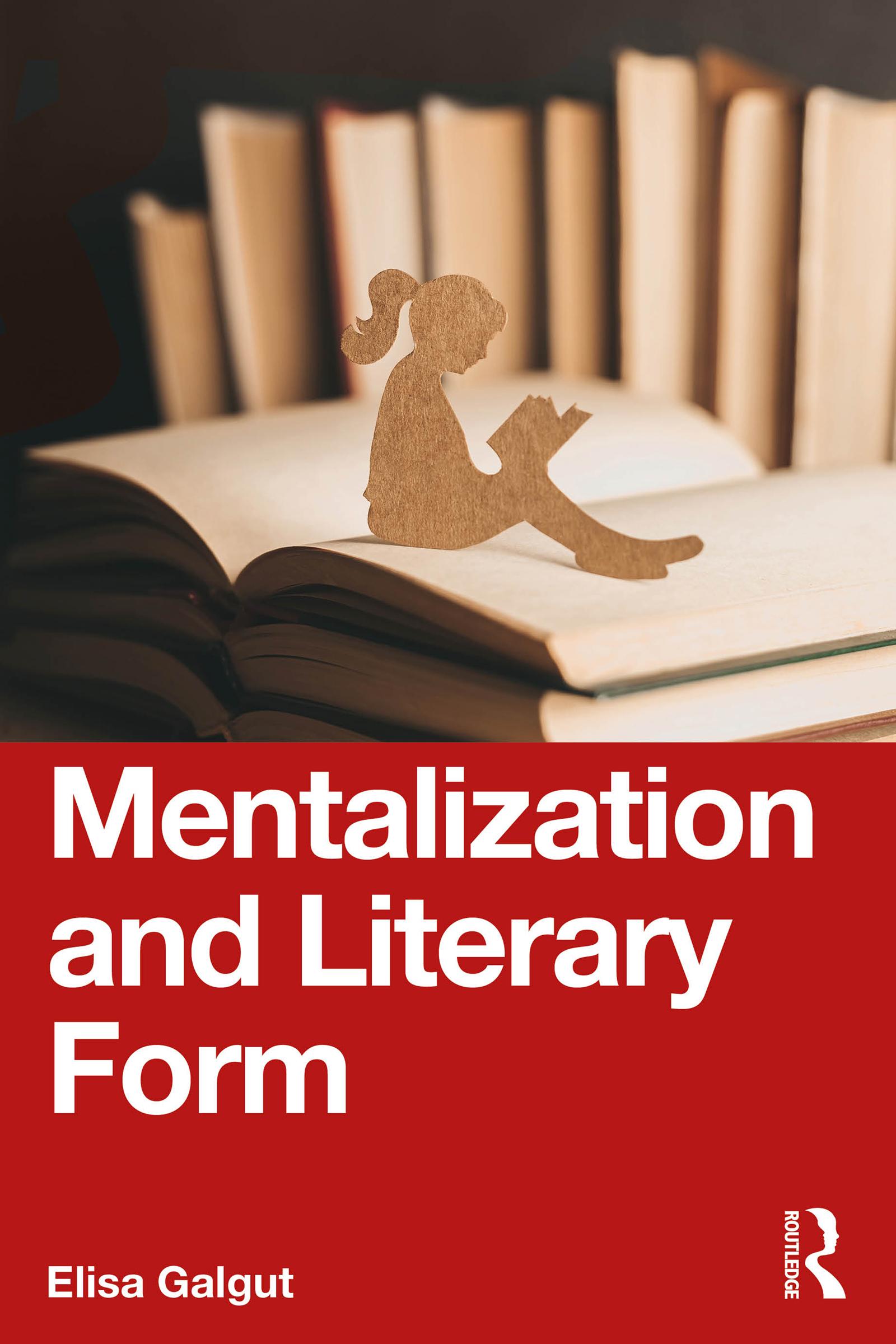
This book examines the ways in which literary form facilitates mentalization and our ability to be aware of our own and others’ mental states, showing how we can use this awareness to make sense of our experiences and interactions.
Looking at narrative, the sonnet, free indirect speech, and autobiographical memory, Elisa Galgut focuses on the ways in which literary form not only contains difficult emotions, but how it shapes and develops these emotional states. She considers how the creative mind gives form to inchoate emotions and structures and processes them in ways that allow us to experience and give name to what was previously unclear and amorphous. Looking at the work of canonical figures of English literature, such as Shakespeare, Milton, and Austen, Galgut’s focus on form – rather than content – offers the reader a novel way of understanding the ways in which literature engages our emotional lives.
Assuming no prior knowledge of complex psychoanalytic concepts, Mentalization and Literary Form is aimed at academic and graduate students focusing on literary studies and philosophy, as well as psychoanalysts interested in Literature.
Paga fácilmente con tarjeta, Klarna, Apple Pay o Google Pay. ¿No estás contento? Siempre tienes 14 días de garantía de devolución. Lee más en nuestros términos. Si tienes preguntas, escríbenos a hello@memmo.org.
Memmo hace que estudiar sea más fácil, estés donde estés. Aquí tienes tus libros de texto y herramientas de estudio inteligentes en un solo lugar: resúmenes, quizzes, podcasts y flashcards. Y también a Ted, tu compañero de estudio que responde a todo lo que te preguntes. Más de 50 000 estudiantes ya estudian aquí. Está hecho para que aprendas más rápido y te estreses menos.