
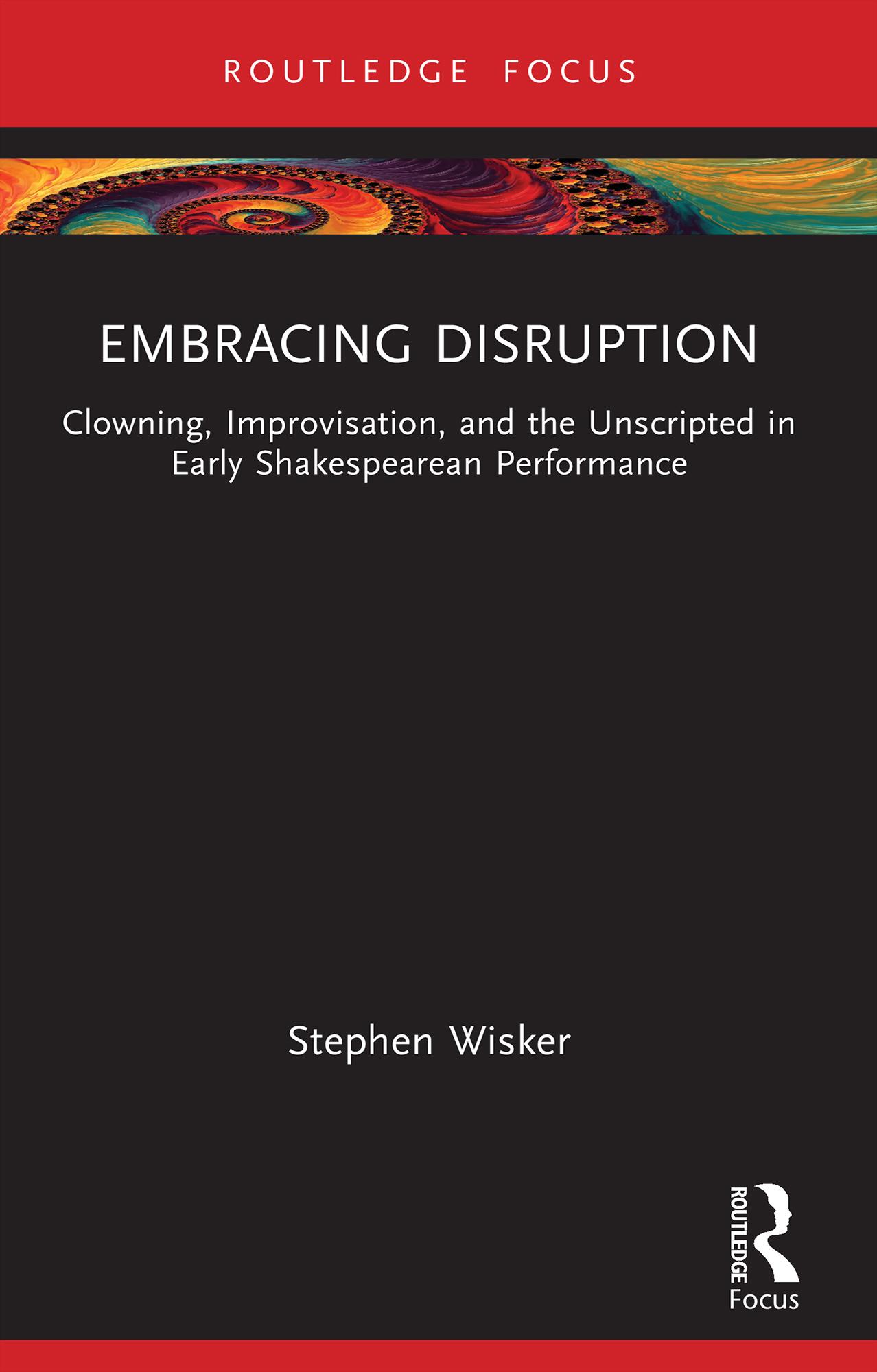
This volume celebrates the centrality of clowning in Shakespeare’s conception of theatre and explores how he purposefully invited the clown’s anarchic energy into the heart of his dramaturgy.
Clowning was a potent but divisive force in the theater of Shakespeare’s time, challenging the emerging tyranny of decorum and the developing notion of the authorial voice. As such, the figure of the clown is key to understanding the pervasive tension between existing and emergent forms of Elizabethan theater, and unlocks forgotten levels of meaning in Shakespeare’s plays, meanings that were only fully experienced in performance rather than on the page. The great clown Dick Tarleton dominated the London theater of the 1580s and deeply informed Shakespeare’s understanding of the anarchic power of performance. By the 1590s, however, the clown’s voice was increasingly silenced by emerging theater practice intent on authorial control and Elizabethan codes of decorum. Against the dominant critical tide, Shakespeare continued to embrace clowning and worked closely with Will Kemp - Tarleton’s successor as the greatest clown of his age - specifically and deliberately placing him alongside his leading man, Richard Burbage, the originator of the roles of Romeo, Hal, Hamlet and many others. Through an analysis of key scenes in Romeo and Juliet and Henry IV, Embracing Disruption illustrates the enormously generative, unstable, and compelling relationship between these two actors, Burbage and Kemp - the hero and the clown - and how their extraordinary dynamic was experienced on the stage rather than on the page. This hero-clown dynamic continues even after Kemp’s departure from Shakespeare’s company: Hamlet features the ghosts of Tarleton and Kemp, two clowns deeply informing Burbage’s performance as the hero. Then a similar dynamic emerges between Kemp’s replacement, a very different clown in Robert Armin playing the Fool opposite Burbage in King Lear. In each instance, the presence of the clown crucially informs the audience’s understanding of the hero. Moreover, Shakespeare’s increasingly sophisticated deployment of clowning comments on and resists the transformation and gentrification of the theater that defined the Elizabethan era.
This study will be of great interest to students and scholars in Performance studies and Shakespeare studies.
Paga fácilmente con tarjeta, Klarna, Apple Pay o Google Pay. ¿No estás contento? Siempre tienes 14 días de garantía de devolución. Lee más en nuestros términos. Si tienes preguntas, escríbenos a hello@memmo.org.
Memmo hace que estudiar sea más fácil, estés donde estés. Aquí tienes tus libros de texto y herramientas de estudio inteligentes en un solo lugar: resúmenes, quizzes, podcasts y flashcards. Y también a Ted, tu compañero de estudio que responde a todo lo que te preguntes. Más de 50 000 estudiantes ya estudian aquí. Está hecho para que aprendas más rápido y te estreses menos.