
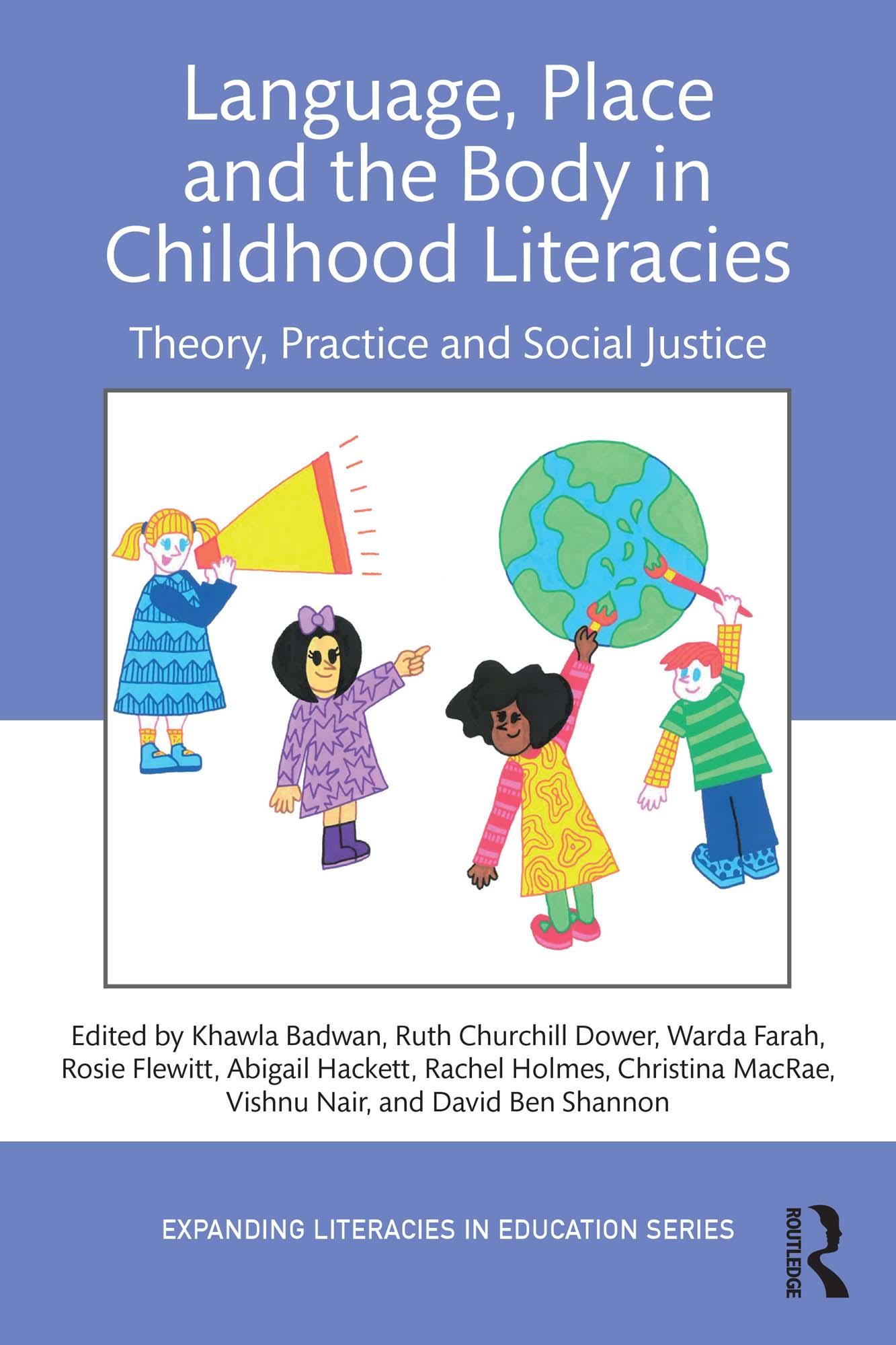
Challenging dominant views of early childhood language development and knowledge, this thought-provoking volume illuminates the importance of place, the body, and movement in opening space for young children’s improvisatory, creative, playful language practices.
Bringing together a rich collection of contemporary research and diverse perspectives, the book centers on the premise that ‘where’ talk happens—be it spoken, mimed, signed, or assisted through one or more communication tools—is not a neutral backdrop or controllable variable. Rather, it is deeply entangled in the emergence of language from bodies, in how these vocalizations make their way into the world, what they might feel like and set into motion, and how they are received, heard and listened to by other humans and by non-humans. Chapter authors introduce theories about language, body, and place, while also providing examples of what this work may look like in practice.
This book is key reading for those who work with young children and families, including teachers, pre-service teachers studying child development, speech and language therapists, support workers, and those in the arts, cultural and environmental sectors. It is also highly relevant to researchers, literacy education scholars, and anyone who endeavors to think more expansively and critically about language and literacy in early childhood contexts.
Paga fácilmente con tarjeta, Klarna, Apple Pay o Google Pay. ¿No estás contento? Siempre tienes 14 días de garantía de devolución. Lee más en nuestros términos. Si tienes preguntas, escríbenos a hello@memmo.org.
Memmo hace que estudiar sea más fácil, estés donde estés. Aquí tienes tus libros de texto y herramientas de estudio inteligentes en un solo lugar: resúmenes, quizzes, podcasts y flashcards. Y también a Ted, tu compañero de estudio que responde a todo lo que te preguntes. Más de 50 000 estudiantes ya estudian aquí. Está hecho para que aprendas más rápido y te estreses menos.