
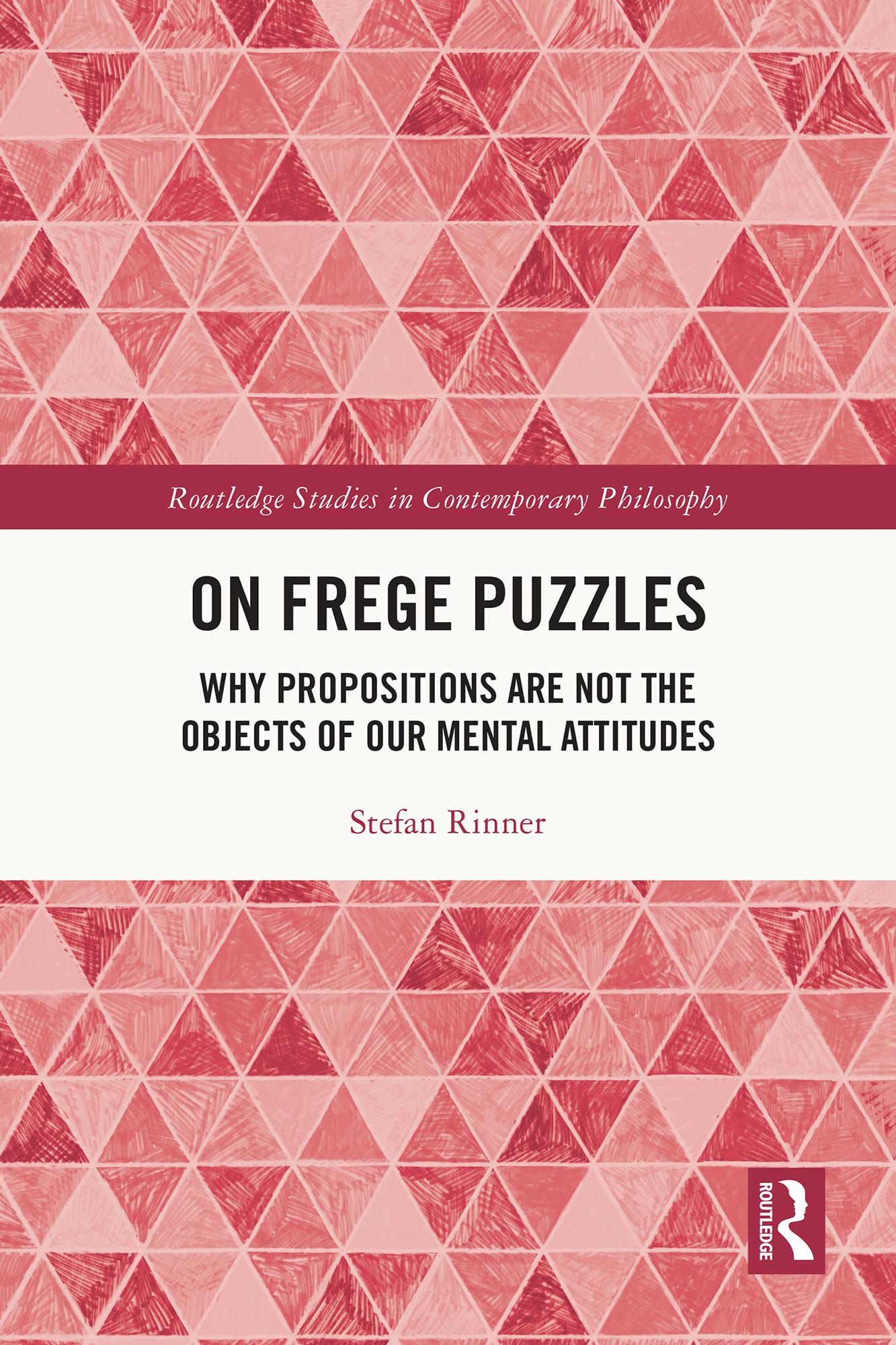
This book argues against the received view of propositional theory, according to which mental attitudes—such as believing, knowing, hoping, and wishing—are relations held between agents and propositions.
Roughly speaking, propositions are primary bearers of truth that are neither sentences nor utterances of sentences, be it of a public language or of a language of thought. This book argues that the propositional theory does not provide a solution to Frege’s puzzle about belief, which arises if we formulate disquotational principles connecting sincere assertion and belief, certain standards regarding rationality, and semantic principles such as the theory of direct reference within the framework of the propositional theory. This suggests that we must reject the propositional theory. The book emphasises this again by showing that the propositional theory cannot solve Schiffer's puzzle regarding de re belief, which, in addition to disquotational principles connecting sincere assertion and belief, uses highly plausible exportation and rationality principles for de re belief. It then discusses possible alternatives to the propositional theory, such as Marcus’ theory of states of affairs, Lewis’ property account, Larson and Ludlow’s theory of interpreted logical forms, and Moltmann’s Multiple Relation Theory. Just like the propositional theory, these theories maintain that mental attitudes such as believing are relations, and they also inherit the main problems of the propositional theory. Therefore, the author proposes and develops a non-relational account of the attitudes in question that together with a measurement account of the respective attitude ascriptions, provides a solution to both Frege’s puzzle and Schiffer’s puzzle.
On Frege Puzzles will appeal to scholars and graduate students working in philosophy of language, philosophy of mind, and logic.
Paga fácilmente con tarjeta, Klarna, Apple Pay o Google Pay. ¿No estás contento? Siempre tienes 14 días de garantía de devolución. Lee más en nuestros términos. Si tienes preguntas, escríbenos a hello@memmo.org.
Memmo hace que estudiar sea más fácil, estés donde estés. Aquí tienes tus libros de texto y herramientas de estudio inteligentes en un solo lugar: resúmenes, quizzes, podcasts y flashcards. Y también a Ted, tu compañero de estudio que responde a todo lo que te preguntes. Más de 50 000 estudiantes ya estudian aquí. Está hecho para que aprendas más rápido y te estreses menos.