
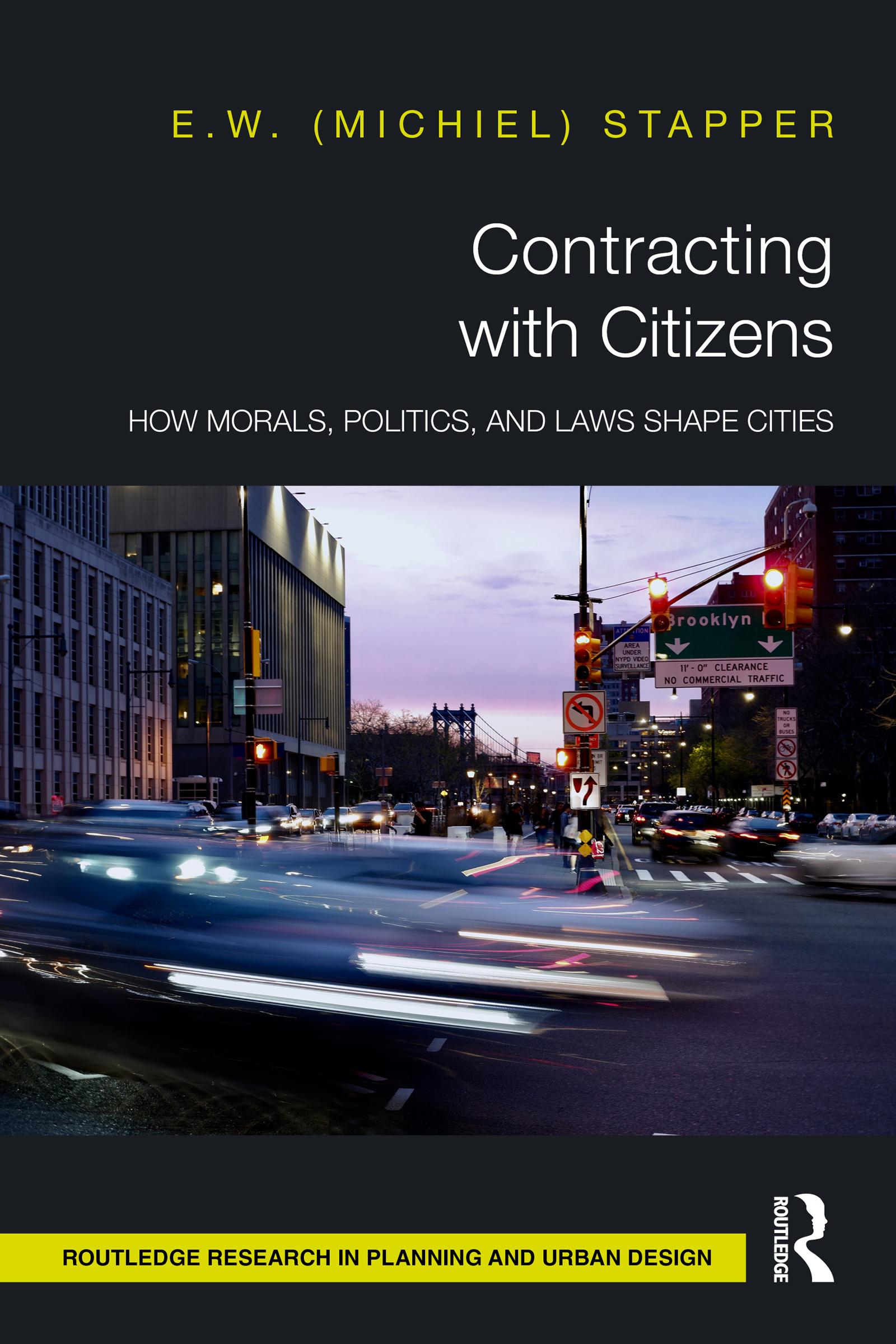
This book demonstrates that contracts, community intermediaries, and participatory processes are closely interlinked, and they can change urban politics.
In participatory processes, residents negotiate with policymakers about the future of their neighborhood. In the last few decades, this happened increasingly in co-creation sessions where citizens are deemed to have an equal position vis-a-vis developers and civil servants. The goal of this book is to understand and theorize how these negotiations affect collective action. The book will scrutinize the role of contracts, community intermediaries, and participatory processes in development projects and planning policies. Using a comparative case study of Amsterdam, Hamburg, and New York, this book reveals how seemingly fresh and novel planning practices are used to justify processes of capital accumulation and reveals how morals, politics, and law can create institutional change.
The book presents a novel theoretical approach to studying urban politics, putting emphasis on (private) law and the material arrangements of participatory processes. It will be of interest to researchers and students of planning, geography, sociology, public administration, and law and will provide valuable lessons for practitioners interested in understanding the effects of contractual governance on neighborhoods.
Paga fácilmente con tarjeta, Klarna, Apple Pay o Google Pay. ¿No estás contento? Siempre tienes 14 días de garantía de devolución. Lee más en nuestros términos. Si tienes preguntas, escríbenos a hello@memmo.org.
Memmo hace que estudiar sea más fácil, estés donde estés. Aquí tienes tus libros de texto y herramientas de estudio inteligentes en un solo lugar: resúmenes, quizzes, podcasts y flashcards. Y también a Ted, tu compañero de estudio que responde a todo lo que te preguntes. Más de 50 000 estudiantes ya estudian aquí. Está hecho para que aprendas más rápido y te estreses menos.