
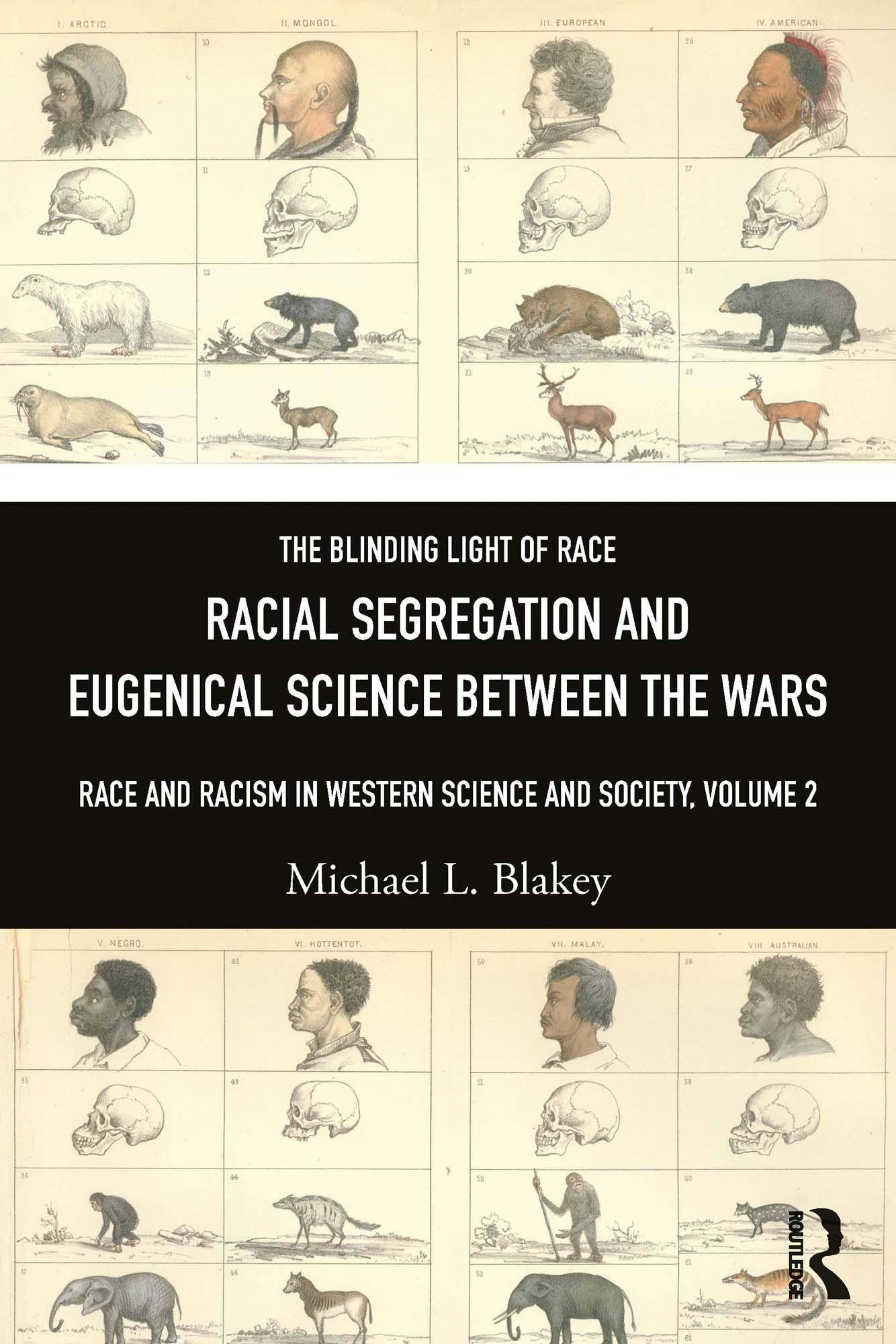
This volume examines the rise and decline of racial science and its relationship to the political and social imposition of Jim Crow in the American South, a racialized code of laws grounded upon an inherently racist and prejudicial pseudoscience. The author argues, here, that the study of human beings within the emerging 18th‑ and 19th‑century institutions of Western science was corrupted by the limited social intuitions of its enslaving, colonizing, and elitist members. Western science and White societies plowed forward in continued ideological adherence to a biodeterministic imagination: to justify slavery, then Jim Crow racial segregation, immigration restriction, and other deadly and exploitative "eugenical" solutions of Social Darwinist thought. The story is further complexified by the countervailing theories and voices of Black and Jewish intellectuals in the social and biocultural sciences in the 19th and 20th centuries such as Frederick Douglass, W.E.B. Du Bois, and Montague Cobb. These had profound consequences not only for the social sciences but also for the cultural life of Black Americans in the aftermath (and afterlife) of slavery. At the same time, even here, the author discloses that the racialized dimensions of social science could not be fully exorcised, as social science continued to construct "soft‑line racism" in that it selectively primitivized darker people and omitted White racism and colonialism from their human story. African American social scientists and historians brought White racism and Black modernity to the fore. Eugenics had begun to paint marginal White people (Jewish and Italian immigrants to the United States) as natural inferiors to "Nordics" or "Aryans" with devastating consequences in World War II Europe. As the War ended, the world community began its turn against racism in science and society. In constructing this historical and sociological counternarrative, the author provides a critical new social history that illuminates a tangled and turgid past for contemporary readers, students, and researchers with vital insights for anthropology, sociology, history, cultural studies, philosophy, and American studies.
Paga fácilmente con tarjeta, Klarna, Apple Pay o Google Pay. ¿No estás contento? Siempre tienes 14 días de garantía de devolución. Lee más en nuestros términos. Si tienes preguntas, escríbenos a hello@memmo.org.
Memmo hace que estudiar sea más fácil, estés donde estés. Aquí tienes tus libros de texto y herramientas de estudio inteligentes en un solo lugar: resúmenes, quizzes, podcasts y flashcards. Y también a Ted, tu compañero de estudio que responde a todo lo que te preguntes. Más de 50 000 estudiantes ya estudian aquí. Está hecho para que aprendas más rápido y te estreses menos.