
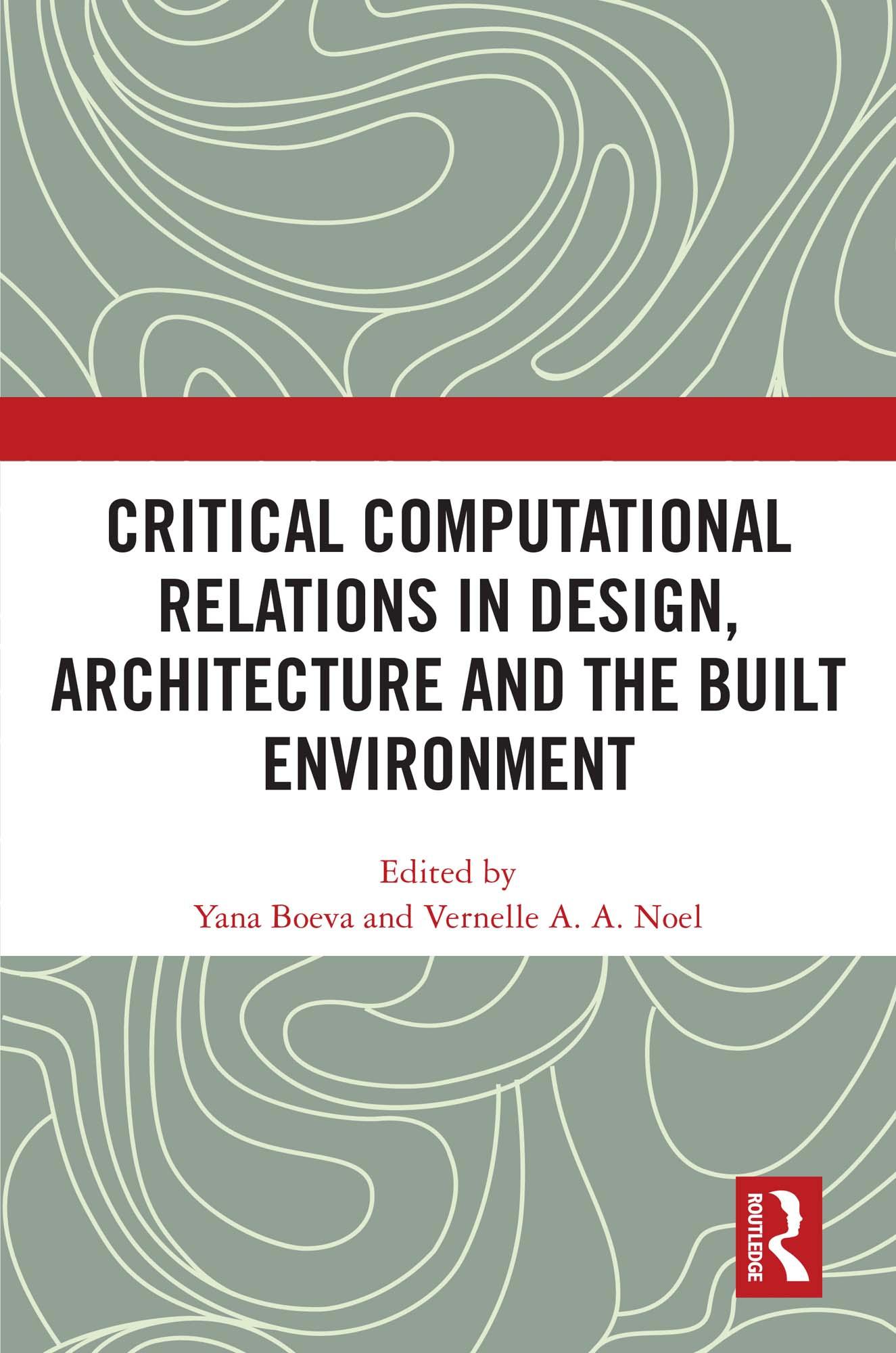
This book delves into the power relations between computational practices, technology infrastructures, knowledge, and their reproductions of bias in design at multiple scales. It provides critical perspectives and insights on how computation intersects with architecture, design, the built environment, and society.
Computational practices, tools and methods in design, architecture, and the built environment, frequently offer technocentric solutions to design problems. Portrayed as mere tools that are "neutral" and "optimized", these technological infrastructures mask social, political, and environmental entanglements involved in their creation and expansion as well as the power of software monopolies and technology providers.
The six contributions to this volume provide critical perspectives and insights on how computation intersects with architecture, design, the built environment, and society. The chapters cover diverse topics such as data practices for design simulations, machine learning (ML) and digital humanities methods for digital heritage, a computationally-aided exploration of ideologies of digital architecture, embodied and craft practice for digital fabrication, feminist hacking practices challenging heteronormative values in digital urban design, and post-disciplinary pedagogies for computational design.
The book will be of interest to researchers, students and practitioners in the fields of architecture, built environment, computational design, science and technology studies, and sociology. The chapters in this book were originally published in Digital Creativity.
Paga fácilmente con tarjeta, Klarna, Apple Pay o Google Pay. ¿No estás contento? Siempre tienes 14 días de garantía de devolución. Lee más en nuestros términos. Si tienes preguntas, escríbenos a hello@memmo.org.
Memmo hace que estudiar sea más fácil, estés donde estés. Aquí tienes tus libros de texto y herramientas de estudio inteligentes en un solo lugar: resúmenes, quizzes, podcasts y flashcards. Y también a Ted, tu compañero de estudio que responde a todo lo que te preguntes. Más de 50 000 estudiantes ya estudian aquí. Está hecho para que aprendas más rápido y te estreses menos.