
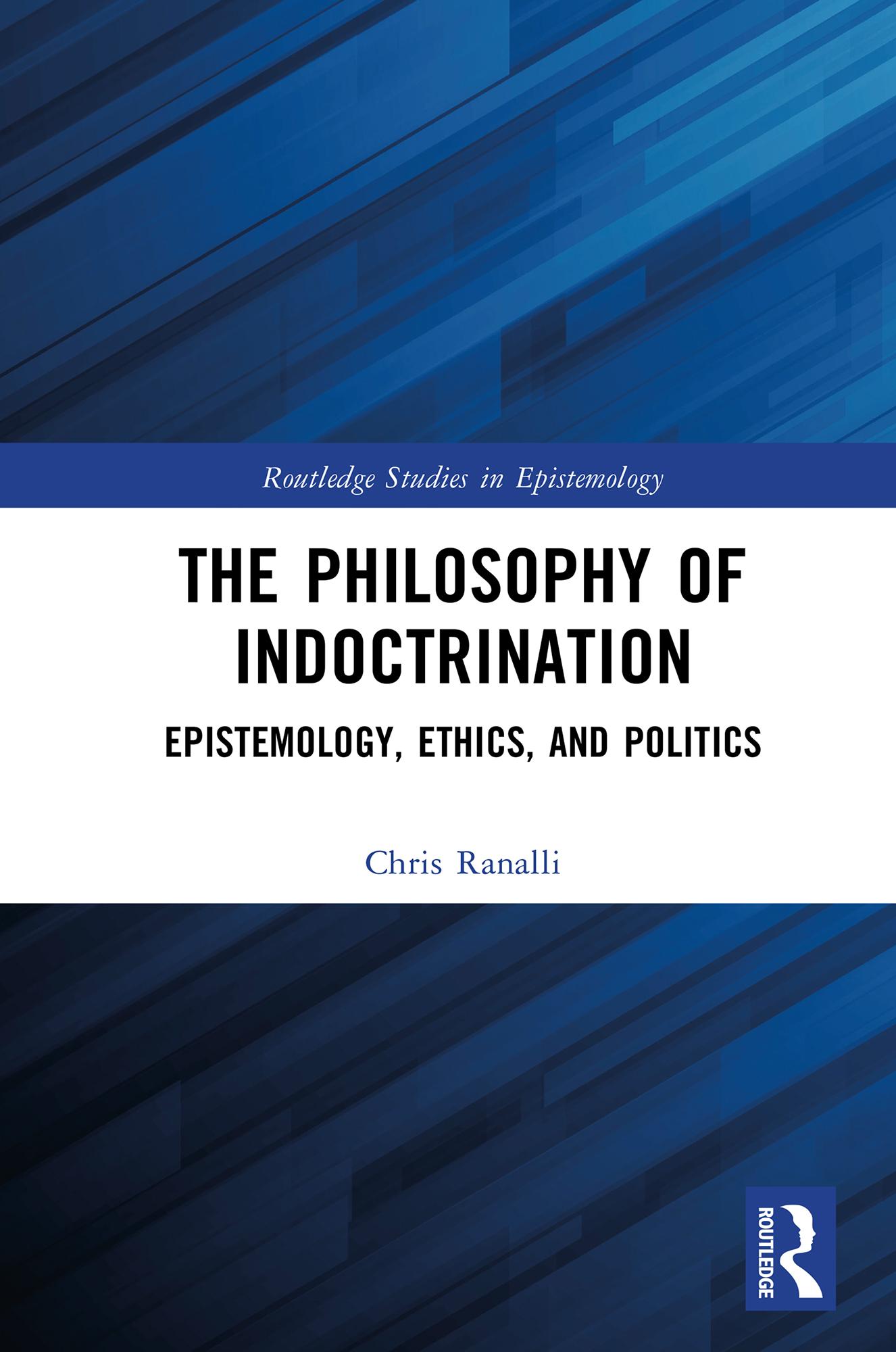
This book develops and defends a novel social epistemological account of indoctrination. It answers important epistemological, ethical, and political questions about what indoctrination is, why it is epistemically harmful, how it can be practiced, and how we should talk about indoctrination.
The author presents three views related to the epistemology of indoctrination. First, he argues that indoctrination is most fundamentally a structural epistemic phenomenon which results in closed-minded beliefs. The sources of indoctrination are diverse: institutional structures, technological systems, ideological frames, and individual actions. What unites them is that they lead to the systematic failure to consider seriously the relevant alternatives to what we are taught, whether by accident or by design. Second, he makes the case that indoctrination is always wrong because it disrespects agents in their capacity as epistemic agents, even when it results in true belief. Third and finally, he contends that public indoctrination-ascriptions are political propaganda; they function to promote political agendas, which can, ironically, breed the conditions for indoctrination rather than forestall it.
The Philosophy of Indoctrination is an essential resource for researchers and advanced students working in social and political epistemology, ethics, political philosophy, philosophy of education, and terrorism and radicalization studies.
Paga fácilmente con tarjeta, Klarna, Apple Pay o Google Pay. ¿No estás contento? Siempre tienes 14 días de garantía de devolución. Lee más en nuestros términos. Si tienes preguntas, escríbenos a hello@memmo.org.
Memmo hace que estudiar sea más fácil, estés donde estés. Aquí tienes tus libros de texto y herramientas de estudio inteligentes en un solo lugar: resúmenes, quizzes, podcasts y flashcards. Y también a Ted, tu compañero de estudio que responde a todo lo que te preguntes. Más de 50 000 estudiantes ya estudian aquí. Está hecho para que aprendas más rápido y te estreses menos.