
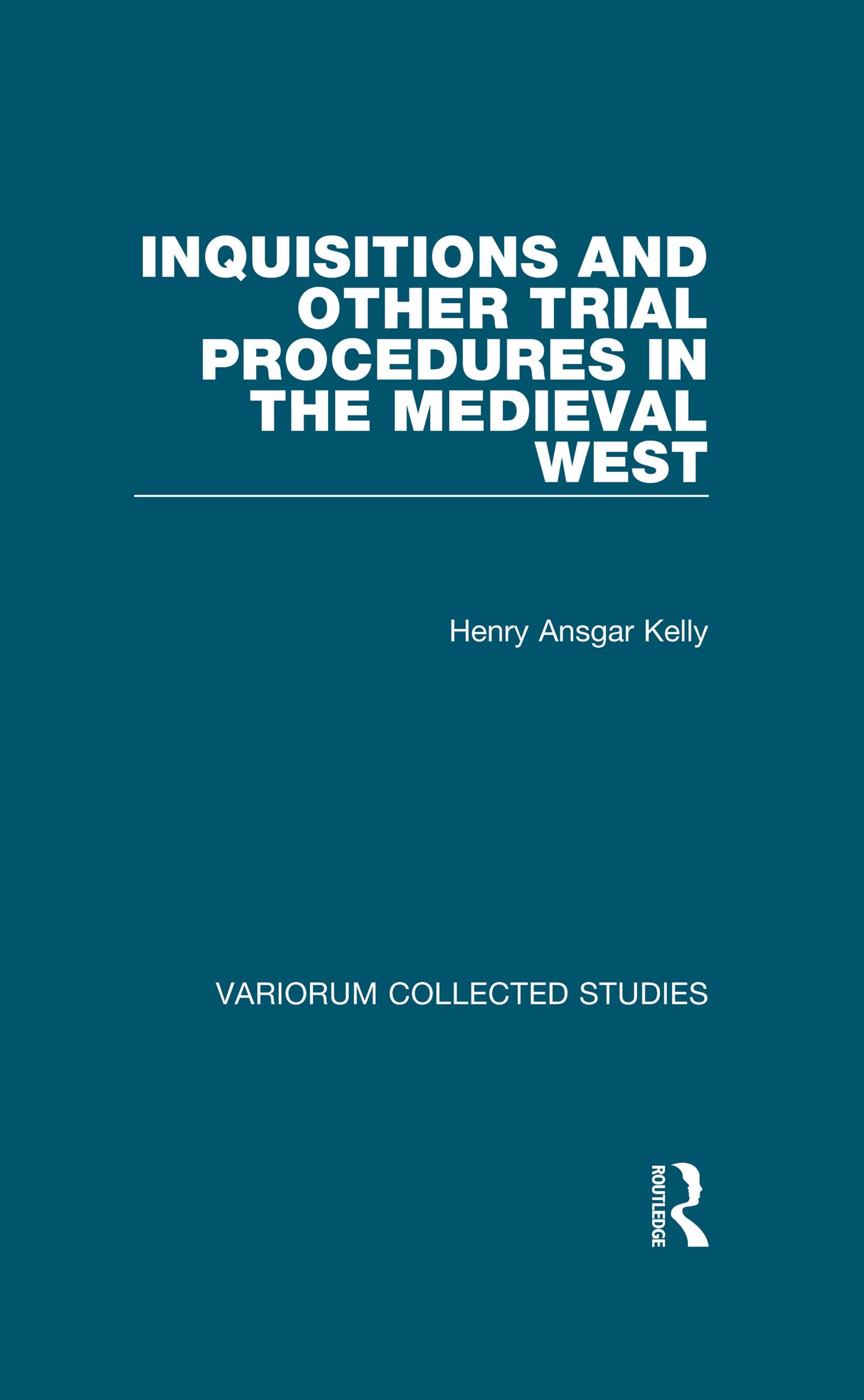
'Inquisition' was the new form of criminal procedure that was developed by the lawyer-pope Innocent III and given definitive form at the Fourth Lateran Council of 1215. It has since developed a notoriety which has obscured the reality of the procedure, and it is this that Professor Kelly is first concerned with here. In contrast to the old Roman system of relying on a volunteer accuser-prosecutor, who would be punished in case of acquittal, the inquisitorial judge himself served as investigator, accuser, prosecutor, and final judge. A probable-cause requirement and other safeguards were put in place to protect the rights of the defendant, but as time went on some of these defences were modified, abused, or ignored, most notoriously among papally appointed heresy-inquisitors; but in all cases appeal and redress were at least theoretically possible. Unlike continental practice, in England inquisitorial procedure was mainly limited to the local church courts, while on the secular side native procedures developed, most notably a system of multiple investigators/accusers/judges, known collectively as the jury. Private accusers, however, were still to be seen, illustrated here in the final pair of studies on 'appeals' of sexual rape.
Paga fácilmente con tarjeta, Klarna, Apple Pay o Google Pay. ¿No estás contento? Siempre tienes 14 días de garantía de devolución. Lee más en nuestros términos. Si tienes preguntas, escríbenos a hello@memmo.org.
Memmo hace que estudiar sea más fácil, estés donde estés. Aquí tienes tus libros de texto y herramientas de estudio inteligentes en un solo lugar: resúmenes, quizzes, podcasts y flashcards. Y también a Ted, tu compañero de estudio que responde a todo lo que te preguntes. Más de 50 000 estudiantes ya estudian aquí. Está hecho para que aprendas más rápido y te estreses menos.
También te podría gustar
Comprar el libro0