
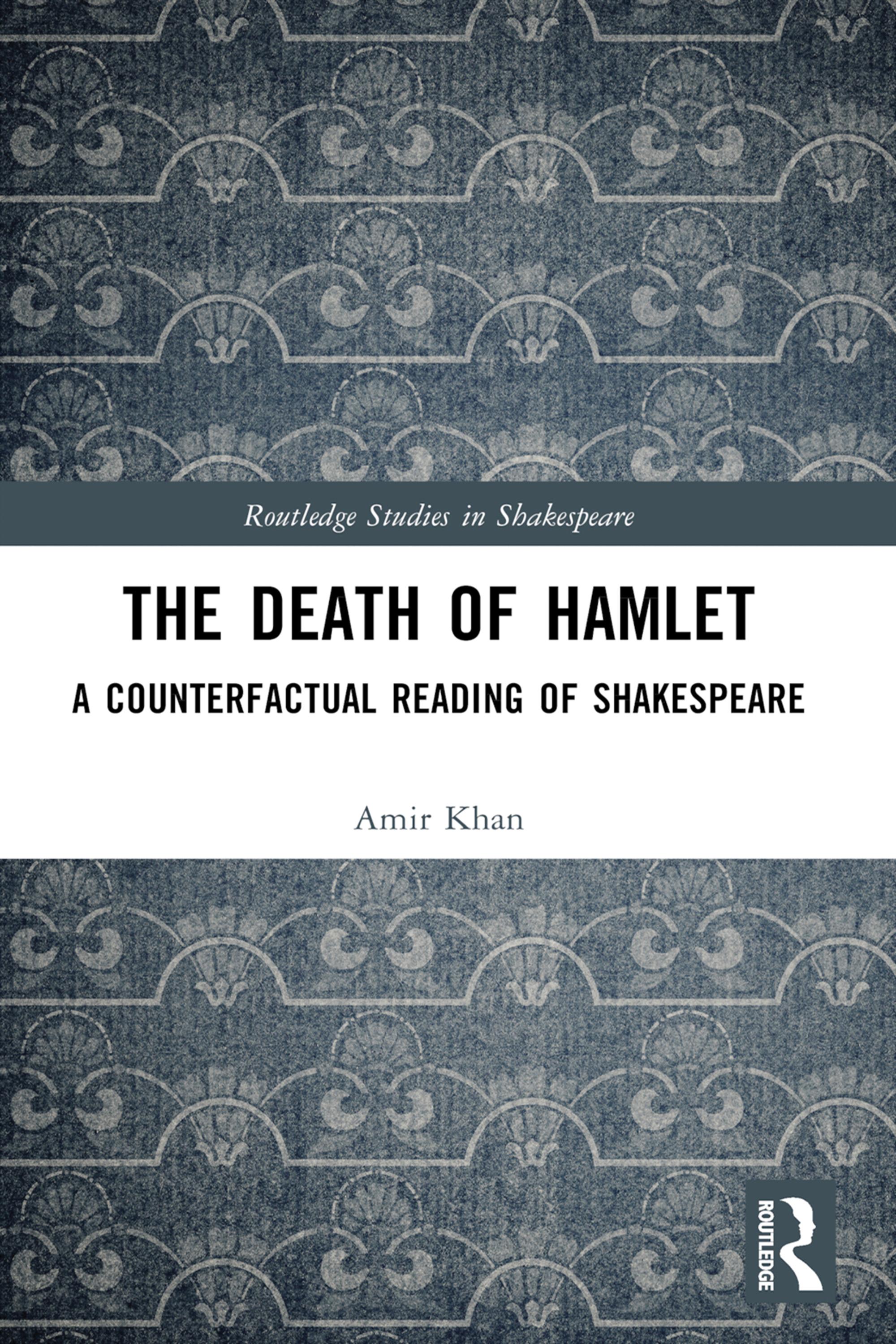
This book is an intervention in Hamlet scholarship. In Thus Spake Zarathustra (1885), Nietzsche famously posited the death of God, taken to mean the dissolution of all horizons within which human beings construct a plausible ontology that gives words significance. The idea of God, as a transcendental signified (to borrow from Derrida), underwrites meaning and values. Socrates placed knowing as the highest philosophical good over two millennia ago; however, once we find that God (i.e. any transcendental signified) is unknowable, the world vanishes. In a world bereft of concepts and meaning, Nietzsche’s philosophical project becomes one of “redeeming” pure willing as itself constitutive of world.
Hamlet and the criticism surrounding it is caught within competing horizons we know are circuitous and unending. We tiresomely make theoretical rounds between competing sets of interpretations that boil down to either establishing meaning within the play (the text transcending its history and revealing universal truths) or situating the text within its proper historical timeframe in order to get it to speak. In short, we are trapped between contextualizing and decontextualizing approaches. Yet we know both approaches, as competing horizons we commit to at the outset, are dead. But to abandon both at the outset means that the text, Hamlet, is itself dead. So how to get it to speak?
Paga fácilmente con tarjeta, Klarna, Apple Pay o Google Pay. ¿No estás contento? Siempre tienes 14 días de garantía de devolución. Lee más en nuestros términos. Si tienes preguntas, escríbenos a hello@memmo.org.
Memmo hace que estudiar sea más fácil, estés donde estés. Aquí tienes tus libros de texto y herramientas de estudio inteligentes en un solo lugar: resúmenes, quizzes, podcasts y flashcards. Y también a Ted, tu compañero de estudio que responde a todo lo que te preguntes. Más de 50 000 estudiantes ya estudian aquí. Está hecho para que aprendas más rápido y te estreses menos.