
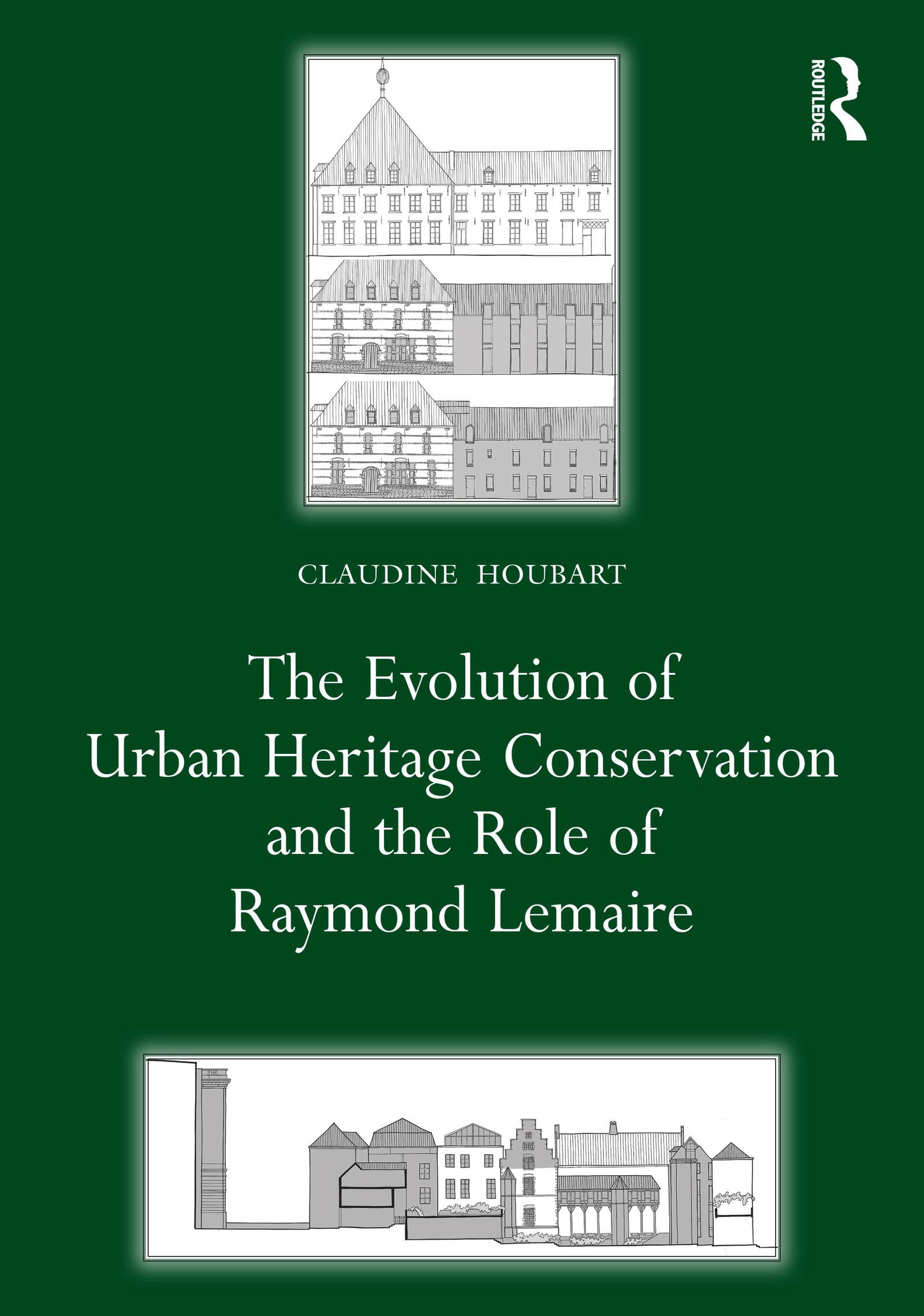
The 1960s and 1970s saw a marked change in the approach to built heritage conservation. From a focus on the preservation of individual buildings, attention turned to the conservation, regeneration, and reuse of entire historic districts. A key player in this process was the Belgian art and architecture historian Raymond Lemaire (1921–1997), yet beyond those in conservation circles few people know of his work and influence or even recognize his name.
In this book, Claudine Houbart traces how the change came about and the role played by Lemaire. She describes his work and influence and in so doing provides a history of urban conservation over the last four decades of the twentieth century and beyond. The first chapter summarizes Lemaire’s background from his training during the Second World War and his work as a Monuments Man immediately after the war, to his role in the drafting of the Venice Charter and his appointment as Secretary General of ICOMOS (International Council on Monuments and Sites). The next chapter describes the rehabilitation of Great Beguinage in Louvain. Now a UNESCO World Heritage Site, the project was directed by Lemaire and is a perfect example of the restoration of an entire district. The following chapter provides case studies of his work in Brussels, demonstrating his methodology in action. The final chapter discusses the transposition of the model of the historic city to urban projects and summarizes Lemaire’s influence on heritage conservation today, particularly integrated conservation. His participation in drafting key conservation documents sponsored by the Council of Europe, UNESCO and ICOMOS, and his desire to revise the Venice Charter are discussed. The book’s conclusion reflects on what has gone before, ending aptly with Lemaire’s own words ‘the past, properly understood, is one of the references for judging the value of today and tomorrow’.
Paga fácilmente con tarjeta, Klarna, Apple Pay o Google Pay. ¿No estás contento? Siempre tienes 14 días de garantía de devolución. Lee más en nuestros términos. Si tienes preguntas, escríbenos a hello@memmo.org.
Memmo hace que estudiar sea más fácil, estés donde estés. Aquí tienes tus libros de texto y herramientas de estudio inteligentes en un solo lugar: resúmenes, quizzes, podcasts y flashcards. Y también a Ted, tu compañero de estudio que responde a todo lo que te preguntes. Más de 50 000 estudiantes ya estudian aquí. Está hecho para que aprendas más rápido y te estreses menos.