
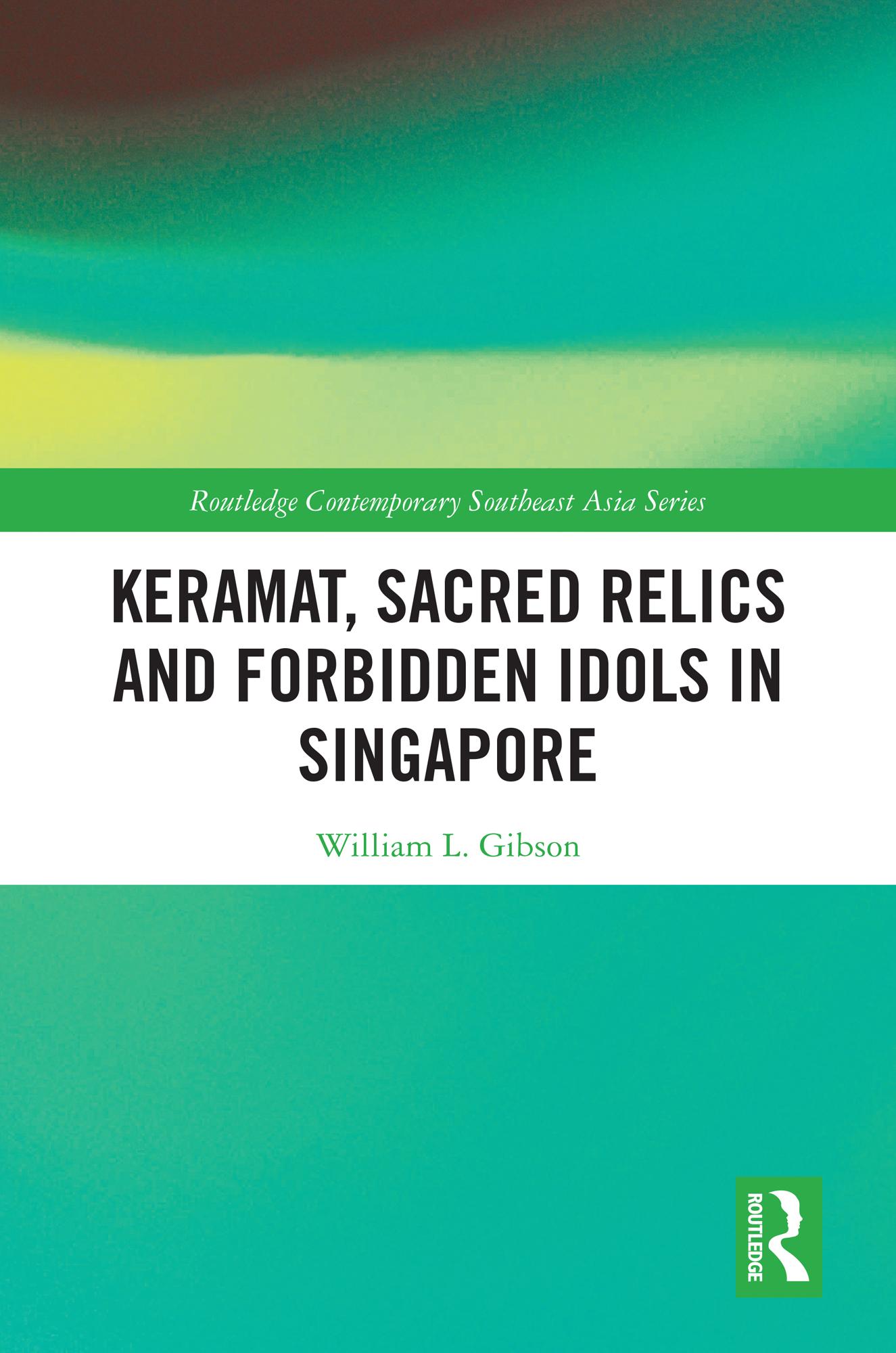
Keramat, holy graves and shrines, represent physical markers of Singapore’s history as a multi‑ethnic maritime trading center. They offered sanctified spaces not only for Muslims but also for the entire community in which they emerged. Maintained by self‑appointed caretakers, the stories of keramat often interweave fact with folklore that mirror the history and sensibilities of the community.
While once an abundant part of the social landscape of Singapore, many keramat were destroyed during the post‑independence rush to develop. These keramat now face a second vanishing with memories of them fading as caretakers and community members age and pass away. In parallel, many modern Muslims consider keramat as a form of shirk, or polytheism, and tacitly consent to their destruction. This book concludes by critically examining the often‑tense relationship between keramat and authority, both secular and religious, from colonial to modern times. The dilemmas of grappling with puritanical norms and grassroots elaborations in varying modes of preservation are investigated using case studies from Singapore and the wider region.
A vital resource for scholars, this work contributes to a people’s history of Singapore, one that both deepens and problematizes official historical accounts.
Paga fácilmente con tarjeta, Klarna, Apple Pay o Google Pay. ¿No estás contento? Siempre tienes 14 días de garantía de devolución. Lee más en nuestros términos. Si tienes preguntas, escríbenos a hello@memmo.org.
Memmo hace que estudiar sea más fácil, estés donde estés. Aquí tienes tus libros de texto y herramientas de estudio inteligentes en un solo lugar: resúmenes, quizzes, podcasts y flashcards. Y también a Ted, tu compañero de estudio que responde a todo lo que te preguntes. Más de 50 000 estudiantes ya estudian aquí. Está hecho para que aprendas más rápido y te estreses menos.