
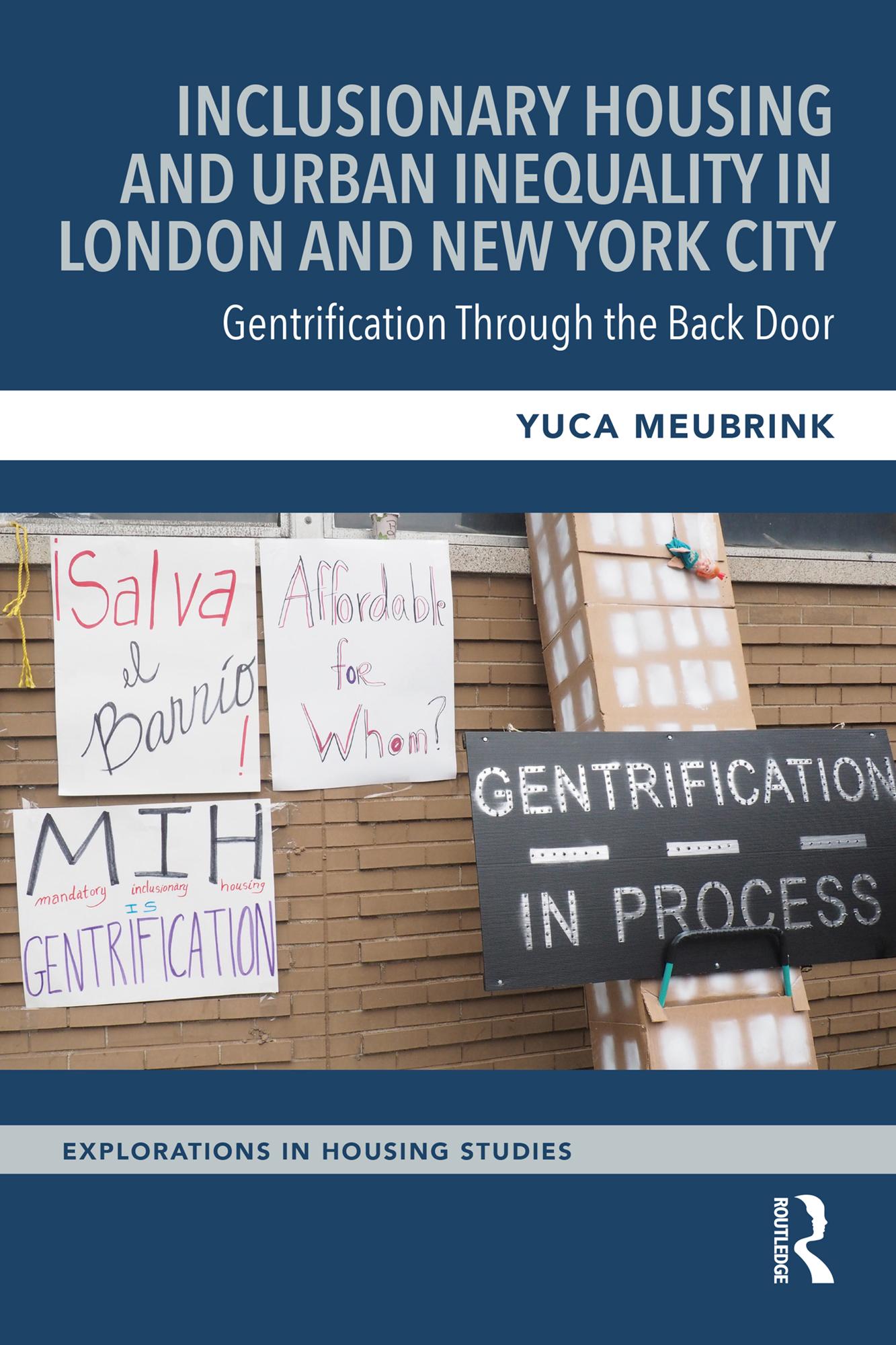
Municipalities around the world have increasingly used inclusionary housing programs to address their housing shortages. This book problematizes those programs in London and New York City by offering an empirical, research-based perspective on the socio-spatial dimensions of inclusionary housing approaches in both cities. The aim of those programs is to produce affordable housing and foster greater socio-economic inclusion by mandating or incentivizing private developers to include affordable housing units within their market-rate residential developments.
The starting point of this book is the so-called “poor door” practice in London and New York City, which results in mixed-income developments with separate entrances for “affordable housing” and wealthier market-rate residents. Focusing on this “poor door” practice allowed for a critical look at the housing program behind it. By exploring the relationship between inclusionary housing, new-build gentrification, and austerity urbanism, this book highlights the complexity of the planning process and the ambivalences and interdependencies of the actors involved. Thereby, it provides evidence that the provision of affordable housing or social mixing through this program has only limited success and, above all, that it promotes – in a sense through the “back door” – the very gentrification and displacement mechanisms it is supposed to counteract.
This book will be of interest to researchers and students of housing studies, planning, and urban sociology, as well as planners and policymakers who are interested in the consequences of their own housing programs.
Paga fácilmente con tarjeta, Klarna, Apple Pay o Google Pay. ¿No estás contento? Siempre tienes 14 días de garantía de devolución. Lee más en nuestros términos. Si tienes preguntas, escríbenos a hello@memmo.org.
Memmo hace que estudiar sea más fácil, estés donde estés. Aquí tienes tus libros de texto y herramientas de estudio inteligentes en un solo lugar: resúmenes, quizzes, podcasts y flashcards. Y también a Ted, tu compañero de estudio que responde a todo lo que te preguntes. Más de 50 000 estudiantes ya estudian aquí. Está hecho para que aprendas más rápido y te estreses menos.