
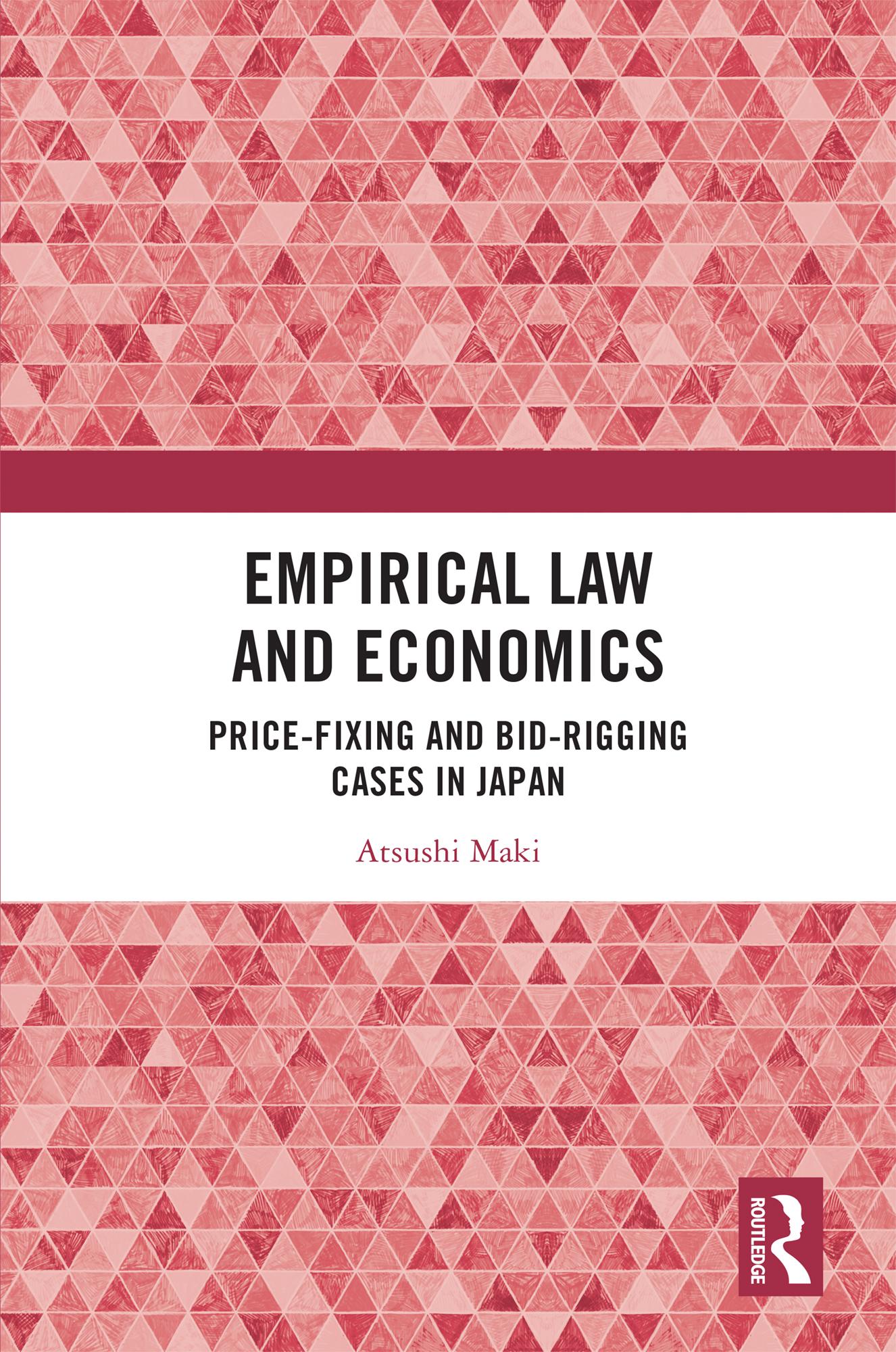
Maki provides an empirical analysis of law and economics by reevaluating Myrdal's value premises and Weber's separation of analysis and policy.
In modern civil society, individuals and businesses conduct economic activities through markets. The mainstream economic theory is the general equilibrium theory, which assumes a perfectly competitive market. The upshot is that transactions through competitive markets maximize the economic welfare of society, with policies such as deregulation and privatization being implemented with the backing of the law. However, in the real economy, legal transactions do not always take place, and this book analyzes price-fixing and bid-rigging cases. These cases show that there is a gap between competition philosophy and legislation. Using the real economy as data, this book conducts an empirical analysis of law and economics and illustrates issues related to the ideals of economics and the proper application of law. Accumulating empirical results will provide the means to form a healthy civil society.
A useful reference for graduate students and researchers in economics and legal research, and an interesting read for those who consider economics to be an empirical science.
Paga fácilmente con tarjeta, Klarna, Apple Pay o Google Pay. ¿No estás contento? Siempre tienes 14 días de garantía de devolución. Lee más en nuestros términos. Si tienes preguntas, escríbenos a hello@memmo.org.
Memmo hace que estudiar sea más fácil, estés donde estés. Aquí tienes tus libros de texto y herramientas de estudio inteligentes en un solo lugar: resúmenes, quizzes, podcasts y flashcards. Y también a Ted, tu compañero de estudio que responde a todo lo que te preguntes. Más de 50 000 estudiantes ya estudian aquí. Está hecho para que aprendas más rápido y te estreses menos.