
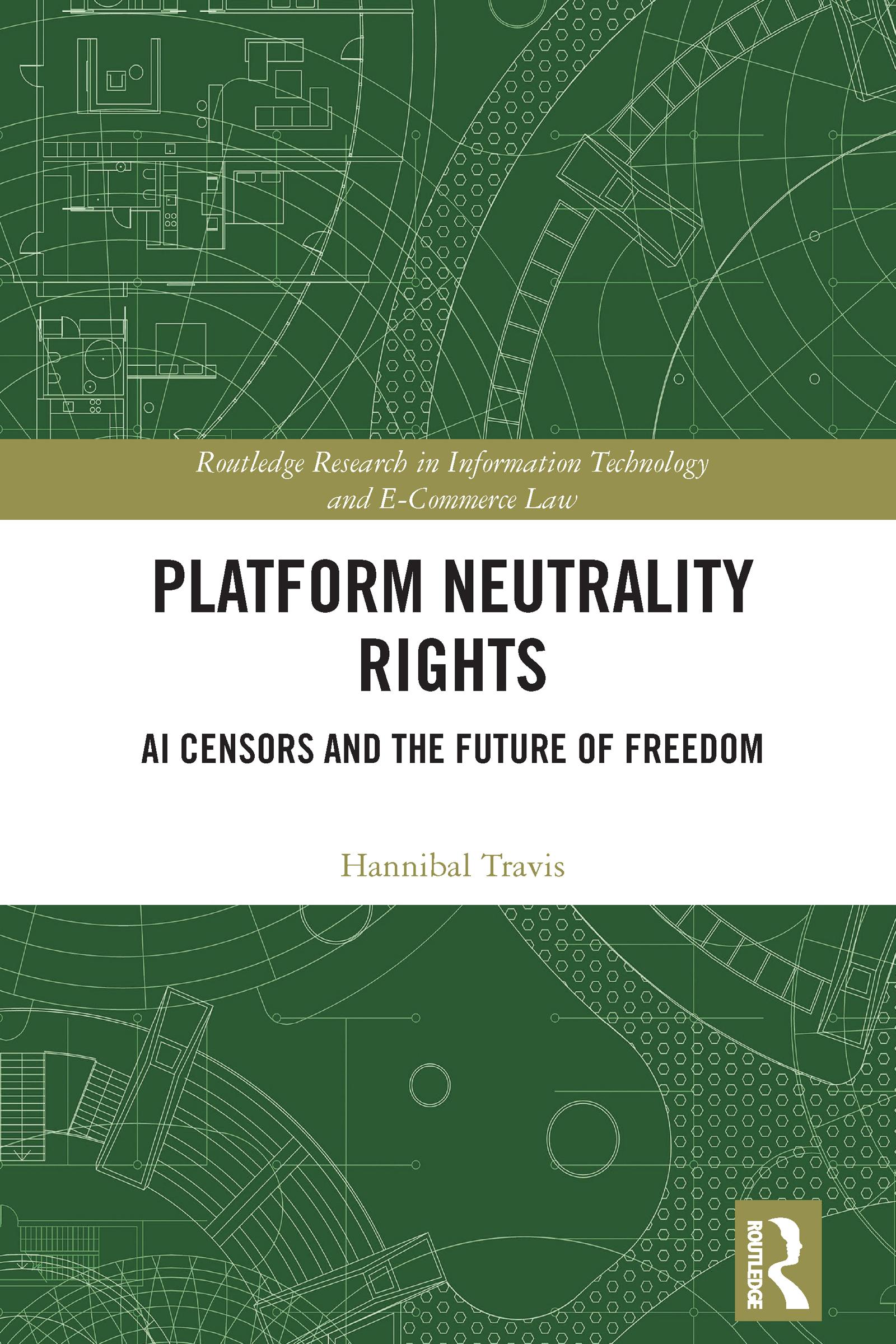
This book analyzes questions of platform bias, algorithmic filtering and ranking of Internet speech, and declining perceptions of online freedom.
Courts have intervened against unfair platforms in important cases, but they have deferred to private sector decisions in many others, particularly in the United States. The First Amendment, human rights law, competition law, Section 230 of the Communications Decency Act, and an array of state and foreign laws address bad faith conduct by Internet platforms or other commercial actors. Arguing that the problem of platform neutrality is similar to the net neutrality problem, the book discusses the assault on freedom of speech that emerges from public-private partnerships. The book draws parallels between U.S. constitutional and statutory doctrines relating to shared spaces and the teachings of international human rights bodies relating to the responsibilities of private actors. It also connects the dots between new rights to appeal account or post removals under the Digital Services Act of the European Union and a variety of fair treatment obligations of platforms under American and European competition laws, “public accommodations” laws, and public utilities laws. Analyzing artificial intelligence (AI) regulation from the point of view of social-media and video-platform users, the book explores overlaps between European and U.S. efforts to limit algorithmic censorship or “shadow-banning”.
The book will be of interest to students and scholars in the field of cyberlaw, the law of emerging technologies and AI law.
Paga fácilmente con tarjeta, Klarna, Apple Pay o Google Pay. ¿No estás contento? Siempre tienes 14 días de garantía de devolución. Lee más en nuestros términos. Si tienes preguntas, escríbenos a hello@memmo.org.
Memmo hace que estudiar sea más fácil, estés donde estés. Aquí tienes tus libros de texto y herramientas de estudio inteligentes en un solo lugar: resúmenes, quizzes, podcasts y flashcards. Y también a Ted, tu compañero de estudio que responde a todo lo que te preguntes. Más de 50 000 estudiantes ya estudian aquí. Está hecho para que aprendas más rápido y te estreses menos.