
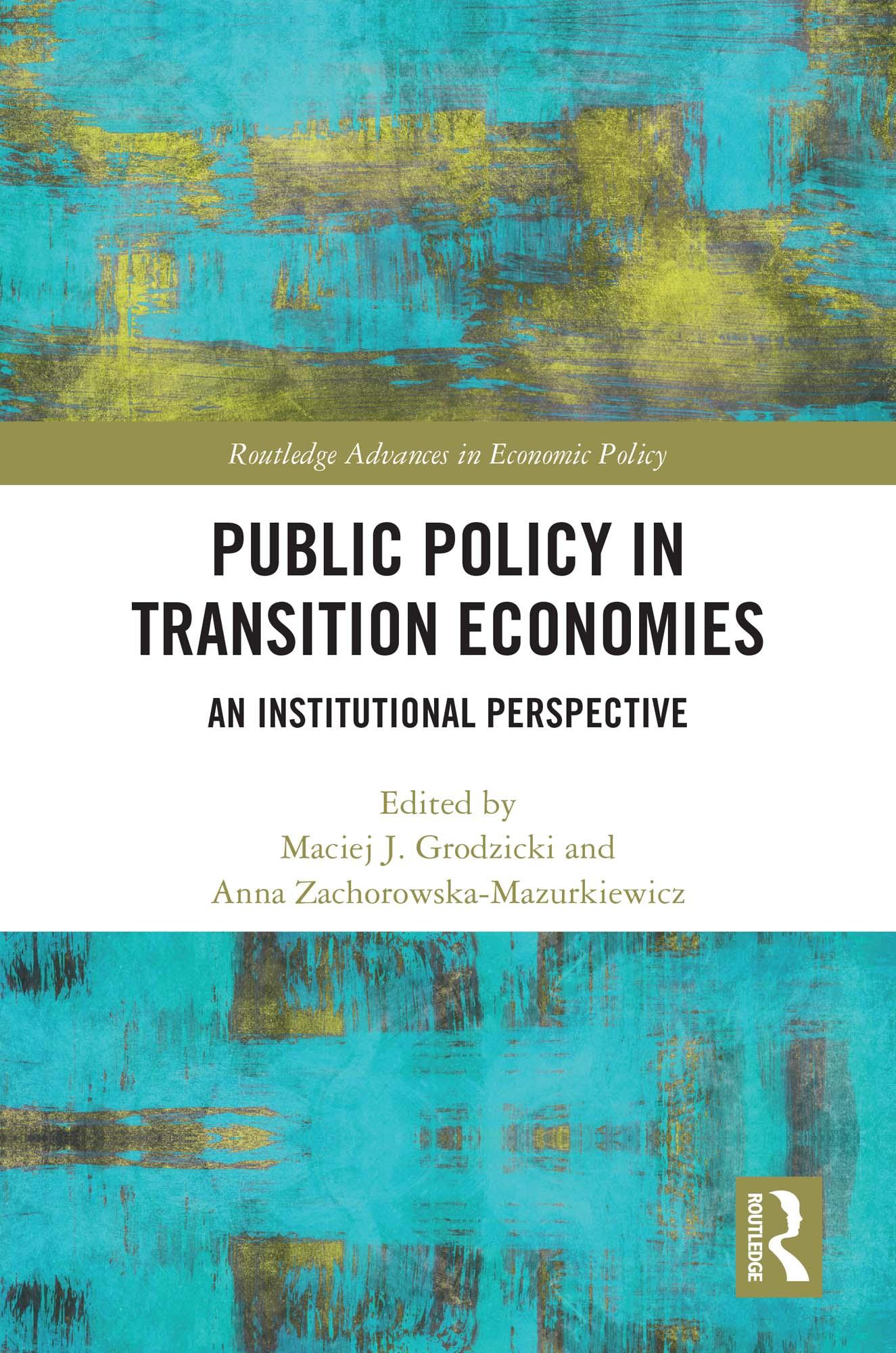
Public policies are usually carefully designed to address a particular problem, but they are also shaped and influenced by the sociocultural heritage of a particular country. This volume explores the origins of economic and other public policies in Central and Eastern Europe.
This region makes for a particularly interesting case because after going through a major system change – transitioning from a command economy into a market economy – many of the key policies were written anew. The contributors to this book look at key policy areas at the intersection of state and private sectors, including industrial, pension, energy, and competition policies. The chapters examine key questions such as: how did these policies evolve from the time of transition to their final form? What were the main drivers of policy conduct and factors influencing major policy choices? How does the historical context impact contemporary policy space? Throughout the volume, an institutional approach is adopted, according to which policies are perceived as the outcome of top‑down design, filtered through social institutions inherited from the past. With this approach, this book presents a long‑running assessment, over 30 years, of policymaking in transition economies, which were subject to profound changes throughout the period.
This book will be of interest to readers in institutional economics, policy studies, transition economies, and the recent history of Eastern Europe.
Paga fácilmente con tarjeta, Klarna, Apple Pay o Google Pay. ¿No estás contento? Siempre tienes 14 días de garantía de devolución. Lee más en nuestros términos. Si tienes preguntas, escríbenos a hello@memmo.org.
Memmo hace que estudiar sea más fácil, estés donde estés. Aquí tienes tus libros de texto y herramientas de estudio inteligentes en un solo lugar: resúmenes, quizzes, podcasts y flashcards. Y también a Ted, tu compañero de estudio que responde a todo lo que te preguntes. Más de 50 000 estudiantes ya estudian aquí. Está hecho para que aprendas más rápido y te estreses menos.