
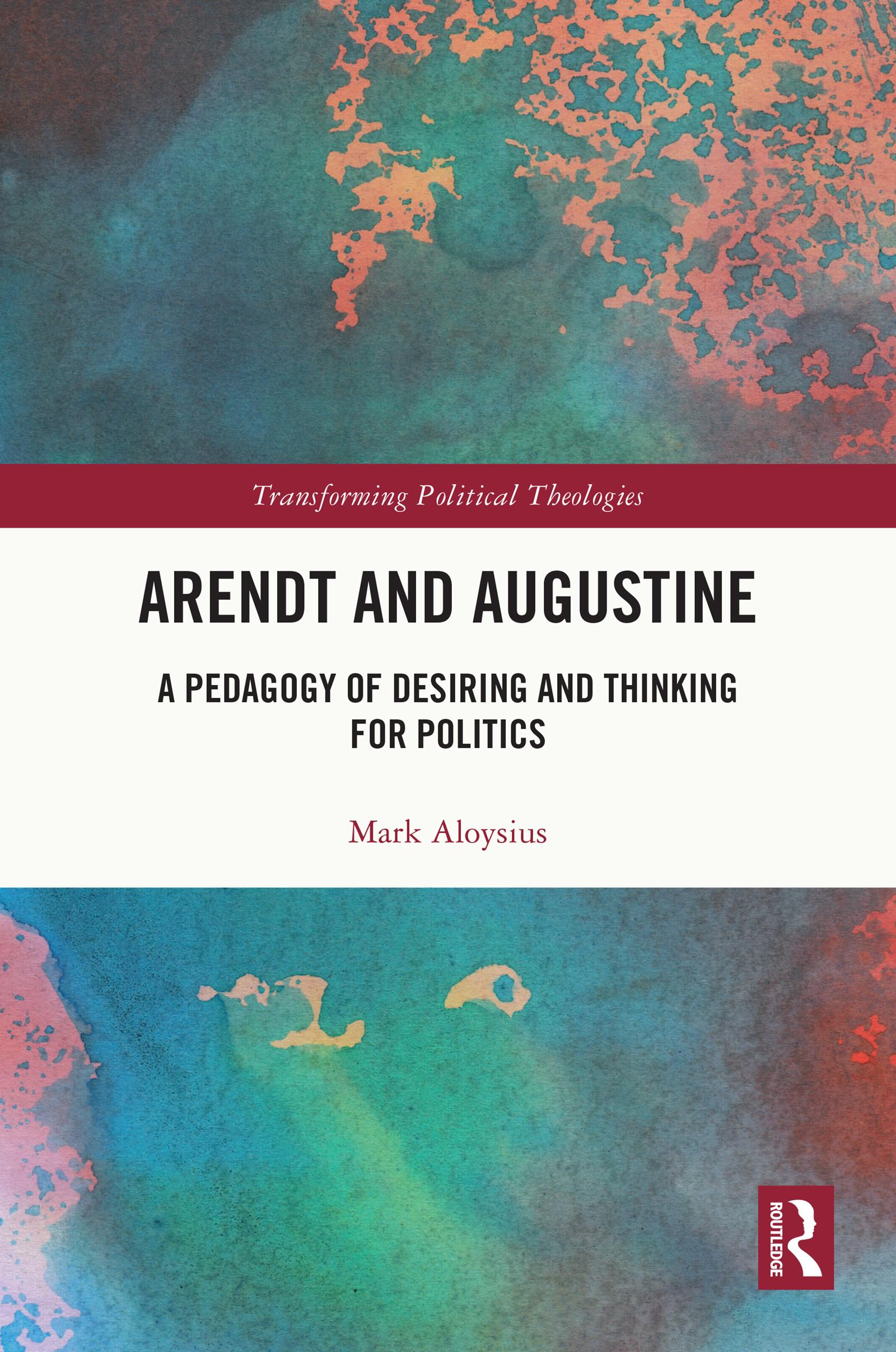
This book addresses a lacuna in scholarship concerning Hannah Arendt’s Augustinian heritage that has predominantly focused on her early work. It de-canonises the sources that political theology has appealed to by shifting the interpretive focus to her mature treatment in The Life of the Mind. Arendt’s initial criticism of Augustinian desiring is that it generates 'worldlessness'. In her later works, Arendt develops a more nuanced reading of the movements of thinking, desiring, and loving in her engagement with Augustine. This study attends to these movements and inspects the spatio-temporal framework which structure Arendt’s conception of the political. The author assesses the claim that Arendt’s conception of the political is drawn from a pedagogy of desiring and thinking from Augustine severed from his mystagogy. Although respecting the method of political theory, the author contends that Arendt’s severing of Augustinian pedagogy from mystagogy brings her to an insurmountable aporia. Instead, the author embeds these pedagogical practices within Augustine’s theology and suggests how that aporia might be overcome and used to develop a mystagogy for contemporary political life. The book will be of particular interest to scholars of political theology, as well as political theory, and political philosophy.
Paga fácilmente con tarjeta, Klarna, Apple Pay o Google Pay. ¿No estás contento? Siempre tienes 14 días de garantía de devolución. Lee más en nuestros términos. Si tienes preguntas, escríbenos a hello@memmo.org.
Memmo hace que estudiar sea más fácil, estés donde estés. Aquí tienes tus libros de texto y herramientas de estudio inteligentes en un solo lugar: resúmenes, quizzes, podcasts y flashcards. Y también a Ted, tu compañero de estudio que responde a todo lo que te preguntes. Más de 50 000 estudiantes ya estudian aquí. Está hecho para que aprendas más rápido y te estreses menos.