
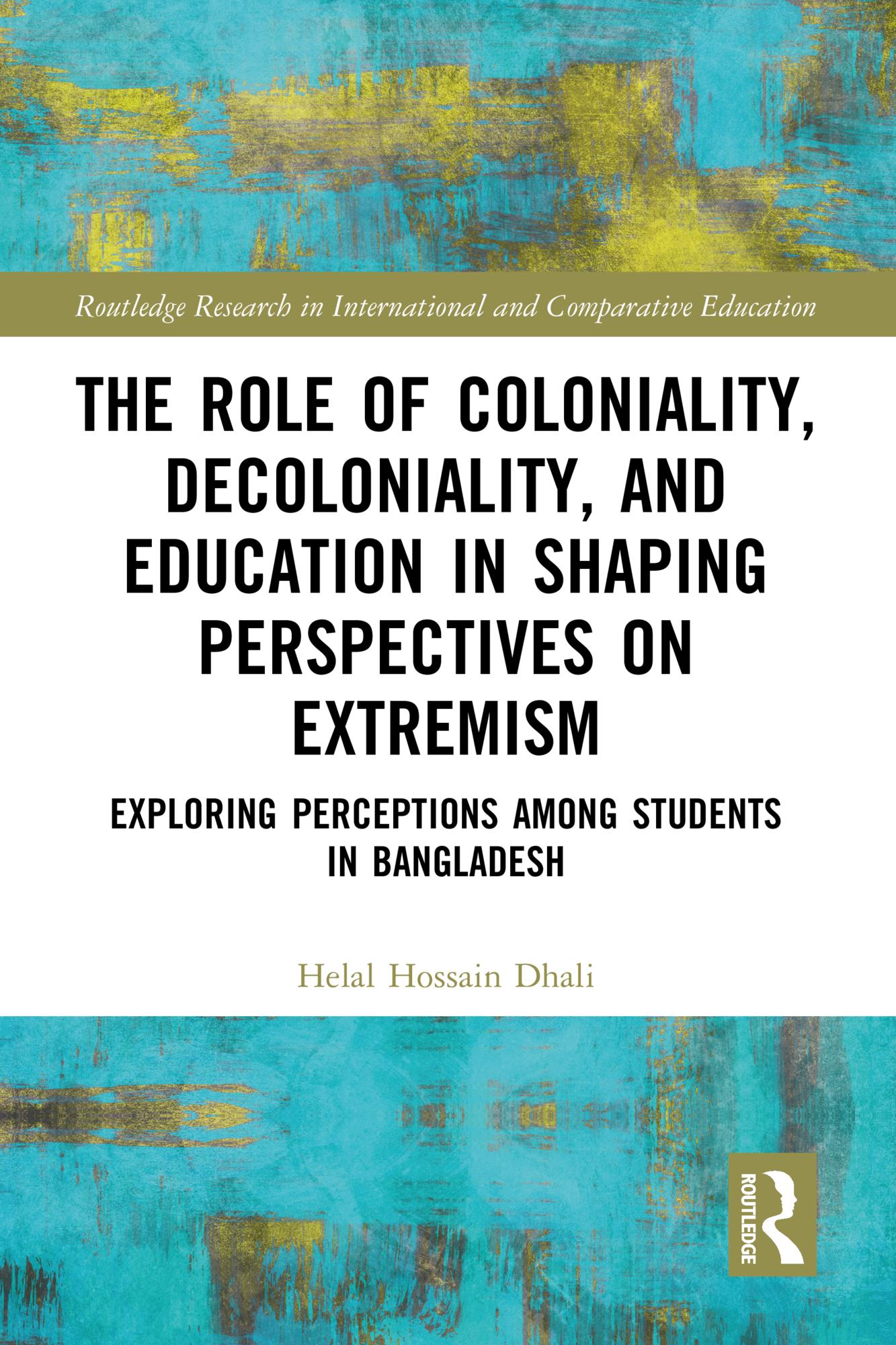
This book extends a comprehensive overview of the treatment of extremism in education in Bangladesh, using a study of perceptions among students to explore proactive measures for the prevention of various types and forms of extremism prevalent among youth.
It offers a critical, holistic, and student-centred study of the role of formal education in shaping perceptions of extremism and intersectional differences among individuals, drawing on data from university students. The author employs post-colonial theory and multicultural educational approaches to highlight how understandings of extremism differ across young adults and policymakers. Ultimately, it demonstrates that students’ overall understanding of extremism is much broader than that of policymakers, and how understandings differ between male and female students at the intersection of rural and urban locations and socio-economic positions. As such, it foregrounds a need to involve and organize formal education as a proactive means to raise awareness and counter all forms of extremism, through incorporating specific teaching strategies into pedagogical practices to foster an anti-communalist, humanistic, critical multicultural, and cosmopolitan outlook among students.
It will appeal to scholars and researchers with interests across multicultural education, comparative and international education, the sociology of education, extremism, and conflict and peace studies.
Paga fácilmente con tarjeta, Klarna, Apple Pay o Google Pay. ¿No estás contento? Siempre tienes 14 días de garantía de devolución. Lee más en nuestros términos. Si tienes preguntas, escríbenos a hello@memmo.org.
Memmo hace que estudiar sea más fácil, estés donde estés. Aquí tienes tus libros de texto y herramientas de estudio inteligentes en un solo lugar: resúmenes, quizzes, podcasts y flashcards. Y también a Ted, tu compañero de estudio que responde a todo lo que te preguntes. Más de 50 000 estudiantes ya estudian aquí. Está hecho para que aprendas más rápido y te estreses menos.