
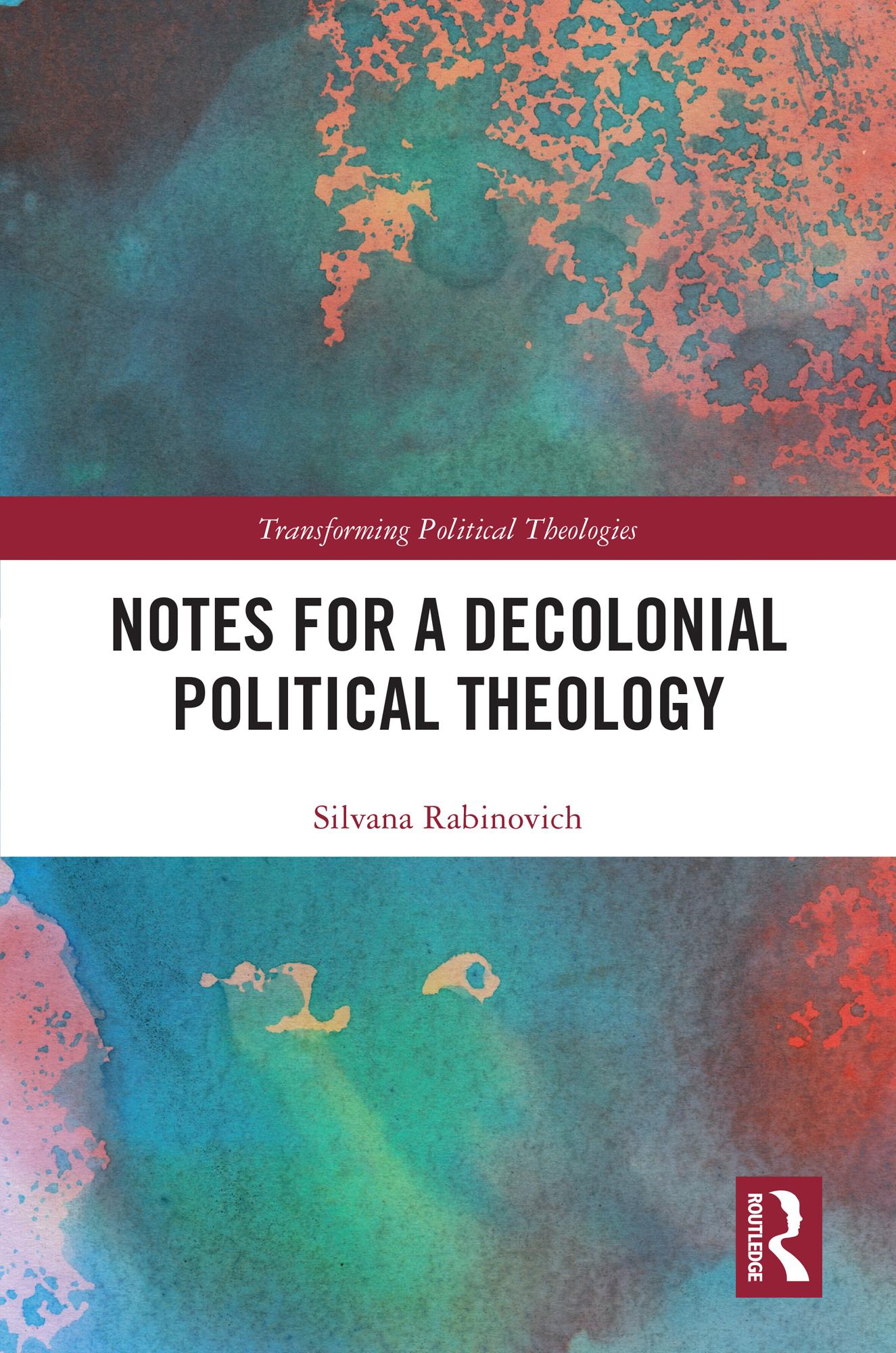
At the crossroads of ethics, poetics and politics, this innovative book outlines a series of notes to decolonize political theology. The author proposes counter-hegemonic forms of reading, which deconstruct domination by embracing fragility. The book opens with a diapason of prejudicelessness as a decolonial key, focusing on prejudices that hinder critical attention to a colonial political theology that perpetuates hatred. The first set of notes aims to ‘de-orientalize the Semite’ by reading midrashic and biblical texts in the present context, the second seeks to decolonize language by exploring the power of translation, and the third ponders decolonial theo-logics to outline a justice of the other. Connecting a number of fields, authors, and epistemologies, the book addresses the Israeli-Palestinian conflict and brings together Jewish thought, continental philosophy, and Latin American perspectives. It engages with a range of thinkers, including Benjamin and Arendt, and features an interview with Enrique Dussel as well as a foreword by Gil Anidjar. This is an important methodological proposal for interdisciplinary and intercultural political theology and a valuable contribution towards rethinking the paradigm of political theology beyond its Eurocentric and colonialist premises.
Paga fácilmente con tarjeta, Klarna, Apple Pay o Google Pay. ¿No estás contento? Siempre tienes 14 días de garantía de devolución. Lee más en nuestros términos. Si tienes preguntas, escríbenos a hello@memmo.org.
Memmo hace que estudiar sea más fácil, estés donde estés. Aquí tienes tus libros de texto y herramientas de estudio inteligentes en un solo lugar: resúmenes, quizzes, podcasts y flashcards. Y también a Ted, tu compañero de estudio que responde a todo lo que te preguntes. Más de 50 000 estudiantes ya estudian aquí. Está hecho para que aprendas más rápido y te estreses menos.