
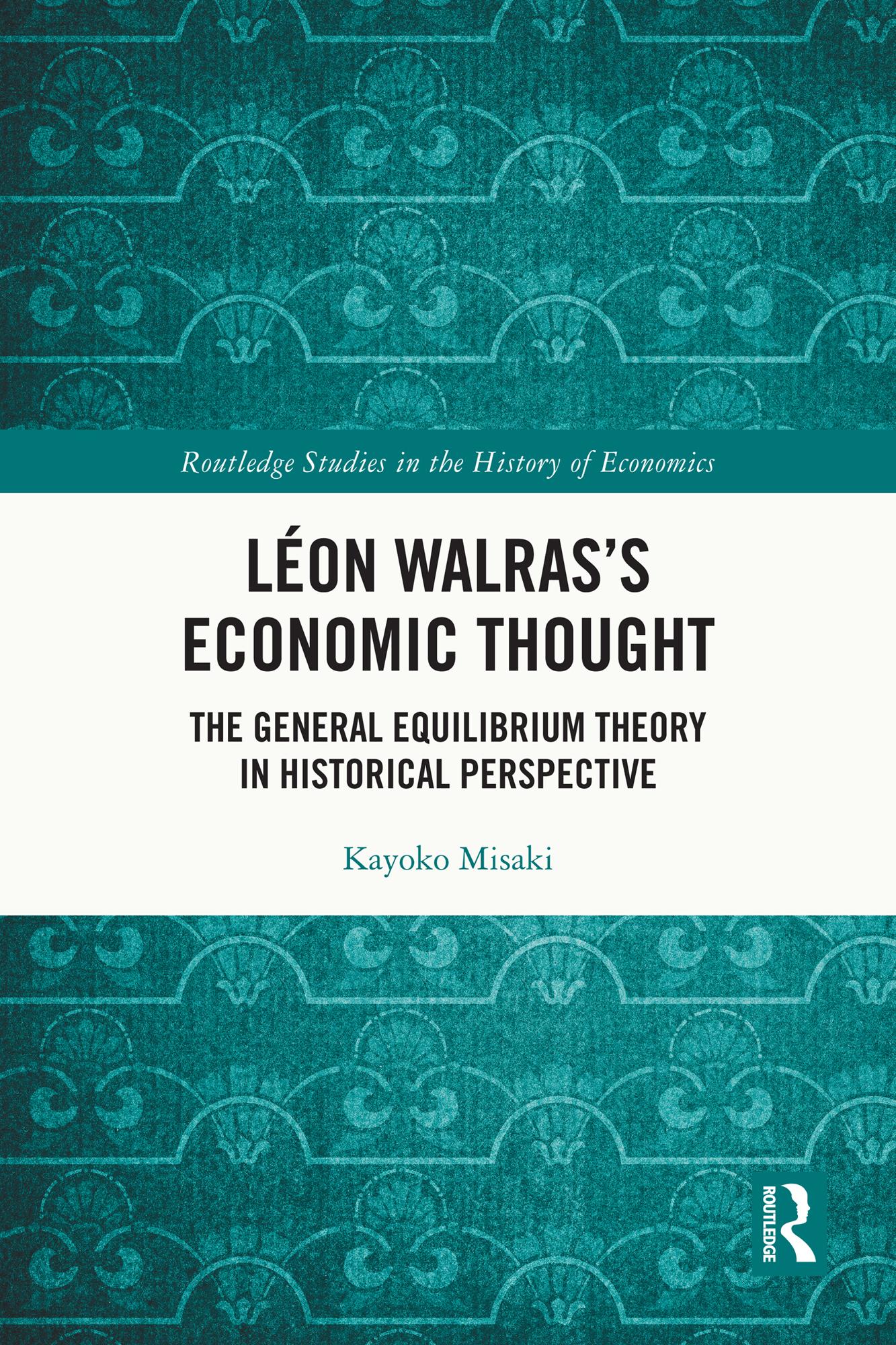
This book sheds new light on the general equilibrium theory of Léon Walras (1834–1910) from a historical perspective. Walras's construction of general equilibrium theory marked the dawn of modern economics, and the theory was greatly developed in the 20th century. However, Walras's own intentions and ideas behind the theory are still not fully understood.
This book aims to clarify the intellectual background of Walras’s economics by delving into his original writings, which have not received much attention until now. Part 1 of the book reconsiders the relationship between Walras and his predecessors, Adam Smith (1723–1790), Jean-Baptiste Say (1767–1832), and Achylle Nicolas Isnard (1749–1803), who are believed to have had a decisive influence on Walras's general equilibrium theory. In Part 2, the book explores Walras's views on the labor market, entrepreneurship, and non-selfish human nature, including concepts like sympathy, which have been overlooked in his general equilibrium theory and subsequently misunderstood to this day. Walras’s economic thought is one of the foundational sources of modern economics. An accurate and in-depth understanding of it will provide a new perspective on the problems faced by modern economics and open future possibilities for economics as a social science.
This book offers new insights not only to researchers and students of the history of economics but also to all those interested in the origins of modern economics.
Paga fácilmente con tarjeta, Klarna, Apple Pay o Google Pay. ¿No estás contento? Siempre tienes 14 días de garantía de devolución. Lee más en nuestros términos. Si tienes preguntas, escríbenos a hello@memmo.org.
Memmo hace que estudiar sea más fácil, estés donde estés. Aquí tienes tus libros de texto y herramientas de estudio inteligentes en un solo lugar: resúmenes, quizzes, podcasts y flashcards. Y también a Ted, tu compañero de estudio que responde a todo lo que te preguntes. Más de 50 000 estudiantes ya estudian aquí. Está hecho para que aprendas más rápido y te estreses menos.