
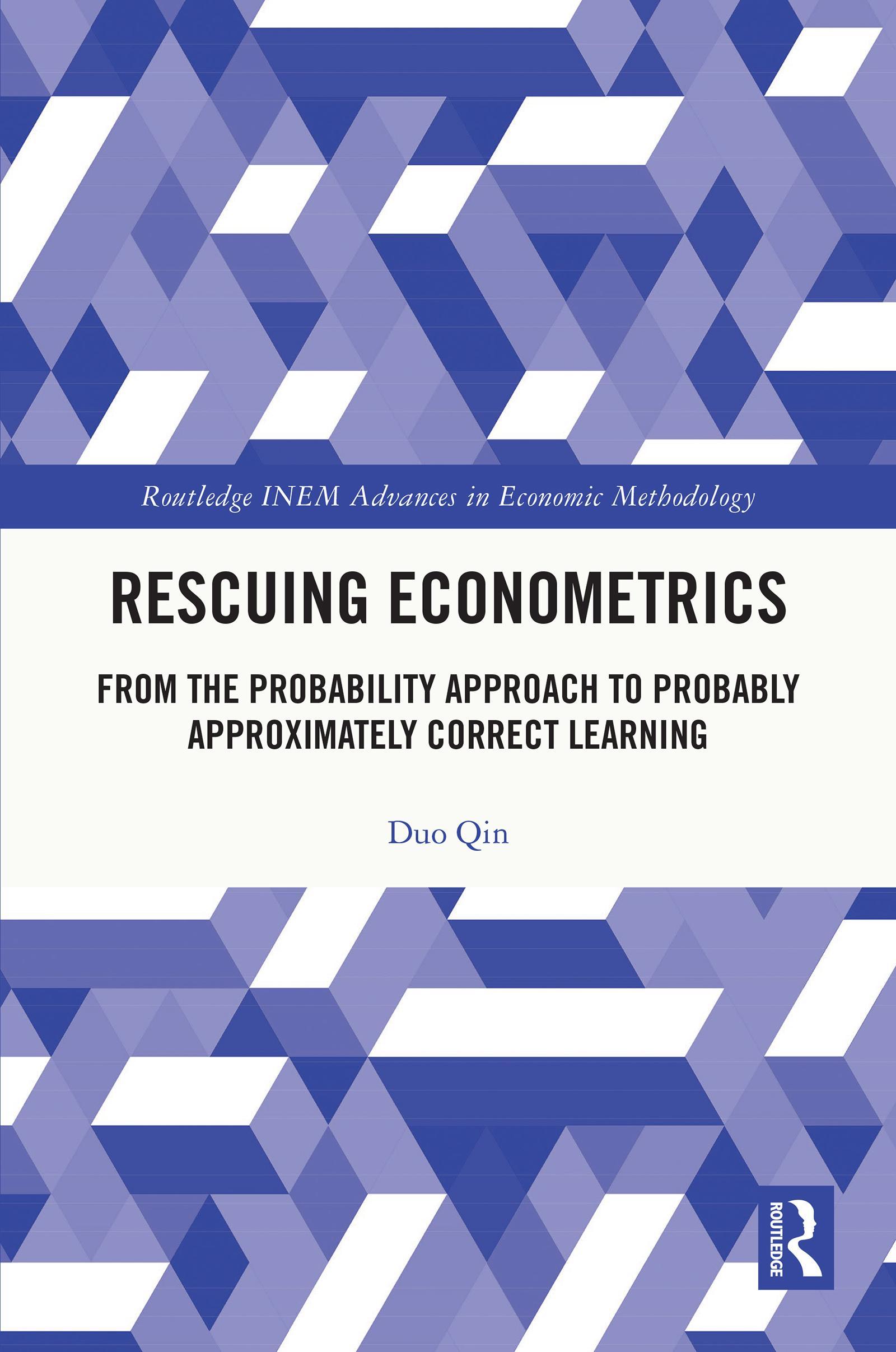
Haavelmo’s 1944 monograph, The Probability Approach in Econometrics, is widely acclaimed as the manifesto of econometrics. This book challenges Haavelmo’s probability approach, shows how its use is delivering defective and inefficient results, and argues for a paradigm shift in econometrics towards a full embrace of machine learning, with its attendant benefits.
Machine learning has only come into existence over recent decades, whereas the universally accepted and current form of econometrics has developed over the past century. A comparison between the two is, however, striking. The practical achievements of machine learning significantly outshine those of econometrics, confirming the presence of widespread inefficiencies in current econometric research. The relative efficiency of machine learning is based on its theoretical foundation, and particularly on the notion of Probably Approximately Correct (PAC) learning. Careful examination reveals that PAC learning theory delivers the goals of applied economic modelling research far better than Haavelmo’s probability approach. Econometrics should therefore renounce its outdated foundation, and rebuild itself upon PAC learning theory so as to unleash its pent-up research potential. The book is catered for applied economists, econometricians, economists specialising in the history and methodology of economics, advanced students, philosophers of social sciences.
Paga fácilmente con tarjeta, Klarna, Apple Pay o Google Pay. ¿No estás contento? Siempre tienes 14 días de garantía de devolución. Lee más en nuestros términos. Si tienes preguntas, escríbenos a hello@memmo.org.
Memmo hace que estudiar sea más fácil, estés donde estés. Aquí tienes tus libros de texto y herramientas de estudio inteligentes en un solo lugar: resúmenes, quizzes, podcasts y flashcards. Y también a Ted, tu compañero de estudio que responde a todo lo que te preguntes. Más de 50 000 estudiantes ya estudian aquí. Está hecho para que aprendas más rápido y te estreses menos.